The battle to be the next Mayor of London has already begun

While Sadiq Khan mulls his future James Cleverly and Reform’s Laila Cunningham are vying for votes in a traditionally Labour city, says Eliot Wilson
When politicians often congratulate themselves on surviving until the weekend, voters can be forgiven for losing our long-term perspective. The next election for the Mayor of London will take place on 4 May 2028, but we need to pay attention now because the battle lines are already being drawn.
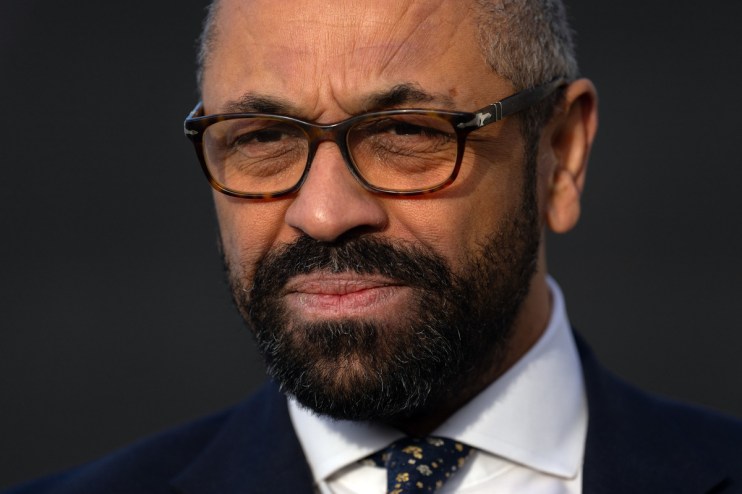
At the end of August, Sir James Cleverly stepped down as shadow secretary of state for housing, communities and local government. His recognisably human, if slightly blokeish, demeanour and sense of what matters to disengaged, cynical but anxious voters had made him one of the more effective Conservative frontbenchers. But he has turned 57 recently, served as foreign secretary and home secretary, and may see little attraction at Westminster.
Instead, Cleverly will compete for his party’s nomination for Mayor of London, and it has now been announced that the deadline for applications will be this Wednesday, 30 September. The Conservatives are cautiously allowing it to be said they have a chance of winning the mayoralty, a huge sign of electoral recovery after the savage beating of July 2024.
Mayor of London is a unique position in British politics. Greater London has a population of 9m, of whom two-thirds are registered voters. The current Mayor, Lord Khan of Tooting, received 1,088,225 votes at the last election, comfortably the largest personal electoral mandate in the country. The Prime Minister can only claim to have been directly chosen by 24,927 people in Makerfield.
The Mayor is a national, even international figure, a vital ambassador, given London’s fame, popularity and pre-eminance as the second biggest global hub for financial services. Conversely, his direct executive powers are relatively modest: the most obvious responsibilities are policing and crime policy, and transport. He also controls strategic planning and economic development; much of the role is not hands-on management but persuasion, convening and making the political weather.
London’s demographics are also unique. Some 40 per cent of the population was born outside the UK, and only 54 per cent now identify as white; some find it challenging to think that the white British population is a minority, at 37 per cent. There are said to be over 300 languages spoken.
This diversity has made London seem an unlikely prospect for Conservative success. Boris Johnson’s eight-year mayoralty (2008-16) is regarded, like the man himself, as an exception, a sui generis political freak weather event, and the norm is assumed to be that Labour will triumph in the capital, where it has won the most seats and votes at every general election for 30 years.
Cynical
It may seem cynical and patronising – because to an extent it is – but an assumption seems to exist that a white candidate will not have the electoral reach to become Mayor. Cleverly is the favourite to represent the Conservatives but is being challenged by Westminster councillor Festus Akinbusoye. Reform UK has chosen former Crown Prosecution Service lawyer Laila Cunningham; she was a Conservative until last year, and the child of parents who fled Gamal Abdel Nasser’s Egypt.
A key question is whether the currency Mayor will seek a fourth term. Lord Khan of Tooting, who was introduced into the House of Lords last week, remains coy on his plans and will give nothing away until year. His position is a peculiar one: polling suggests a majority of voters think he should not run again, but the numbers also indicate that he remains the candidate to beat if he enters the lists yet again.
If Khan decides not to stand, the favourites to pick up Labour’s banner include former Deputy Prime Minister David Lammy, Corbyn-era Shadow Cabinet minister Dawn Butler and Khan’s successor as MP for Tooting, Dr Rosena Allin-Khan.
It is an underpowered group. Lammy is a Westminster veteran of high office now, but it would be a generous to view his time either as foreign secretary or deputy Prime Minister as successful. He is impulsive, cocksure and bombastic, with a shaky grasp on policy detail.
Butler stood as deputy Labour leader in 2020, presumably because six months as a junior minister and time as an assistant whip which exposed her inability to count the number of MPs in a committee room were a solid foundation. She came last.
Allin-Khan, a physician specialising in public health, is substantially more impressive than both but lacks the profile of Lammy or Butler. She is sharp, quick-witted and resolute, and might have Khan’s blessing if he decides to move on.
One other issue hangs over the election, particularly if Khan remains Labour’s candidate. Opposition parties have attacked his tenure from the perspective of law and order, especially accusing him of presiding over a frightening rise in knife crime. Reform UK has gone in hardest of all: Cunningham has said “It’s a dereliction of duty that there’s not more policing, more access to police”, and hinted at darker motivation:
“London, one of the greatest cities on earth, is no longer safe, and that didn’t happen by accident… there’ll be a new sheriff in town and I’ll be launching an all-out war on crime.”
She has also claimed there are “no safe parts” of London. The difficulty for us all – for candidates making their pitches and for voters choose whom to support – is our image of crime, disorder and risk is not wholly based on evidence. Knife crime, for example, has risen slightly since the beginning of Khan’s mayoralty, but has seen peaks and troughs. A recent report by King’s College London Policy Institute demonstrates that London has one of the country’s lowest rates of violent crime, slightly lower than it was five years ago; and 12.2 per cent of Londoners personally experienced crime in the year 2024/25, while most voters estimated double that.
A third of voters believe there are areas of London governed by Sharia law, and the median estimate for the capital’s Muslim population is 35 per cent, while the true figure is 15 per cent; the median guess by Reform UK supporters was 50 per cent.
Cleverly has promised to “put forward a classic Conservative case” for his candidacy. “It’s about enterprise, it’s about opportunity.” He has avoided some of the sharper-edged stances of his party in the hope of catching and exploiting any desperate desire for optimism, and his supporters have stressed his normality. Reform UK have simply branded London a dangerous failure, perhaps forgetting that to dismiss the populations at which the finger is pointed is to alienate around half the city’s total inhabitants.
The question for all the contenders is a fundamental one about our politics. Are politicians willing to do anything to grasp victory, including wilfully creating false narratives of civilisational decline and the reduction of voting to a ruthlessly simple ethnic and sectarian headcount? Or might the electorate, cynical and tired, respond positively to a candidate who found a way to talk about identity and belonging as well as prosperity, opportunity and freedom? Sir James Cleverly might give it a go, but at the moment it looks like a gamble.