Tech bosses warn Chancellor UK risks surrendering to foreign AI giants

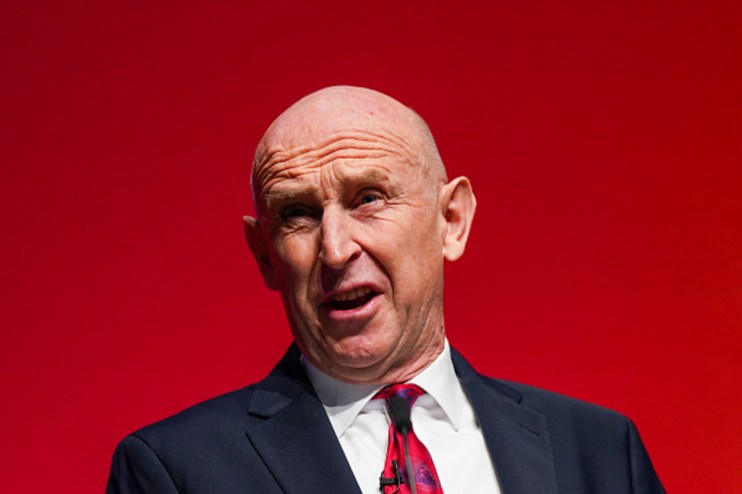
Britain risks becoming dangerously dependent on foreign tech giants unless the government develops a comprehensive strategy for its own AI, industry leaders have warned the Chancellor ahead of his Budget on Wednesday.
UKAI, which represents more than 270 AI businesses, has urged John Healey to commit substantial funding to a national sovereign AI strategy, warning that the country could become a “vassal state” reliant on overseas powers for critical technology.
The warning comes just days after the Treasury unveiled more than £600m in AI investment, including additional funding for British startups and domestic chip design.
However, the trade body argued that successive funding announcements had failed to address the broader problem of Britain’s dependence on foreign companies for the AI models, computing infrastructure and services underpinning its economy.
“The UK has some of the world’s best AI companies, yet no Sovereign AI strategy to help them thrive”, said Tim Flagg, UKAI’s chief executive.
“The AI Opportunities Action Plan, the Sovereign AI Fund and the AI Hardware Plan are all welcome steps, but nothing joins them together. On their own, they are building blocks. Joined up as a strategy, they would be transformative”.
He warned that without immediate action, Britain risked becoming a “vassal state, dependent on countries that control the AI infrastructure our economy increasingly relies on”.
Pressure builds over Britain’s AI dependence
The warning follows major disruptions from a recent Google Cloud outage, which UKAI said affected banks, businesses and courts, proving the risks of relying on a small number of overseas providers.
It also comes amid growing concern over Britain’s exposure to geopolitical tensions and the dominance of American tech companies in the global AI market.
Charlotte Wilson, head of enterprise at cybersecurity firm Check Point, said the government needed to move beyond individual funding commitments.
“Without a dedicated sovereign plan in place, the UK will continue to be at the mercy of overseas tech firms, subjected to damaging outages and major cyber security scares”, she said.
“Piecemeal funding announcements are tactical at best, and we need a detailed strategy about how the country will build and design a new wave of AI tools to support critical national infrastructure”.
Wilson argued that developing domestic AI capabilities should also form part of Britain’s defence spending plans, especially as cyber threats from hostile states intensify.
The calls follow a warning from the government’s Council for Science and Technology that Britain risks becoming a “high-value AI customer” rather than a producer of critical technology unless ministers strengthen domestic capabilities.
The government has already established a £500m Sovereign AI Fund to help British startups scale, with the Treasury announcing a further £60m for the programme on Saturday.
Another £60m will support research and procurement of British AI technology, while £18m has been earmarked for a new advanced chip-design academy.
The wider package includes £165m for a national AI biosecurity initiative, backed by OpenAI, Anthropic and Google DeepMind, alongside £130m for AI-powered cybersecurity projects.
Healey said the investment would help deliver a “distinctively British approach to AI” that protects national interests while supporting economic growth.
AI minister Kanishka Narayan also acknowledged the risks of overseas dependence, warning that Britain could not “afford to rely entirely on technology built overseas”.
However, UKAI wants the government to bring its existing initiatives together under a single strategy, backed by dedicated funding and changes to public procurement that would give British AI companies greater access to government contracts.
Flagg said Britain had the entrepreneurs, research and talent to compete but that these remained “fragmented and disconnected”.
“The government can change that by uniting and championing British AI businesses and reforming public procurement, so that taxpayer money builds British growth and British jobs”, he said. “Next week’s Budget is the moment to act”.