Portugal holidays: why The Algarve offers so much more than just beaches

The Algarve beyond the beaches, by Jack J Matthews
The prospect of walking 300 km is intimidating. But even the longest, most challenging of journeys begins with a single step, and as long as one foot keeps following the other, you will have covered a good distance in no time. This, at least, was the mantra I reassured myself with as I embarked on my first stage of the Via Algarviana (www.viaalgarviana.org), the dramatic Portuguese hiking trail which winds its way from the Spanish border to the Atlantic coast. The sun was shining, I felt well prepared for the days ahead… and within half an hour, I was already being outpaced by a group of septugenarian walkers, colourfully clad and moving at remarkable speed.
THE ALGARVE BEYOND THE BEACHES: THE TRIP
If you think the Algarve is just sun-soaked beaches and world-class golf, think again. Set back from the southern Portuguese coast lie stunning landscapes rich in layers of heritage. Via Algarviana weaves its way through this idyllic countryside, intersecting with more than two dozen other connecting trails. Together, the network of walking routes transports you over mountains and through cork forests, past ancient standing stones and the doorsteps of Algarve’s premium food producers. The only question is, which section will you pick for the first of many long weekend trips?
WHAT TO SEE
The Via Algarviana’s first stage begins on Portugal’s eastern frontier with Spain. Down on the shores of the River Guadiana, there’s a statue celebrating the town of Alcoutim’s smuggling history. Ever since the 13th century, but as recently as the 1960s, poor inhabitants smuggled luxury goods such as coffee and tobacco, cognac and perfume, in sacks across the border. It is said that the income from a single night’s smuggling could match two months’ wages for an agricultural labourer, but it was tough and dangerous work and often controlled by gangs. Today, the Rota do Contrabandista (Smugglers Route) is part of the Via Algarviana and it starts with a gentle hike through orchards of carob, almond, and olive.
As the path diverges from the river, and you ascend into the quiet rural uplands, it’s easy to forget you were still in the UK just a few hours ago. The welcome solitude of the trail is only interrupted by the occasional hamlet with its pleasant traditional vegetable gardens. Just north of the village of Afonso Vincente you get the first chance of many to see the menhirs – standing stones similar or stelae– which reveal the Neolithic stories of this landscape. The Levajo Menhirs, only discovered in 1992, are thought to be more than 5,000 years old.
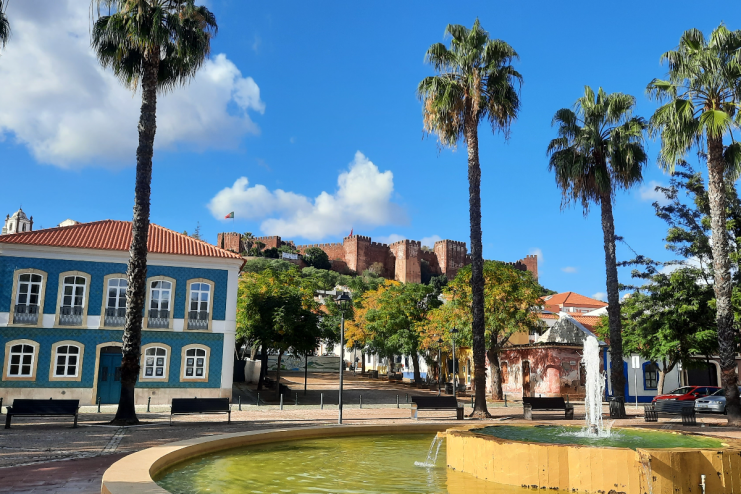
Silves is your base for exploring the routes nearer the centre of the Algarve. The city’s red sandstone castle provides an excellent opportunity to learn about Portugal’s history of conquest and cultures, from the Romans and Visigoths, to the Moors and Crusaders. Legend has it that if you stand beside the cistern, you might hear the wailing of the ‘El Moura Encantada’, the enchanted maiden. She was a Moorish princess whose lover drowned himself in the well. Understandably, she never recovered from the heartbreak, and her ghost mourns his loss to this day.
The trails meander past wetlands with wading flamingos, and forests of cork oak, their ochre-coloured trunks revealing a recent harvest. Portugal possesses a quarter of the world’s cork forests and produces 60% of global exports, so these trees are as critical to the local economy as they are to the Algarvian ecosystem. Local developer Erik de Vlieger recently purchased the Fábrica do Inglês, Silves’ former cork processing factory, and is restoring it as a museum and cultural venue, boutique hotel, and office space. “Fábrica do Inglês is an undeniable landmark in the collective memory of Silves,” says de Vlieger. “The Castle of Silves is the biggest tourist magnet,” he says. “This will be the second.”
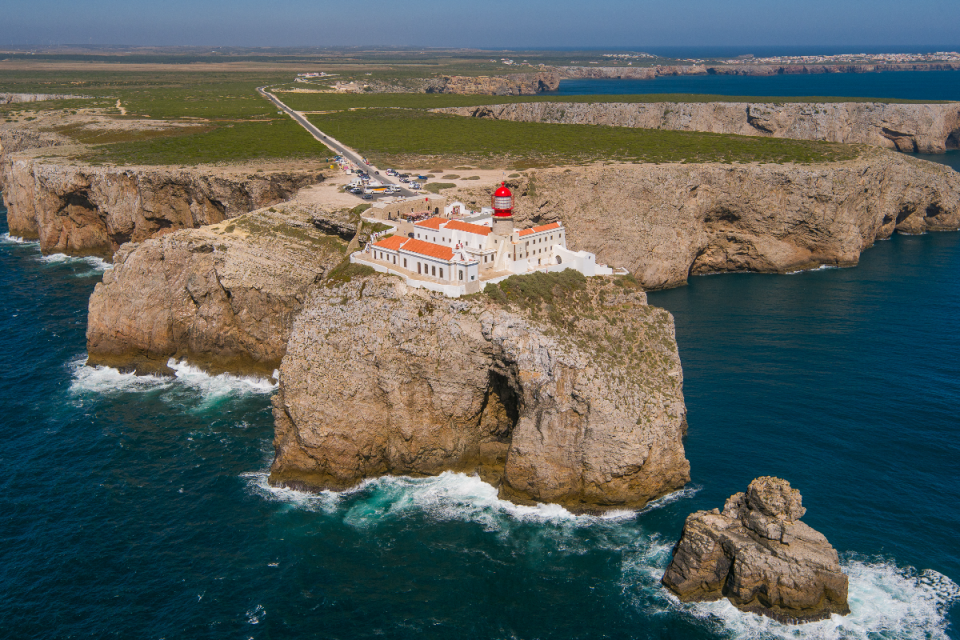
For those who want to hike in the Algarve but can’t resist the allure of the ocean, then the Via Algarviana’s final stage, 14, is the perfect choice. Start your day at the Museum of the Town of Bispo (www.museuviladobispo.pt) and delve deeper into the history of the area through their excellent exhibits. The museum is built within a former granary, and hosts interpretation on the local geology and history, including more information on the menhir standing stones that have made regular appearances along your walks. The hike is a mostly flat, 16.4 km-long trail alongside abandoned fields and nature reserves rich in rare birds. Towards the end of the route, a lighthouse appears on the horizon, alongside winds of sea salt air. Your finish line of the Cape of Saint Vincent is then revealed. The limestone cliffs of Portugal’s most south-western point are already well worth a visit, but are even more compelling as the sun begins to set after a long and enjoyable hike.
Whichever of the stages and connections you choose to walk, it’s easy to follow the route. Each leg has a clear map and guide that you can download for free from the website, and the Via Algarviana app makes both navigation and understanding the landscape much easier.
TAKE A TOUR
Francisco Simões, a conservationist and CEO of Algarvian Roots (www.algarvianroots.com), has an encyclopaedic knowledge on every possible thing you might see while out on the trails – and presents it with charm and an infectious passion for his region. His tours invite you to slow down and experience the hidden viewpoints of the Algarve’s quieter, more mysterious side. Appealing to my appetite, which was undoubtedly heightened by exertion on the trail, Simões used cuisine to tell the landscape’s story. He fuelled our longer hikes with supplies of the Three Delicias of the Algarve cake, a rich, dark desert made from locally grown figs, almonds, and carob. And as I devoured each mouthful, Simões taught me about the agricultural practices of the Algarve, as well as the culinary traditions.
At the market in Silves, Simões introduces me to the wider bounty that the Algarve provides. Here, the air is alive with the calls of fishmongers and the chatter of reed-weavers, plus the gossiping and haggling of local smallholders, one of whom happens to be Simões’ grandmother. Before beginning the afternoon hike, we headed over to Restaurante O Monchiqueiro 2. This unassuming eatery is slightly off the usual tourist route, and it’s reassuringly full of locals who are clearly regulars. The restaurant specialise in simple local food, done well. Try the rabbit stew and the pork cheeks with confit garlic, followed by a big slice of watermelon. It’s a hearty meal which will sustain you on trail.
We stopped for a post-hike tour and tasting at Lagar dos Pardieiros, where three generations of the Oliveira dos Santos family preserve the traditions of stone pressed olive oil. Son Miguel, who now runs the family business, guided me through the process, starting with the Monchique syenite millstones which slowly grind the olives in a cold press system. It’s labour intensive but the flavour of the resulting oil is superior. Nothing is wasted – the spent olive paste is composted and then re-used to fertilise the olive groves. Miguel’s passion shines through, and he has achieved a seemingly perfect balance of honouring the heritage of his grandfather’s business and introducing his own innovations. The high quality of the olive oil is clear during the tasting – no wonder Lagar dos Pardieiros is prized by some of the top restaurants in Portugal.
THE ALGARVE: WHERE TO STAY
For those centring their stay around Stage 1 of the Via Algarviana, then Hotel D’Alcoutim (www.hoteldalcoutim.com/; from £44 per night) is the perfect base. The team here will happily arrange a local taxi to bring you back to the hotel at the end of your long hike, and you can then enjoy a well-earned drink by the pool while looking across the River Guadiana to Spain.
The Silves History Guest House (https://shorturl.at/CQyi8; from £89 per night) features nine charming rooms within a recently renovated historical building, just a few minutes walk from the city’s castle. The small swimming pool surrounded by the old walls of Silves provides the perfect spot for a post-hike rest.
The Via Algarviana’s final stage reaches the ocean near the town of Sagres, where you will find the ideally-situated Hotel Pousada Sagres (www.pousadas.pt/uk/hotel/pousada-sagres; from £90). The hotel has breathtaking panoramic views of the sea and a 15th century fortress, and while these can be easily observed from your room’s balcony, why not take an evening stroll along the neighbouring cliff-top boardwalk to truly appreciate this beautiful coastline?
FIND OUT MORE
British Airways (www.britishairways.com) flies direct from London Gatwick to Faro, the Algarve’s historic capital, from £93 return. The most comprehensive website for planning your trip is www.visitalgarve.pt/en, but for dedicated walking guides and calendars for the Algarve’s regular walking festivals, see www.algarvewalkingseason.com.
Read more: Doing Portugal’s Algarve the smart way, at Pine Cliffs Resort