On This Day: Happy birthday Andrew Neil

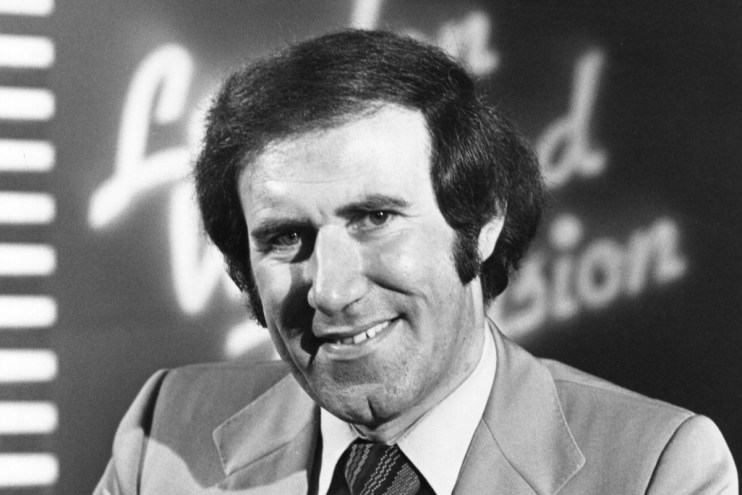
Today in 1949, Andrew Neil was born. He remains one of the most compelling figures in the British media landscape, writes Eliot Wilson
In a media landscape of interchangeable and forgettable talking heads, Andrew Neil remains an unmistakable and forceful presence. Readers who can recall a time when he was not a well-kent face in political journalism must now themselves be looking towards retirement, and Neil seems to have done everything: editor of The Sunday Times, founding chairman of Sky TV, BBC broadcaster for 25 years, chairman of The Spectator.
Neil celebrates his 77th birthday today, still one of the biggest beasts around. When he appeared in front of the House of Lords Communications and Digital Committee in 2024 to discuss “The future of news: impartiality, trust and technology”, he was box office: self-assured, razor-sharp, often combative. While peers wrung their hands, Neil gave a bravura performance.
“The reach of British journalism has never been greater… the world is our oyster. We have mobilised the English language to build our business model. It is the greatest asset we have and it allows us to break out of the barriers of our own country and reach across the globe.”
No declinism here. That says something profound about him, an unwillingness to accept waning fortunes which the Establishment used to find addictive, what was for many years referred to as “the British disease”. Unwary soi-disant champions of the “ordinary people” have sometimes misjudged Neil as a pillar of that Establishment: the pinstripe suits and pocket handkerchiefs, the willing acceptance of a champagne flute, the villa on the Côte d’Azur.
It is not a mistake made twice.
Andrew Ferguson Neil was born in Paisley in Renfrewshire, an industrial town founded on cotton and thread. When he was five, his family moved from a rented inner-city tenement to a semi-detached council house in Glenburn, Paisley’s first housing scheme. It was a largely working-class community but Neil’s parents occupied a strange liminal position: his father Jim had served with the Eighth Army in the Western Desert and ended the Second World War a captain, rising to major in charge of the Territorial Army in Paisley through the 1950s, and was an elder of the Church of Scotland. His mother Mary had found wartime work in the cotton mills to support the family, and they were, Neil has written, “plain, decent folk”, but somehow “never quite progressed into the middle class”.
The great driver for Neil, as it was for a particular section of Scottish society from the Enlightenment through to the post-War era, was education. There is some mythologising about the classlessness of Scottish schooling, but there was an underlying rigour and industry in the country’s schools and its four ancient universities.
Neil won a place at Paisley Grammar School, founded in 1586, his “passport to an excellent education and social mobility”. Then in 1967 he went to the University of Glasgow to read political science and political economy, the subjects of Adam Smith in the institution where he had been a professor.
As an undergraduate he was bright and intellectually voracious (he shared a first-year political economy class with my late father), but Neil also immersed himself in the combative debating of the Glasgow University Union and edited the student newspaper. He graduated in 1971, worked briefly for the Conservative Party and in 1973 joined The Economist. It was the beginning of an unpredictable career which is still not at its conclusion.
Big break
Neil’s big break was his appointment by Rupert Murdoch as editor of The Sunday Times in 1983. He was 34, self-confident and determined to bring about change, telling Murdoch the paper had to “shake off its collectivist mind-set to become the champion of a market-led revolution that would shake the British Establishment to its bones and transform the economy and society”. This was language to which the Australian mogul was receptive, though Murdoch and Neil were never wholly aligned in political terms.
The paper became vibrant and vital, covering Mark Thatcher’s shady business dealings, atrocities in Matabeleland overseen by Robert Mugabe and the secrets of Israel’s nuclear weapons programme disclosed by whistleblower Mordechai Vanunu. Its political compass was unpredictable: it supported the deployment of US cruise missiles in Britain and America’s invasion of Grenada, argued for a scaled-down monarchy, ran stories of an emerging underclass and “social tragedy of Dickensian proportions” and opposed the poll tax.
Neil left The Sunday Times in 1994, supposedly temporarily: his condemnation of corruption in Malaysia was obstructing Murdoch’s efforts to acquire a television franchise there, and Murdoch knew that business took priority over journalism. But Neil had also been increasing his broadcasting presence alongside his editorship. Murdoch named him founding chairman of Sky TV, part of News Corporation, when it launched in 1988.
He also became a regular contributor to the BBC’s output, and from the 1990s it became perhaps his principal platform: he presented Despatch Box, This Week, Daily Politics, Sunday Politics and Politics Live as well as occasional hosting duties on Newsnight.
Neil was, and is, a singular media performer. He has never sought to hide his unusual blend of radical Toryism, Atlanticism and impatience with what he identifies as cant. Sometimes over-ebullient, he shows a distaste for the Establishment and consensus which shows they still get under his skin. There is very occasionally something of the absurd about him, too florid, too cocksure, too dismissive. It has been reflected in aspects of his celebrity, including his notorious relationship with a former Miss India, Pamella Bordes, and the photograph of him, beloved of Private Eye, in a vest and baseball cap, embracing a much younger woman. It can irk him, but I suspect he also sees and perhaps even leans into some of the flashes of absurdity.
Nevertheless, he remains a formidable cross-examiner, a quick, incisive mind with an appetite for facts and a daunting work ethic. In 2019, even the fast-talking, sure-footed Ben Shapiro came off second best in an encounter Shapiro described as being “destroyed”.
Neil’s later career is marked by an outstanding success and a disappointing failure. For two decades, he was chairman of The Spectator, and in harness with a succession of editors, principally fellow Scot Fraser Nelson, he steered the magazine through stormy waters, built up an enormous print and digital circulation and made it financially sound and profitable, as well as influential if sometimes controversial.
By contrast, he spent just under a year as chairman of new entrant GB News, which he regards as the “biggest single mistake” of his career. Neil talked a good game in the run-up to the channel’s launch, dismissing suggestions it would simply be a British Fox News, a right-wing opinion channel. I think he genuinely believed GB News could be innovative and distinctive, analysing current affairs in its own way. To have argued so vehemently against the prevailing wisdom, only to see it essentially confirmed, must have stung.
Still Neil remains. “In a sense,” he once told an interviewer, “my whole life is a research project.” His appetite for news remains undimmed, as does his willingness to scrap with anyone if he thinks he is right. He is the product of a different Scotland, one which has all but disappeared but which I recognise so clearly from my parents’ generation. He has critics by the score, of course, and he has made mistakes. Yet his zest and energy are compelling. Imagining British media over the last half-century without him is hard; surely, too, it would have been a drier, more monochrome place.
Eliot Wilson, writer and historian; Senior Fellow for National Security, Coalition for Global Prosperity; Contributing Editor, Defence on the Brink