Mia Drennan: I was selling Macks in Debenhams – now I run a unicorn

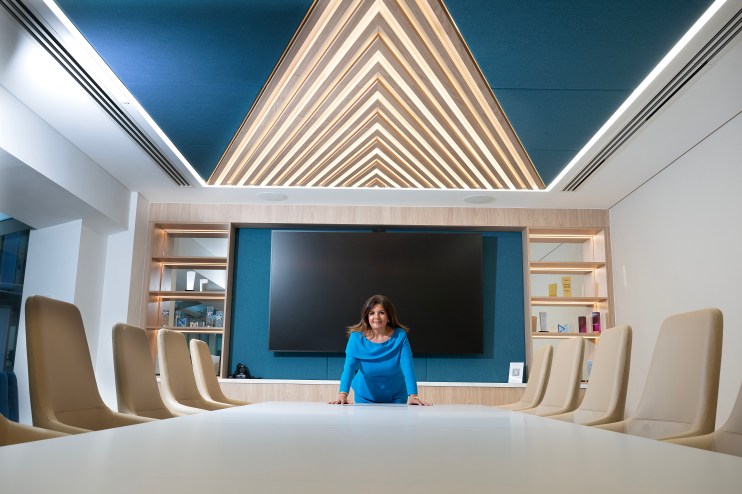
It took Mia Drennan 400 meetings to get her loan agency off the ground. Over 15 years later, she speaks to Ali Lyon about the recent investment that took the firm to fabled unicorn status, and what lies next.
It is half-past-five on a balmy Thursday evening and in a cavernous central London office, a gaggle young staff are putting the beers and prosecco on ice.
Glas – the loan agency whose Farringdon headquarters is being transformed into this open-plan pop-up bar – is celebrating, its co-founder Mia Drennan tells City AM, toasting a big deal that has been a long time in the making.
“I can’t say who, but we’ve just been mandated on a significant partnership with one of the biggest private credit firms in Europe,” she says. “And when we get a big deal like that, everybody celebrates together – because it’s the team that’s winning, not the individual.”
For Drennan, the driving force behind one of the UK’s newest unicorns, the past six months alone has already brought a string of milestones that mean today is not the first time that the Coronas have been cracked open for her excitable staff.
The year began with the news that Glas, a financial services firm that specialises in structure and repackaging highly complex debt instruments, had secured a colossal investment that took its valuation to the totemic $1bn mark for the first time.
British buyout firm Oakley Capital, along with Canadian pensions juggernaut La Caisse, injected hundreds of millions of pounds into Drennan’s financial plumbing scale-up, marking a new high-water mark for the firm she established more than 15 years ago.
And just months before securing that bumper investment, the founder was named EY’s UK ‘entrepreneur of the year’. The gong, the Big Four firm’s judges said, was warranted for Drennan “scaling Glas across 10 countries with minimal capital”.
It also means she will spend this week in the Monegasque coastline, rubbing shoulders with founders from 47 other markets against whom she is vying to win the audit giant’s global entrepreneur title.
Unlike some executives, who like to play down the importance of individual accolades, the straight-talking Drennan has no reservations branding the nomination “massive”. “Becoming the world entrepreneur of the year is a big deal,” she adds.
But these personal accolades do not appear to have come at the expense of milestones for Glas which, alongside the private credit partnership and investment, also recently worked on a “massive deal for Mr Musk” ahead of SpaceX’s record-breaking market debut.
The scenic route to unicorn status
Life hasn’t always been so clement for the matter-of-fact unicorn-running entrepreneur, who was adopted into an Essex-based working-class family at just six weeks of age. She grew up wanting to be a pilot at a time when the Royal Air Force didn’t accept women, and ended up “doing various temp jobs in banking and financial institutions”.
She then left the UK to become a holiday representative in Corfu, before returning to work at a call centre – “which was horrific” – and a sales assistant at Debenham’s where she manned the Mackintosh section.
But it was landing at KPMG – one of EY’s Big Four rivals – that lit the touchpaper of her City career. Stints at Citibank, the silver circle law firm Simmons and Simmons and the Bank of New York – now BNY – followed.
And when she was passed over for promotion by the latter investment bank at the last minute, the appeal of working for herself, and not having your future defined by the whims of faceless higher-ups an ocean away, became unignorable.
“I got pissed off,” she says, reflecting on the blow that would come to define the next 20 years of her life. “And so I quit. It was probably the best decision I ever made. I could have gone and worked for a competitor – but an old client was looking to set up in London, and I said, ‘I can help you.'”
She set up Square Mile Connections, a boutique headhunting shop for professional services executives, which she would run for six years. And then, yearning for a return to the kind of thorny, complex transactions that had dominated her corporate life before recruitment, she set up Glas – or Global Loan Agency Services – to act as a middle man of sorts in gargantuan debt deals.
Her timing could hardly have been better. Shortly after resolving to leave recruitment behind her, a certain bank by the name of Lehman Brothers suffered the largest collapse in financial history, setting off a chain of events that would swell into the global financial crisis.
Mega-loans and credit facilities struck during what turned out to be one of history’s largest debt-fuelled asset bubbles needed to those to be restructured and reorganised to reflect the more straitened financial times. And, along with her co-founder Brian Carne, it was Drennan who was on hand to pick through the mess.
“We did 400 meetings around the City of London, with just £6,000 to our names,” she says of the gruelling first few months of Glas’s existence. “And it was only after that that we got our first deal.”
That deal – the restructuring of German packaging firm Klockner Pentaplast – bred a string of other work, until the big breakthrough moment came in 2012. Still a fledgling agency, Glas was then appointed to comb through the £2.4bn mess that was Yell, the once swashbuckling firm behind the iconic Yellow Pages directory book that had hit hard times as companies and the customers migrated onto the internet.
“We got that deal in June 2012, just before the Olympics, which I’d actually signed up to volunteer at two years earlier,” she says. “I was having to leave work at 3 o’clock every day to do my two hours in Trafalgar Square, and my co-founder was like, ‘What are you doing?'”
After that, she enjoyed years of steady growth and expansion into a handful of markets, under which rocket boosters were strapped when, in 2022, it caught the eye of American private equity boutique Levine Leichtman. Accelerated expansion followed, taking the company deeper into the US and 10 other destinations around Europe and Asia, and in just four years it grew 10 times.
‘I’m still bullish on private credit’
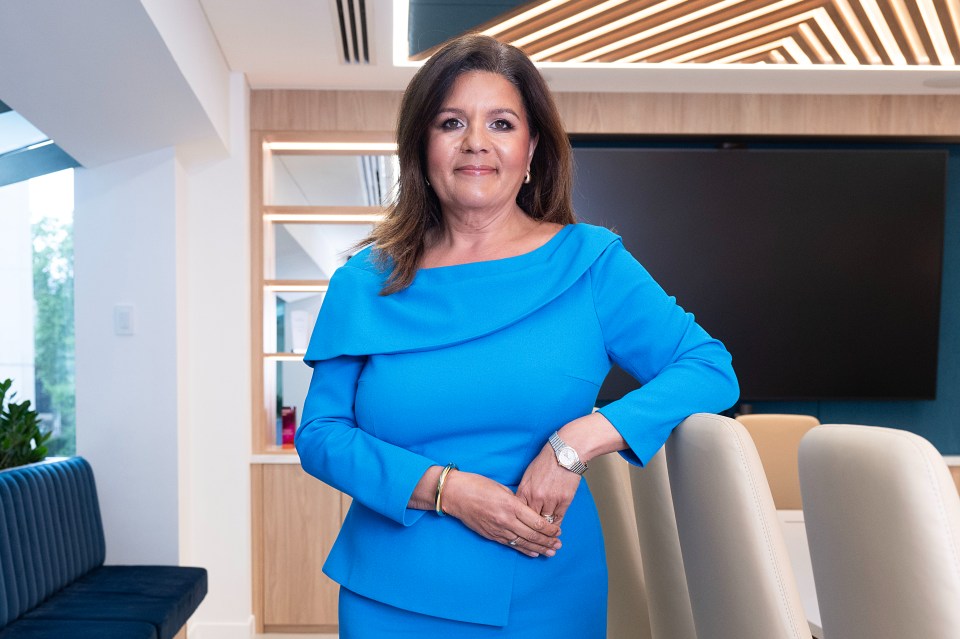
Now, with Oakley and La Caisse at her side, Drennan finds herself facing headlong into a financial world that has rarely been more uncertain. Geopolitical ructions, ballooning government debts, the light-speed rollout of the artificial intelligence and worries over private credit have all left markets in a state of schizophrenia, whipsawing from exuberant highs to bubble-popping sell-offs.
And of those four horsemen, it is private credit on which Drennan is particularly well-positioned to comment. More than half of Glas’s business now comes from structuring the kind of increasingly large direct loans being issued by so-called non-banks.
But as regulators and lawmakers become increasingly exercised about the shadowy industry’s potential to spark the next big crisis, Drennan is sanguine about the threat posed by global finance’s newest rainmakers.
“There’s a reason it’s been so successful. 80 per cent of mid-market lending in the US is with private credit,” she says. “I’m quite bullish on it. They serve a need in the market – and we’re actually going through a re-financing at the moment and are exploring private credit as well as banking providers.”
But if a downturn does arise, Glas will also be on hand to help mop up the messy pieces as it was in the fallout from 2008 and – more recently – during the pandemic and as the Iran war has continued to mount. “We saw this in Covid,” Drennan says. “Any conflict or challenge in the world, trading activity goes up. So we have lots of big syndicated loans, where the trading has spiked since the war. People aren’t necessarily originating new CLO [collateralised loan obligation] funds, but we’re effectively trading one for another.”
All of which means Drennan’s unicorn is – as its co-founder puts it – “perfectly hedged”. When times are good and animal spirits are up, the firm can work on the kind of complex credit deals required to fund big capex like those taking place in the AI space. When conditions deteriorate, they’ll be on hand too, making it all the more attractive proposition to Oakley.
The British boutique investor had to fend off competition from over a hundred other buyout firms, Drennan says, and in accepting Oakley its main partner, Glas became one of the vanishingly few large private companies to be backed predominantly by British capital.
Unicorns like Glas have increasingly found themselves having to cast their net to the US or Japan in search for chunky growth capital, with many of the newly spawned AI-related unicorn boasting almost entirely American investor bases. But for Drennan, having owners who are down the road, not half the world away, was only part of the appeal.
“I met the team on day one, and I walked in to find three ladies sat at the table, which is highly unusual,” she says. “When I did those 400 meetings around the City, they were predominantly men… and I don’t think change is as quick in those investment firms.”
The Square Mile is “absolutely” still an old boys’ club, in her view, which is part of the reason why she is launching a podcast featuring a as yet undisclosed line-up of Britain’s big name female entrepreneurs.
“I find myself in a position I didn’t ever expect to be in,” she says, outlining the thinking behind the foray. “I speak to a lot of female founder entrepreneurs who want a community – and this will be a not for profit place where people can go to and talk honestly about their challenges.”
Drennan will – as well as recounting those 400 gruelling meetings before landing her unicorn’s first deal – talk through “all the mistakes I made along the way”.
“It will be not for profit, but it will be ultimately a community where people can go and talk honestly about their challenges, particularly around things like investment, fundraising, things like that,” she says.
But before she sits down to tackle any of those meaty topics, there’s a celebration to be had; and a glass of prosecco – or Corona – with her name on it.