Meet the startup backed by Peter Thiel that wants to ‘hold journalists to account’

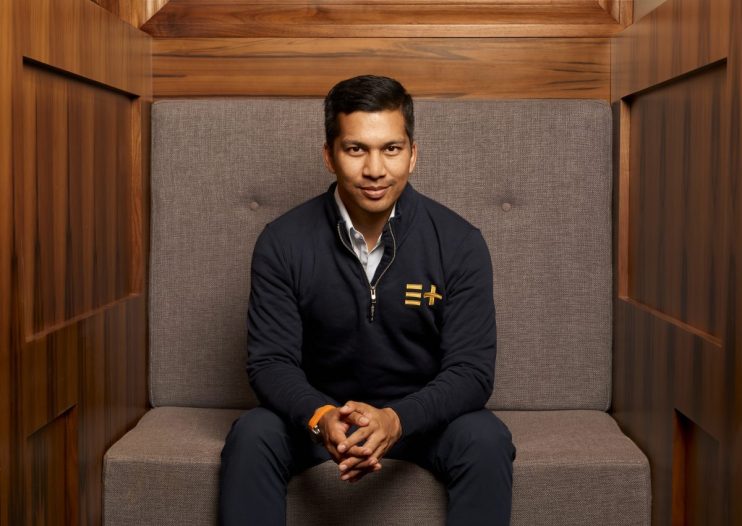
Founder Aron D’Souza spoke to Maria Ward-Brennan about his Peter Thiel-backed startup, which aims to hold journalists accountable by providing real-time ratings and investigations into their reporting practices.
There exists a lively debate about the extent to which AI could replace journalists, but before it does that – could it develop a hold over the media in other ways? Objection, a new AI platform founded by entrepreneur Aron D’Souza and backed by investors including Palantir and PayPal founders Peter Thiel and Balaji Srinivasan, promises a new way of holding journalists and the media to account.
The platform is promoted by D’Souza and Thiel, who met at Oxford University, after their involvement in wrestler Hulk Hogan (Terry Bollea )’s 2013 lawsuit against gossip media site Gawker over its publication of a sex tape featuring the star.
“It’s the first time ever in American history that a major media outlet was truly held accountable for what they wrote, and Gawker went bankrupt after that,” D’Souza stated.
The case, which overall took $10m to challenge, was funded by Thiel, as D’Souza noted, “he had his own reasons why he wanted to challenge Gawker”.
Gawker had previously outed the tech billionaire Thiel as gay in a 2007 blog.
D’Souza said the case “taught me that justice is highly inaccessible to most people” and the Hulk, who, despite being “a world-renowned figure…could not afford to prosecute his case through the courts”.
Now D’Souza, who also founded the Enhanced Games, a doping version of the Olympic Games, is essentially industrialising what was done with Gawker.
But this time, D’Souza is deploying AI and former intelligence officers as investigators, including ex‑CIA, FBI, and MI6 figures, to study complaints about journalism submitted to the platform – for a fee.
Criticism of expensive lawyers
Objection’s launch press release states that “For centuries, the press has acted as the de facto judge of public truth. Outlets investigate, publish, and pronounce verdicts on reputations — with no efficient mechanism for their claims to be rigorously examined in return.”
D’Souza, who is critical of the current legal system, says that the court system is not designed to benefit people, corporations or even billionaires. Instead, he says, it is designed to benefit lawyers.
He notes that lawyers are billing thousands of dollars an hour, adding, “I don’t think anyone’s time is worth $2,000 an hour”.
“Lawyers are making more money than the bankers”, he says, claiming that many earn more than partners at Goldman Sachs and suggested that the legal sector’s compensation “has gone off the charts”.
AI: Judge, jury and executioner?
D’Souza’s says that “in 1970, 70 per cent of Americans trusted the news media; today, that’s less than 30 per cent.”
In the UK, he suggested that public trust in the media is “probably lower” than in the US. “The UK is where Rupert Murdoch and Conrad black, the Media Barons of the 80s, proved their business that created Fox News and the politicised New York Times that we have today,” he stated.
Unlike in the US, where the ‘right to free speech’ can create issues in libel litigation, English libel laws are very strict. Newspapers and media outlets also have editorial codes that journalists and editors must follow, including having integrity and accuracy at the forefront.
The likelihood of successfully suing a journalist in order to stop a story saw the practice of SLAPPS, the legal route in the UK to gag journalists, being so active that it is currently awaiting a Bill by the UK government to restrict its use.
D’Souza’s argument is that while once upon a time a journalist’s job was to sell a complete newspaper, today their role is to “generate articles with compelling headlines that [lead to] viral media distribution”.
He is critical of journalists blending fact and opinion, chasing clicks with viral headlines, and – a particular bugbear – reporters turning long interviews into mere “selective” extracts.
The Objection platform, which rolled out this week, will give every journalist in the world a real-time ratings card. The methodology focuses on four aspects of journalists’ pieces: the use of anonymous sources, emotive language, clickbait constructions, and politicised language. Scoring badly in these areas will downrate a journalist’s credibility score – as judged by Objection.
An investigation on the platform can cost “between $2,000 and $10,000” and last about half a week, with an ultimate decision made by the AI judge. D’Souza says this makes a system of redress more affordable compared to the cost of the current legal system.
However, compared to a libel trial in a US or English court, the conclusions are not legally binding.
Ultimately, D’Souza wants the AI platform to “become a Court of Arbitration” where parties to agree to use Objection for disputes before conducting interviews or speaking to journalists.
The website shows 10 live cases in the system, including one with a judgment against CNN, finding against a story that alleged podcast giant Joe Rogan promoted the use of a horse dewormer, Ivermectin, during the Covid pandemic.
The other live investigation involves a Wall Street Journal story alleging that US President Donald Trump wrote a 50th-birthday note to Jeffrey Epstein that contained the message “may every day be another wonderful secret”.
On condition of anonymity…
Supporters of D’Souza’s crusade may say it helps to level the playing field; providing a form of redress to those who can’t afford to engage a lawyer. But critics are concerned that the system appears stacked against journalists from the outset – not least given its hostility to the use of anonymous sources, which can serve as the foundation for investigative journalism.
“In our ratings rubric, an anonymous source is valued, you know, as low as a rumour. Because ultimately, if it can’t be replicated, then it’s not a trustworthy piece of information,” D’Souza stated.