Less magic, more panic in Disney’s AI deal

It was always going to happen, wasn’t it? The moment AI video tools became proficient enough to conjure something that looked vaguely like a princess, or a Jedi, Disney would ultimately have to choose: spend the next decade playing a game of Whac-A-Mole in court, or license its assets in-house.
The House of Mouse, it seems, has opted for the latter. According to a new Enders Analysis report, its decision to licence elements of its intellectual property (IP) to OpenAI’s Sora is not a ‘moonshot’ into the future of storytelling, so much as a pragmatic effort to “regain agency in a consumer ecosystem dominated by rampant unlicensed IP usage”.
The report dubbed the move as “necessary to staunch damaging infringement”, framing it as a defensive move rather than an aggressive expansion play.
A Sag-Afra spokesperson said the industry should be “worried” about the implications, adding that the move is “unlikely to generate meaningful near-term financial upside”.
The internet was already playing with Disney’s toys; now, Disney just wants to make sure the play happens inside its own sandbox.
Disney’s Sora threat
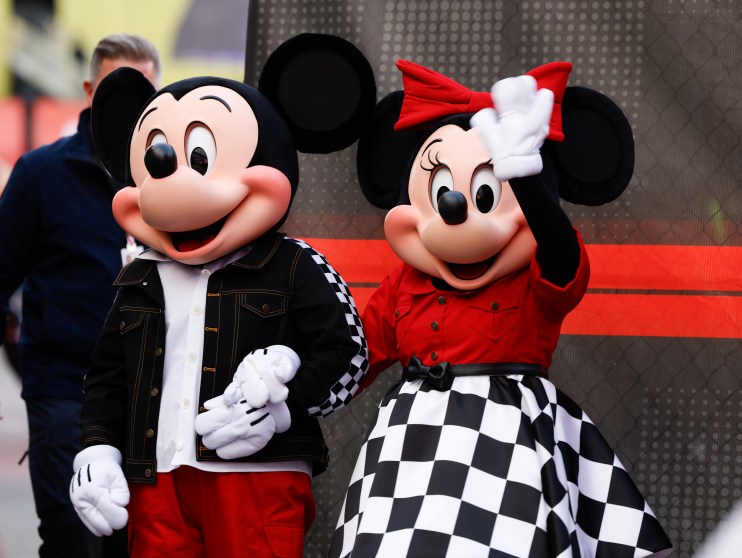
For decades, the American studio’s business model has largely leaned on control, where its characters posed as assets, governed by rules, brand codes and revenue waterfalls that stretch from the big screen to theme park gift shops.
The system relied on Disney being the sole arbiter of where Mickey appeared, and how he behaved. But AI has pulled the rug from under its feet.
Sora’s ability to produce short-form content at the drop of a hat meant Disney IP was increasingly being imitated and used without comprehension or oversight.
Sag-Afra describes this as a “structural erosion of control” unless formal licensing channels were established.
Enders suggests the OpenAI agreement is therefore an act of containment – a way to channel activity that was effectively already happening into a framework with guardrails it could control.
The deal is notably finite – a three-year term, narrowly scoped to Sora and OpenAI’s image tools.
This provides Disney with an escape hatch. If the numbers underwhelm, or the ecosystem sours, they can simply walk away unscathed.
Interestingly, the compensation isn’t a simple licensing fee. Disney, instead, has secured a $1bn (£749m) equity stake with warrants in OpenAI, betting on the platform’s long-term value rather than immediate cash flow.
At the same time, the phenomenon itself is not entirely new. Fan-generated content has long been part of how entertainment franchises stay culturally relevant between official releases.
“User-generated content, especially in video form, is in many ways a great thing for franchise owners,” said Gareth Sutcliffe, analyst at Enders Analysis.
“It signals what’s working and what isn’t with the IP rather than being perceived as direct competition. It allows for an expression of fandom to keep characters and stories alive between movie or TV series releases.”
Still, he added that the key challenge for rights holders is ensuring they share in the financial upside from that activity.
“The key for all copyright owners, including Disney, will be to ensure they receive appropriate financial upside from user generated content that uses specific AI tools, through a royalty mechanism that reflects the usage of that IP.”
Fragmented assets
Historically, rights were licensed at the level of films, or series. But with the ascent of AI, value may be attached to fragments instead. Think of a character model, a recognisable trope or environment.
Imagine, then, not a streaming deal for a franchise, but a metered appearance: a stormtrooper cameo in a fan-generated clip, tracked and monetised; a princess likeness in a short-form parody, counted and costed.
Because Disney’s characters are so visually distinct, they are, as Sag-Afra said, “materially easier to detect” and monetise within AI outputs, than the murkier assets of smaller studios.
Likeness rights layer over copyright, and back catalogues lack the character-led IP architecture that makes Disney’s approach workable.
And, as the Enders report shows, there remains no universal or transparent framework for revenue sharing on AI-generated outputs.
There is also the fact that OpenAI itself is still loss-making, and that the economics of consumer video AI remain nascent.
So, while publicly, the partnership reads as forward-looking. Privately, it functions as a perimeter fence, where the arrangement became ‘necessary’’ for Disney to stem infringement and reassert brand control.
Disney knows that it’s better to be inside the machine, than endlessly trying to police it from the outside; the magic, as ever, residing in ownership.