John Caudwell and Stuart Rose blast ‘tax creep’

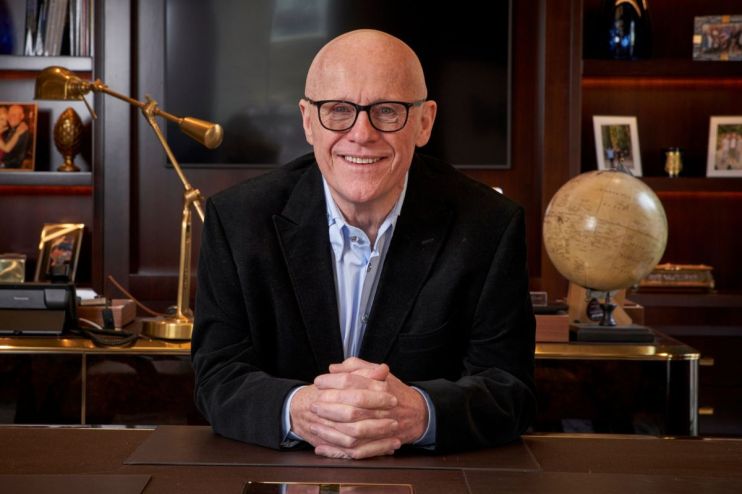
Billionaire political donor John Caudwell and retail bigwig Lord Stuart Rose have hit out at the “creep of taxes” hitting businesses across the country.
The influential business veterans have joined a campaign led by entrepreneur group Helm calling on the government to “stop the creep of taxes on wealth creators”.
A letter, which has been signed by Pimlico Plumbers’ former boss Charlie Mullins and Gail’s Bakery chairman Luke Johnson, urges Labour to stop rolling out new tax hikes on founders, including levies on dividends, capital gains and business assets.
Lord Rose, the former chairman of Asda and Marks & Spencer, said he had “never been more concerned about the cost of doing business” and added that taxes and regulation had become “serious impediments to growth and employment”.
“Employers’ National Insurance alone took £100m a year out of one supermarket,” Rose said, referring to the impact of former Chancellor Rachel Reeves’ £25bn tax hike in late 2024.
“Multiply that across the economy and it is easy to see why investment has stalled.”
Caudwell separately told the Telegraph he did not believe Labour were “electable” despite being a donor to the party before the last election.
The open letter comes ahead of John Healey’s Budget on 28 October. The new Chancellor has promised to offer businesses “breathing space” after the private sector was hit with a high share of tax hikes under Reeves.
The letter concludes that a “steady creep of tax rises and reductions in entrepreneurial reliefs is making it harder to build and scale a business in the UK”.
Pre-Budget lobbying underway
Economists are raising the alarm on the design of the tax system and the changes that have taken place over the century.
One Westminster think tank argued that the tax system has bcome more damaging for growth in the last 15 years.
The Institute of Economic Affairs (IEA) has said that the overall system has deteriorated over the last 15 years such that incentives for investment have been “eroded”.
Tom Clougherty, former chief of the right-leaning think tank, said twice raising taxes on investment at moments of economic crises was a “major error, and likely had a chilling effect on growth”.
Research suggested that levies on investment – via corporation tax, personal taxes on dividends and capital gains tax changes – have climbed by 10 percentage points since the Great Financial Crisis of 2008.
The new report pins the blame on successive Tory and Labour governments for targeting investors and workers over less productive parts of the economy. Since 2024, the Labour government has cumulatively raised about £65bn in taxes, with more than half impacting businesses.
“The tax system didn’t cause Britain’s growth slowdown, but it has made bouncing back much harder than it needed to be,” Clougherty said.
“Looking back, it seems extraordinary that we have twice responded to major economic crises by sharply raising taxes on investment – but that’s what happened.
“My fear is that on current trends the 2020s and 2030s are going to be much worse in this respect than the 2010s. The tax system is probably a greater threat to enterprise and initiative today than at any point in the last 35 years.”
Taxes hit personal incomes
The paper by the IEA highlights research by the accountancy body ICAEW suggesting that the HMRC handbook has more than tripled in size from 7,250 pages to about 23,500 pages.
Clougherty also argued that the UK would rank above its current level of 32 out of 38 on the Tax Foundation’s International Tax Competitiveness Index had taxes on personal income remained at pre-financial crisis levels.
According to the IEA’s research, the burden on personal income has swollen from 44.5 per cent of government revenue in 2000 to 51 per cent of receipts some 24 years later.
Clougherty pointed out that the number of people paying the additional rate of tax, about 5.5m more since 2000, has been a “striking change” in the UK economy.
The withdrawal of the personal allowance for people earning more than £100,000 hits 500,000 more people than when it was initially introduced.