Jeffrey Archer (1940-2026): A writer of fiction in all senses

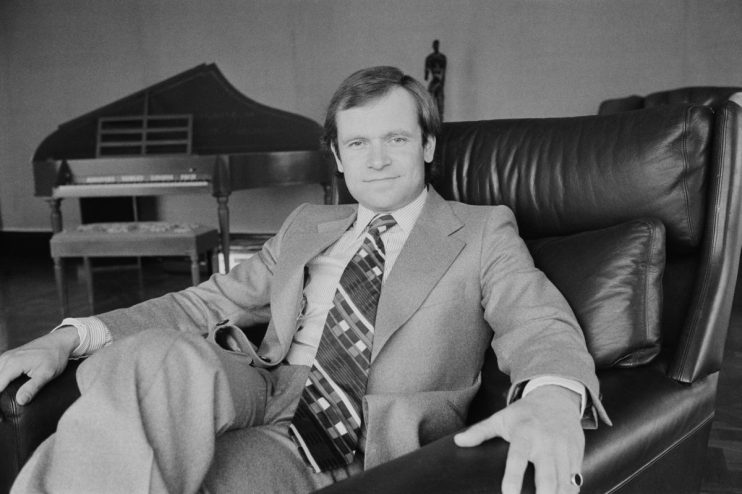
Following the death of novelist and former political Jeffrey Archer, Eliot Wilson looks back at a complicated life
At the beginning of October 1999, the election for the new post of Mayor of London was only seven months away. Ken Livingstone, left-wing MP for Brent East and the last leader of the Greater London Council before its abolition in 1986, wanted to be Labour’s candidate, while Tony Blair’s New Labour camarilla would have preferred almost anyone else.
The Conservatives saw internal Labour division as a straw and clutched at it. Over the summer of 1999, a frenetic campaign saw novelist Jeffrer Archer and former transport minister Steve Norris battle it out, and Archer won the ballot of party members 71 per cent to 29 per cent.
53 days later it was all over. The News of the World published allegations that Archer had perjured himself in his 1987 libel trial, and he withdrew his nomination.
That Archer had won the candidacy so convincingly in the first place said something profound about him and about the Conservative Party. Jeffrey Archer was a proven and habitual liar. His attitude to financial propriety was casual. Yet when he was summed up, it would be under the rubric of “colourful” or “irrepressible”.
More than any unreliable narrator before Boris Johnson, an element of the Conservative faithful saw his charm and persistence, a Panglossian belief that tomorrow would be better than today, and liked it. He was a lovable rogue whose flaws were offset by this optimism, in a party in which harsh medicine and hard work were often preached.
The son of a conman
Jeffrey Howard Archer was born on 15 April 1940 and grew up in Weston-super-Mare in Somerset. Even as a child, Archer was a fabulist: his mother Lola was a journalist, but he variously described his father William – 64 when Archer was born – as a Royal Engineer, survivor of the fall of Singapore or British consul there (Singapore, a Crown colony, had no consulate), a sergeant in the Somerset Light Infantry and a Distinguished Conduct Medal winner. William Archer was none of these; he was a bigamist and a conman, who died when Jeffrey was 16.
The children of conmen are victims, of course, and often seek solace in the interstices between truth and falsehood: David Cornwell, whose pen name was John le Carré, was an obvious example. In a different way, Archer doubled down on this malign inheritance. He was forever an ambiguous character, capable of misdirection and allowing mistaken inferences to go uncorrected. He won a scholarship to Wellington School in Somerset, an admirable feat, but was relaxed if people assumed he had attended the grander Wellington College in Berkshire.
He left school after his O-levels and drifted through some jobs while inventing others after the fact, almost as if trying on the roles. He did undertake basic training with the Duke of Wellington’s Regiment, then was given a place at Sandhurst but quit without warning after a few months. Archer was also able and determined enough to get through training and spend five months in Brixton as a constable in the Metropolitan Police, but, again, he quickly turned away from the thin blue line.
He spent some time – how much and where has never been verified – in the United States. Later he claimed to have graduated with a BSc from Berkeley, but the university has no record of him.
Having shown genuine promise as an athlete at school, Archer became a public school PE master. He was awarded a fellowship of the International Federation of Physical Culture, and proudly bore the post-nominal letters FIFPC; in fact it was a postal-based body-building club.
Archer went up to Oxford in 1963 to undertake the one-year extramural Diploma of Education. No-one knows how he was accepted, but once there he attached himself inseparably to his host college Brasenose, and spent three years in the city completing his one-year course. He became President of the Oxford University Athletics Club, but more than that he established a claim, shaky but real, to being an “Oxford man”.
Having persuaded the Beatles to participate in an Oxfam fundraiser, Archer then worked as a charity fundraiser. But his vaulting ambition steered him towards politics. The Conservative Party of the mid-1960s was not impenetrable but still required the “wrong” sort of person to work twice as hard for the same result. It was a pressure which exerted a malign effect on the personalities of Edward Heath and Margaret Thatcher, and would leave John Major, later a good friend of Archer, perennially sensitive. Of course CVs and personal background were massaged, but Archer’s embrace of fiction proved to begin years before he wrote his first book.
The political years
In 1967, Archer was elected to the Greater London Council for Havering, at 27, the youngest councillor ever, he said. Actually he was not even the youngest councillor elected that year. When the right-wing Conservative MP for Louth, Sir Cyril Osborne, died in 1969, Archer snatched the nomination and was elected at the December by-election. He claimed to be the youngest MP: he was not, by more than seven years. But in an age before Google and Wikipedia, people were more likely to believe what they were told.
Darker clouds began to gather after his first few years as an MP. First he had to settle a dispute over expenses he had claimed when fundraising for the UN Association. But there was an existential threat on its way, for which he bore little responsibility except ambition. A friend had told him that Aquablast, a Canadian cleaning firm, was on the verge of making enormous sums of money from a new product. Archer borrowed heavily from Anthony Bamford of JCB to invest in the company, which proved to be a scam.
When Aquablast collapsed in 1974, Archer, over-leveraged and in debt to the tune of £500,000 (around £6m today), was facing bankruptcy. If he became bankrupt, he would be disqualified from the House of Commons, so he anticipated the worst by stepping down at the October 1974 election. Now he needed serious money.
Archer was always driven and had implacable self-belief, which came to his rescue. Having exhausted other avenues, he decided to write a best-selling novel. On hearing this, his Oxford athletics friend Adrian Metcalfe challenged him, in an exchange which summed up Archer.
“Jeffrey, you can barely spell, let alone write.”
“That doesn’t matter, I can tell stories.”
Both had a point. Archer wrote Not A Penny More, Not A Penny Less, a rags-to-riches tale drawing on his own experience, published first in the US then the UK in 1976. After a slow start, it performed well, then astonishingly well, with the UK paperback selling 3.5m copies. And it heralded the debut of one of the most commercially successful British authors of the age.
Archer was a disciplined writing machine. After as many as 17 drafts, a novel appeared every few years, and the public loved them. Kane and Abel (1979) sold 34m copies worldwide and was adapted for television in 1985. They were undemanding, the writing pedestrian and the dialogue sometimes comically bad. But he wrote to make money, and he understood a formula which appealed to the public in their millions. He was frequently dubbed “the master storyteller”, and that, not the craft of writing or the texture of characterisation, was the key to his success.
With his days in the Commons behind him, Archer became a popular speaker with the Conservative Party membership. In 1985, Margaret Thatcher appointed Norman Tebbit as party chairman, and chose Archer, whom she called “the extrovert’s extrovert”, to be deputy chairman. She understood Archer’s charm as the lovable rogue and knew that it touched parts of the party membership more staid politicians could not reach.
Tebbit was apprehensive; Willie Whitelaw, Thatcher’s irreplaceable deputy, warned her Archer was “an accident waiting to happen”.
It did. In October 1986, The News of the World alleged Archer had paid sex worker Monica Coughlin £2,000 to go abroad; The Daily Star then printed what everyone had been thinking, that Archer himself had paid Coughlin for sex. Archer resigned after 13 months as deputy chairman and promptly sued The Daily Star for libel.
The trial was extraordinary: in his instructions to the jury Mr Justice Caulfield conjured up the testimony of Archer’s wife, Mary: “Remember Mary Archer in the witness-box. Your vision of her probably will never disappear. Has she elegance? Has she fragrance?”
The judge moved on to the plaintiff: “Is he in need of cold, unloving, rubber-insulated sex in a seedy hotel round about quarter to one on a Tuesday morning after an evening at the Caprice?”
Archer won his suit and £500,000 in damages. Once more the darling of the Tory grassroots, in 1992 he was created Lord Archer of Weston-super-Mare. He was tipped for party chairman in the mid-1990s, before the establishment of the London mayoralty offered a final chance of office and power.
But he had lied during the libel trial, having solicited false alibis for himself. In 2000, he was charged with perjury and perverting the course of justice, and was convicted and sentenced to four years in prison. He was released after two years and published three volumes of A Prison Diary, each portentously subtitled after a part of Dante’s Divina Commedia. Archer was seemingly shocked by what he saw and heard, and recorded it with the earnestness of Edward VIII’s “Something should be done to get [South Wales miners] at work again”.
Archer would not have denied being lucky. Living in the Old Rectory in Grantchester, with a Thames-side penthouse full of expensive art where he hosted Krug-and-shepherd’s-pie parties, he was rich from his early 40s until his death on 5 October 2026, aged 86. His final novel, Adam and Eve, was published the same day. He sold 320m books worldwide, and was buttressed by extraordinarily indulgent family and friends.
Many of his social circle attest to an intense, almost guileless charm, and there was something winning about his refusal to accept defeat. One of his oldest friends, critic Sheridan Morley, explained: “The best way to think about Jeffrey is to treat him as if he comes from another planet… he thinks [it] is going to be all right in the end.”
He was lucky in his spouse of 60 years, distinguished (and “fragrant”) scientist Dr Mary Archer. She was loyal and discreet, and could only bring herself to approach his relentless mendacity by admitting he had “a gift for inaccurate précis”.
It was not “inaccurate précis”. Archer had since his youth gone well beyond the bounds of setting facts in the best possible light and perhaps helping their lustre a little. Some of the things he claimed simply were not, could not have been true, but he was more than willing to invent, amend or delete when it was to his advantage. In Morley’s phrase, it was “all right in the end”, at least for him.
A “master storyteller” and well-connected multi-millionaire, Archer was blessed by commercial appeal and a fearsome work ethic. Many found him personally kind and delighted in his hospitality. As a behemoth of books, he was unstoppable, despite a pedestrian prose style. But he was also a liar, tried and tested. He wrote fiction for a living as well as let it shape his personality. Each aspect has its cheerleaders, but we all of us have to judge for ourselves.
Eliot Wilson is a writer and historian