I’m an AI founder – here’s why I agree with the Pope about AI

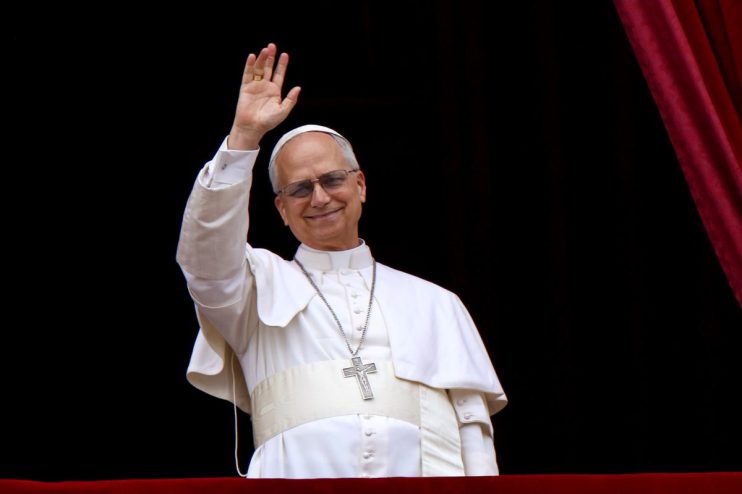
Pope Leo XIV’s has produced the most profound piece of writing on AI – critiquing how extreme capitalism uses AI to homogenize knowledge and concentrate power, says Lewis Liu
When I was 18, I took a religious philosophy course as part of the core curriculum at Harvard. When we dove into the Tower of Babel, I had an immediate allergic reaction to the story. Why can humanity not build a tower bigger than God? Why can we not unify humanity so we can all speak the same language? My instant inclination was to rebel against it, and, being an aspiring painter at the time, to paint a massive Renaissance-style canvas showing humanity using science and machines to rebuild the Tower of Babel in the modern era, defeating God in the process.
That was 20 years ago – before I became a father, before I travelled the world and experienced its infinite diversity, before I spent years building AI systems in the real world, and before Pope Leo XIV published his encyclical Magnifica Humanitas: On Safeguarding the Human Person in the Time of Artificial Intelligence. Pope Leo named himself after Leo XIII, the pope who presided over the first great industrial revolution and whose landmark 1891 letter Rerum Novarum (“new things”) became the founding document of the Church’s social teaching. The parallel is deliberate.
I originally planned to write this column as: “I read the Pope’s entire letter on AI so you don’t have to.” Having actually read it, I’ve changed my mind. If you care about AI’s impact on humanity, I implore you to read it yourself. Despite being non-religious (though my wife is Irish Catholic and my older son recently received his first communion), this is singularly the most profound piece of writing about AI and society I have ever encountered, including academic papers, governmental briefings, and Dario Amodei’s self-congratulatory 20,000-word blog post.
So instead of a summary, think of this as a reading guide through my lens. If I were to distill the encyclical to its essence, it would be this: the culture of extreme capitalism has produced AI systems built on intellectual property theft that homogenise knowledge toward the worldview of their builders. Armed with this technology, a small group can amass unprecedented economic and military power, and usher in a new era of digital slavery and colonialism. The only antidote is for all of us, individually and collectively, to recommit to what makes us human: to push for genuine AI governance, economic reform and the democratisation of AI’s benefits; and ultimately, to choose love for each other over love for power.
The Tower of Babel and the homogenisation of knowledge
The Tower of Babel sits at the heart of Pope Leo’s argument. In his reading, Babel was not simply an act of rebellion, it was a project of dangerous uniformity. A single language, a single technology, a single direction. The diversity and plurality that makes humanity human was sacrificed at the altar of efficiency and self-aggrandisement. God did not destroy the tower out of jealousy; the tower destroyed itself, because any civilisation that flattens human diversity in pursuit of dominance contains the seeds of its own collapse.
Pope Leo sees AI through exactly this lens: a technology that, through model bias and the concentration of economic power, homogenises knowledge toward the worldview of its builders, allowing a small group in Silicon Valley to shape how billions of people understand reality itself [Paragraphs 1, 7, 10, 102, 104]. I have been writing about this for years: knowledge collapse is one of the most insidious and dangerous consequences of AI, and it took a Pope to give it the theological weight it deserves.
A critique of modern capitalism
This concentration of power is made possible by a very specific economic system. Pope Leo’s critique of modern capitalism is exceptionally sharp, even by papal standards. He begins at the foundation: is private property inherently good, or must it yield under certain conditions to the common good? His answer is unambiguous: private property is always subordinate to what he calls the “universal destination of goods” [Paragraph 66]. He then goes further, stating that in today’s system, major technological and economic actors exercise de facto power that exceeds that of many governments [Paragraph 71]. For a document coming out of the Vatican, that is a striking thing to say explicitly.
He goes on to condemn over-financialisation (finance extracted for its own sake rather than in service of human need) and questions GDP as a meaningful measure of societal progress, arguing that growth which bypasses human dignity is not progress at all [Paragraphs 159-160]. Most pointedly, he takes aim at surveillance capitalism: the systematic harvesting of personal data to extract maximum commercial value from individuals, leaving zero surplus for the person themselves [Paragraph 171]. Pope Leo XIV is the first American pope, and what is telling is that he is articulating, through a moral and theological lens, exactly what the vast majority of ordinary Americans already feel viscerally: that late-stage digital capitalism is working magnificently for the top 0.01 per cent, and failing everyone else.
The new digital slavery
From capitalism’s failures, Pope Leo draws a direct line to their human cost. The extreme wealth inequality generated by AI-fuelled late-stage capitalism is not just an economic problem, it is a moral catastrophe. What makes this section of the encyclical particularly striking is his method: he holds the Church itself accountable first, acknowledging its historical failure to condemn slavery clearly and early enough [Paragraphs 176-177]. This is not a pope lecturing from a position of institutional innocence. He is saying: we got it wrong before, and we cannot get it wrong again.
Having established that moral baseline, he makes his central accusation directly: that this road leads to a new form of slavery. Not metaphorically: he writes that “new forms of slavery are fuelled by economic chains and digital infrastructures” [Paragraphs 178-179]. The language of slavery and colonialism runs throughout the encyclical, and deliberately so. Pope Leo is not reaching for shock value. He is making a precise argument about dignity and the abuse of absolute power. If automation strips people of meaningful work (and with it their sense of purpose and self-worth) [Paragraphs 149-154] while AI-powered drone warfare and surveillance give a small group coercive physical dominance over everyone else [192-200], then the combination is complete: a handful of people controlling both what billions think, through knowledge homogenisation, and what billions can do, through military and technological supremacy. The Tower of Babel, in other words, was not a warning about the past. It was a prophecy about now.
From the culture of power to the civilisation of love
Pope Leo’s answer to all of this is not primarily regulatory or political, though he calls for both. It is cultural. Without naming Silicon Valley explicitly, he delivers a precise indictment of its animating spirit, which he calls “the Culture of Power”: the singular, totalising obsession with optimisation, dominance and scale at the expense of everything else [Paragraph 113]. Against this, he poses what he calls “the Civilisation of Love”, and whilst the theological dimensions of that phrase are obvious, his secular prescription is equally clear: meaningful AI governance, genuine economic reform with a markedly more redistributive bent, and the democratisation of AI’s benefits. Ultimately, though, the encyclical’s deepest appeal is not to policy but to something more fundamental: love for one another, which for Christians means love for God, and for everyone else means love for humanity itself.
I will be honest: this encyclical moved me. My work on AI governance and privacy is sometimes dismissed in Silicon Valley as unsexy and backwards looking. Reading this, I was reminded that there are people (and, it would seem, a Pope) who believe that there is a better way to integrate AI with humanity. Amplifying individual human dignity is not a soft concern to be traded away for market share; it is the entire point.
It took me 20 years, and the experience of having built parts of the Tower of Babel myself, to finally understand that story. Last October, I wrote a column arguing that AI, through knowledge collapse and the homogenisation of thought, risked reversing the Renaissance and plunging us into a new intellectual Dark Age. I used a Medieval Catholic Church analogy to warn about diversity of thought being extinguished by a singular algorithmic orthodoxy. I wrote it as an AI founder, artist, and physicist — not knowing that seven months later, an actual Pope would articulate the same argument from two thousand years of theological tradition. That convergence, across such different vantage points, should tell us something.
If I were to paint that canvas again, I would not paint humanity defeating God. I would paint the Book of Nehemiah: Jerusalem rebuilt not by a single architect with a master plan, but by a diverse people, each contributing their own talents to a shared wall. The modern version of that scene, I now believe, is each machine amplifying the gifts of each individual – working together, in all our plurality, to rebuild a broken world.