Has Apple accidentally made the perfect phone for old people?

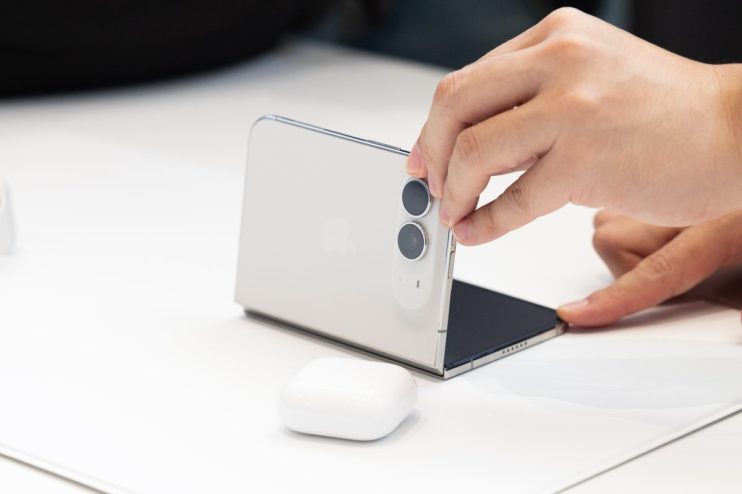
Has Apple accidentally built an age-tech device without calling it one, asks Paul Armstrong following the release of the first foldable iPhone
Apple’s new CEO, John Ternus, announced iPhone Duo with plenty of expectation on his shoulders after months of leaks. No one’s talking about how the iPhone Duo might just accidentally be the best phone out there for seniors that’s not remotely marketed to them.
A lot of people missed that the promo videos featured a lot of older people using the iPhone Duo. Sure there was a mix, but Apple clearly knows how well this phone could work for seniors even if it’s marketed towards tech enthusiasts. 90 per cent of over-50s have a smartphone, so iPhone Duo isn’t a massive change, more of an easy-to-understand evolution.
The price at £1,999, even with instalment or buy-now, pay-later payments, is a lot of money with the lowest configuration possible. Lots of hot takes are pushing that aside, but during a cost of living crisis, it means Apple is considering the different markets and needs the iPhone Duo out in the wild to do the convincing. Don’t get me wrong, the price could have been a lot worse (and is at £3,000 for 2 TB of storage), but £1,999 isn’t unthinkable or out of reach to not look like or feel a Luddite to children or grandchildren, be able to read without feeling half blind, and generally feel like the device is built for you.
Apple’s 7.6-inch display is 50 per cent larger than the iPhone 18 Pro Max, while the nano-texture surface reduces glare. Right now, if you have bad eyesight, Apple and co. simply offer to ratchet up the text size so that you become a security risk every time you open your phone. When you have a phone that can become as big as an iPad you and designers can make different choices. App developers should be salivating over the silver generation dollars they might be able to access now if you look at their screen time.
The iPhone Duo is perfect for seniors
Apple doesn’t need this to be a massive hit at home, it’s mainly a China growth play, and it’ll sell plenty of both types of phones regardless, but it’s a great example of a silent market. Apple is a trusted brand among seniors, they like the focus on privacy, security, the ‘it works’ factor and up until recently, it wasn’t AI-everything, everywhere, all at once. The big issue for this demographic is often seeing the text on smaller phones. Fast forward to a device that works whatever way you pick it up, has a large screen when needed and a familiar-to-this-generation Pencil and you have a device that speaks to a demographic without saying a word.
The camera setup on the iPhone Duo is also going to attract seniors. Screens everywhere means it’s easier to adjust quickly. Fold in (pun intended) the ability to unlock with a finger, stand it up, use it as an alarm clock, and the iPhone Duo looks like it’s been made so that people can benefit from accessible design without identifying themselves as having accessibility needs. Marketing the iPhone Duo explicitly as a senior device would probably make it less attractive to seniors.
The Pencil element may be more important than it looks. The USB-C Pencil will work with iPhone Duo in a few months which will be important for those with reduced dexterity now or in the future. Signing documents, annotating PDFs and writing notes should all become easier. Gone are the days when tapping a small interface box frustrates the user and scuppers progress. The familiarity of the Pencil could be more important than a lot of the die-hard Pencil skeptics would like (Steve Jobs didn’t like styluses as the primary input option).
The device isn’t perfect, but when was the last time you thought a phone considered your age? The iPhone Duo is also heavier and thicker when folded than conventional smartphones most people are used to. Anyone with reduced grip strength, arthritis or tremors probably isn’t going to pick this shining beacon of a £1,999 insurance claim. Even considering these drawbacks, Apple has either found an accidental market or already knows it exists and is prioritising cool factor first. One thing that will be interesting to keep an eye on will be how long users keep foldables versus single-screen smartphones. Foldables might just age better with owners which will be an issue for hardware makers who like regular upgrade cycles.
iPhone Duo is a phone whose form factor accommodates the realities of ageing and the growing prevalence of presbyopia. Instead of going the toddler route (removing options, making buttons ginormous), Apple is giving older users another choice. Whether Apple caters to this market directly isn’t even the issue. People shouldn’t have to buy a device that advertises their ageing in order to get hardware that accommodates it.
Paul Armstrong is founder of emerging tech advisory, TBD Group, and its intelligence community, TBD+