Germany’s politics have become unsustainable

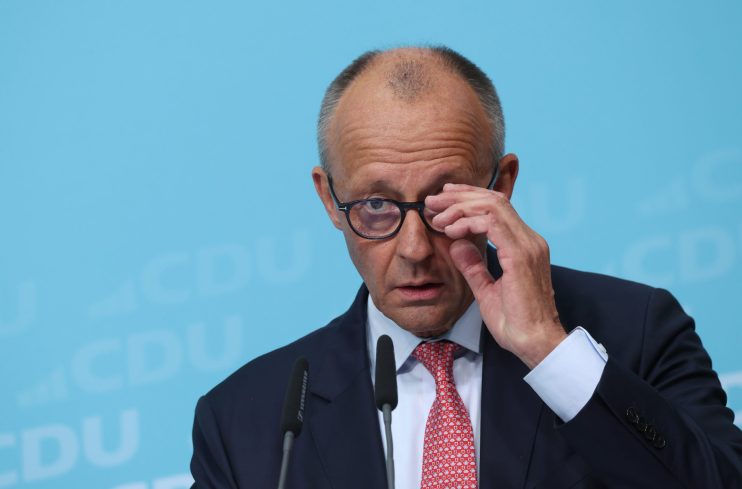
German Chancellor Merz and the CDU face a severe political crisis following disastrous state election results and plunging approval ratings, says Helen Thomas
“It was a disaster” said German Chancellor Merz after the results of two key German elections. If anything, that was an understatement. The CDU suffered the humiliation of falling below the five per cent electoral threshold in Mecklenburg-Western Pomerania, leaving it with no representation whatsoever. It was, by some distance, the party’s worst ever state election result. The humiliation was compounded by losing in Berlin to the radical Left. With the right-wing AfD taking top spot (although likely not government) in Mecklenburg-Western Pomerania, Germany is falling prey to the centrifugal electoral force of disenchanted and fragmented voters opting for the extremes as traditional centrist parties fail to deliver.
The German constitution was revamped after the war precisely to avoid the instability that had dogged the Weimar Republic. But the resulting rigidity is struggling to accommodate such an electoral realignment. The much-trumpeted “firewall” that other parties have erected around the AfD is becoming harder to maintain now that the far-right party consistently tops national opinion polls with almost 30 per cent of the vote. Coalition-building becomes harder and policymaking more fractious. Merz’s CDU chose to govern with the centre-left SPD, but the compromises required to keep the coalition together have harmed both parties in the polls.
This is an unsustainable situation. The challenges of the day, from pension reform in an ageing population to expensive energy and stagnant growth are difficult to resolve with a Chancellor whose authority is so badly depleted. Despite the international welcome for Merz’s dramatic U-turn in exempting defence spending above one per cent of GDP from Germany’s debt brake, it came just nine days after he won last year’s election. He then rushed the change through the outgoing parliament, before the Bundestag that voters had just elected could take its seats as that would contain an AfD-Left blocking minority able to veto it. Riding roughshod over voters tends to incite revenge. Merz’s approval rating has since plunged to record lows for a serving Chancellor.
Merz’s card was marked from the start
His card was marked from the start. Merz was barely the CDU’s first choice as leader, securing the job only at the third attempt (cc: Andy Burnham) and then stumbled at the first hurdle as Chancellor, failing to win the Bundestag’s backing on the first ballot despite a notional parliamentary majority, something unprecedented in post-war Germany. When an unstoppable force meets an immovable object, something has to give. Merz might claim he can fight on but we are in the endgame. His party have already been murmuring about a Kanzlertausch or “Chancellor swap”. It may be constitutionally difficult to remove him, but successive electoral beatings combined with record-low national polling make the pressure increasingly difficult to contain.
As this is constitutionally conservative Germany, however, engineering a change is no simple matter. Merz has shown no appetite for calling a confidence vote, leaving two principal routes: resignation or a constructive vote of no confidence. In the first case, the Bundestag gets several opportunities to find an alternative Chancellor before an early election becomes possible; in the second, failure to secure an absolute majority for a named successor simply leaves Merz in office. To complicate the arithmetic further, Chancellor elections are conducted by secret ballot. MPs do not always vote as their parties expect. In the 1982 Kanzlertausch, Helmut Kohl cleared the required majority by just seven votes, despite the parties supporting him notionally commanding considerably more.
All of which means that the route out is fraught with the potential for volatility and miscalculation. The electoral threat facing the CDU is becoming acute, but changing the Chancellor without triggering a wider political crisis is considerably easier to discuss than to execute.
So far, the political risk premium has barely manifested itself in German bonds. The focus remains on France where the spread to Germany has breached 100bp for the first time since the Eurozone debt crisis in 2012. The likelihood of a Le Pen presidential victory next year is rising whilst parliament remains in paralysis over agreeing a budget to bear down on spiralling debt/deficit dynamics. Whilst Germany has a far more prudent debt profile, the increased spending under the CDU/SPD government leaves a lot more debt to be digested by the markets. Commerzbank forecasts gross issuance of 400bn EUR in 2027, almost double the 227bn of five years earlier.
That matters at a time when bond markets are already creaking under the weight of enormous issuance, whether from governments or hyperscalers, while renewed Middle East tensions threaten another inflationary impulse. Germany has long been treated as the rock-solid political and fiscal anchor of the Eurozone. If that anchor starts to drag, yields will not stay moored for long.
Helen Thomas is founder and CEO of Blonde Money