Food industry warns of inflation ‘calm before the storm’

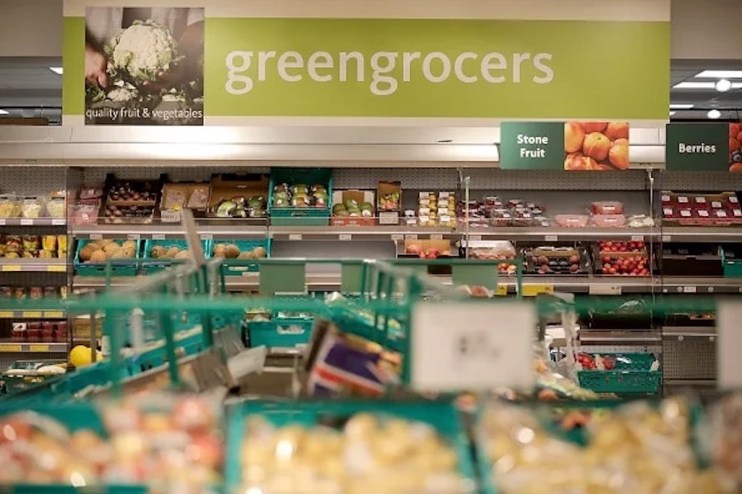
Food and retail bosses have warned the fall in food inflation is the “calm before the storm,” as business brace for the Iran war to push up energy costs.
Trade body Food and Drink Federation (FDF) said Wednesday’s drop in food inflation – from 3.6 to 3.3 per cent year on year – could be the last boost for Brits before looming costs spike the price of their weekly shop.
Headline inflation stuck at three per cent for February, well above the Bank of England’s targets, in the last indication of the state of the UK’s economy before the Iran conflict broke out, causing global energy prices to soar.
Food inflation fell to 3.3 per cent in the year to February, according to the Office for National Statistics (ONS), but the rate of price growth quickened in other areas of retail, including clothing (up from 0.3 to 1.6 per cent) and transport services (2.7 to 3.5 per cent).
Shoppers will ‘feel the cost’ of Iran war
Karen Betts, chief executive of the FDF, said the fall in food inflation obscures historically high price levels and the concerns of manufacturers that energy price costs may end up impacting on-shelf prices.
She said: “While food inflation fell slightly in February 2026, I am concerned that this is the calm before the storm.
“Food and drink is an essential, bought by every household, every week. While it can take several months for cost rises to filter fully through to shop shelves, the cost of the Iran conflict will be felt by shoppers this year.”
Betts called on the government to give food and drink manufacturers emergency support with their energy bills, to avoid another food inflation jump.
The foods with the fastest rate of price growth in the year to February were beef and veal (21 per cent), offal (17 per cent) and whole milk (13 per cent).
Prices fell for nine food categories, with the largest drops for olive oil (-10 per cent), flour (minus eight per cent) and pizza (minus five per cent).
Food inflation could reach eight per cent
Food inflation could soar above eight per cent as soon as this summer if the Iran war continues to stifle global supply chains, according to data from the Institute of Grocery Distribution (IGD).
The UK’s food prices are now around 38 per cent higher than pre-Covid levels, having fallen from the peak of the 2022 energy crisis, when food inflation rocketed by 17 per cent in the year.
But the IGD said the Iran war could spike prices further, to reach a full-year average of 6.4 per cent which would saddle the average shopper with an extra £150 of costs.
Retail businesses are also staring down the barrel of price increases, with the head of the British Retail Consortium (BRC) warning the Treasury will miss its inflation target unless it takes action to help firms.
Harvir Dhillon, an economist at the BRC, said: “Retailers continue to do everything they can to keep prices down for customers, but margins remain extremely tight.
“Heightened geopolitical tensions in the Middle East are very likely to increase energy and transport costs in the months ahead, creating additional pressures for consumers and businesses alike across the economy.”