‘Difficult decisions’ – Burnham looks at new tax on workers to fund social care overhaul

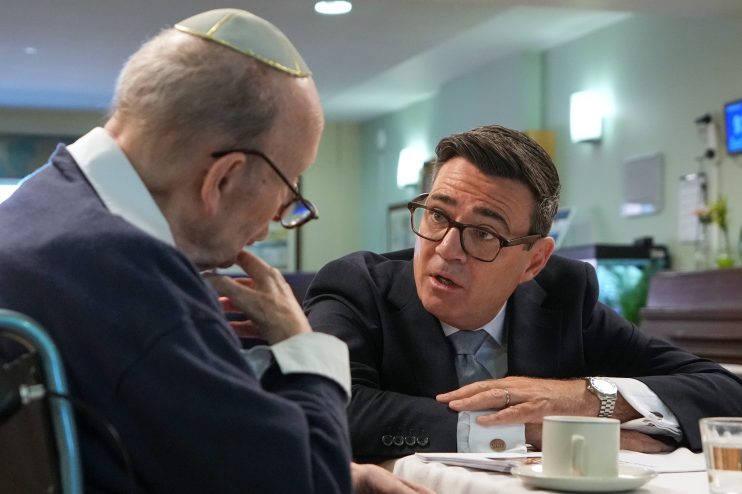
Andy Burnham has pleaded for opponents to engage in a cross-party discussion over sweeping adult social care reform as he warned that “difficult decisions” would have to be taken to fund the plans.
In a press conference from a Jewish care centre in North London, Burnham indicated he wanted social care to be funded on an “NHS principle” of collective contribution as he said the system was worse than American healthcare.
The Prime Minister announced that a review into social care reforms would be published earlier than planned and added that he would look to take part in cross-party talks with opposition leaders to find a solution.
Burnham and Baroness Louise Casey, who is leading a review into social care, asked reporters to avoid “overwriting” suggested plans before proposals were put forward, adding that he wanted the public to have a “clear-eyed” understanding of possible reforms for treating people.
Potential tax hikes or spending re-allocations to fund social care would likely not be made until after Casey has published her review, and so decisions could be left to next year’s Budget.
The Prime Minister also ruled out raising income taxes, VAT or national insurance as he said he would stick to the Labour manifesto from 2024.
“I will stick to the manifesto,” Burnham said. “That is important. There are commitments there on tax.”
But he added that his previous endorsement of an insurance scheme based on estates was based on the “NHS principle” where “if everybody… contributed a little, it could mean everybody could protect the majority of what they’d worked for”.
“I don’t know – do people support that? This is the point. What I got wrong was going too close to a general election when there just wasn’t time for those issues to breathe.”
He also said there would be “difficult decisions” to be made after the review by Casey is completed.
“We will be honest with people about those, we will put them before the country at the right time, and we will hopefully proceed with people’s consent.”
Ruth Gregory, chief economist at Capital Economics, said their analysis of Burnham’s “spending and tax pledges to date could cost a hefty £46-63bn” – noting that while the PM “has said his policy ambitions will be paid for by a) higher borrowing using the ‘flexibility in the fiscal rules’ and b) ‘asking for a bit more in tax’ – there are limits to both.”
She added that a plausible scenario for a Burnham agenda is “a big increase in the size of the state, with higher spending on defence, council house building and social care (perhaps of no more than £30-40bn), higher taxes (perhaps up to £20-25bn) and higher borrowing” – although “the bond market is already close to the limits of how much extra borrowing it will tolerate.”
‘National care crisis’: Tax ideas floated in health department
The grilling over funding for deep social care reform at the press conference came as it was reported that officials in the health department had considered creating a new levy on top of income tax to fund social care.
One option considered was a levy of 1.8 per cent of earnings above £6,240 paid by workers over the age of 34, a report in the The Telegraph suggested. The plan is broadly based on a report by Re:State, a Whitehall-focused think tank.
Wealthier elderly people would then pay more according to the value of their wealth to fund a new system. It would be different to a so-called “death tax” levy of 10 per cent on estates.
The Prime Minister had invited both Kemi Badenoch and Sir Ed Davey to meet with him to tackle social care in an attempt to make it a cross-party issue. Nigel Farage was not asked to join meetings.
Badenoch has held that she would not back changes if taxes were raised. Conservative Party chairman Kevin Hollinrake also hit out at reported plans that the private sector would not be included in reforms as Number 10 looks to focus on support from charities and community services.
Hollinrake blasted Burnham over plans to potentially hit taxpayers with “huge new costs” and “create a national care crisis”.
Expending political capital
Adult social care reforms hinge on a review led by Casey, who is also leading an inquiry on grooming gangs and was once touted as a potential chief of staff to Sir Keir Starmer.
Casey has not yet published her review on social care, which is expected to be published later this year, but told broadcasters on Wednesday morning that “difficult questions” should be asked about who gets support.
Casey told the BBC: “I would qualify, and I’m sitting here right now. I’m not disabled, but I could qualify if I answered those questions based on my medical records, it’s simple as.
“And so I think we’ve just got to get ourselves a little bit more straight on the fact there are some people out there who are listening to this programme that are struggling beyond belief to try and help themselves or get help for their families with very significant disabilities, and the help they’re getting is not enough.
“At the same time, I’m asking the country to just take a breath for a minute and think: ‘who should we be looking after, and how’ is the most important, I think, question facing the British welfare state in the 21st century.”
Despite a string of policy announcements on education and the cost of living, Burnham has made reforming social care central to his premiership as he vowed to expend “whatever political capital I have” on fixes.
“Last week I said we needed a different kind of politics: problem-solving, not point-scoring.
“Nowhere is that more urgent than social care.”