Debenhams shares boom as long-awaited turnaround bears fruit

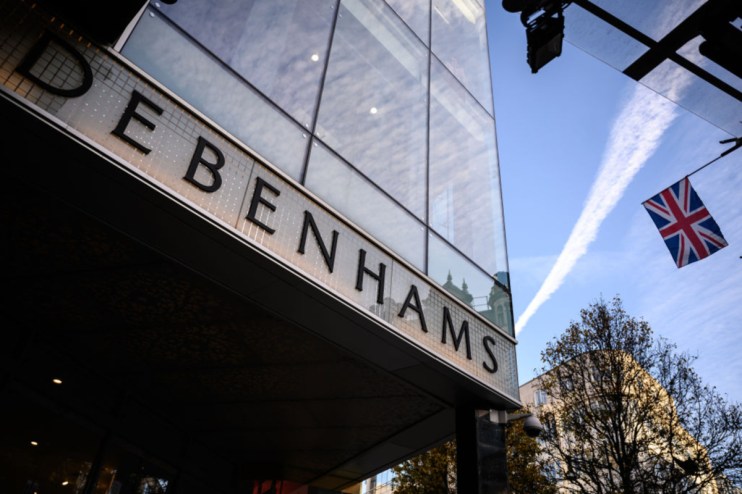
Debenhams shares soared after the fast-fashion retailer returned to growth, in a suggestion that the firm’s long-awaited turnaround is beginning to take hold.
The firm, which is listed on the AIM market as Boohoo, said on Wednesday that its sales were up by 0.5 in the first three months of this year, prompting its shares to jump by 19 per cent.
The retailer’s turnaround gained pace in May, reaching eight per cent year-on-year sales growth as it succeeds in slashing costs.
Debenhams’ share price, which remains down three per cent in the year so far, climbed to more than 22p following the firm’s trading update.
The group said its Pretty Little Thing brand – which was revamped last year – has driven its recent sales resurgence, as has recent lower volumes of returns applications.
The firm is benefitting from its shift away from an exclusively fast-fashion model and towards supporting third-party sellers on its platforms, analysts said.
Shift to online retail gains pace
Sarah Streeter, chief investment strategist at Wealth Club, said: “Its turnaround strategy has been rooted in rebuilding the group around the Debenhams marketplace platform to try and counter several bruising years of sliding sales.”
Debenhams has faced a “hard slog” in its recovery from the Covid-19 pandemic but its recovery is bearing fruit, AJ Bell investment director Russ Mould said.
“That progress has been achieved against a difficult consumer backdrop is a feather in the cap for management.”
“A return to meaningful sales growth gave investors plenty of cause for optimism,” he said.
Debenhams said its cost-cutting plan is gaining traction, with exceptional costs falling by 72 per cent in the first quarter while capital expenditure dropped by 54 per cent year on year.
‘Major inflection point’ in turnaround
Wayne Brown, an analyst at Panmure Liberum, dubbed Debenham’s update as a “major inflection point” for the company’s turnaround.
“The turnaround plan to simplify the operations, cut major costs, integrate all the brands into one ecosystem and then reinvigorate the brands seems to be coming together,” he said.
Debenhams’ struggles in recent years have centred on its slow progress in converting from a high-street retailer into an online operator.
The group’s shares plummeted as much as 20 per cent in February when it announced an equity raise, though the scheme took £40m – exceeding the initial target.
Debenhams’ board positioned the equity raise as central to reshaping the group’s fortunes, while a non-executive director quit following the scheme, describing the company as “undervalued” by the market.
Dan Finley, the group’s chief executive, said on Wednesday that its return to growth is “the result of the heavy lifting of our multi-year turnaround: the move to an asset light marketplace model, the warehouse consolidation, the cost reset, and the rebuild of every brand on a single proprietary platform.”