Chancellor Rachel Reeves denies misleading public over finances before Budget

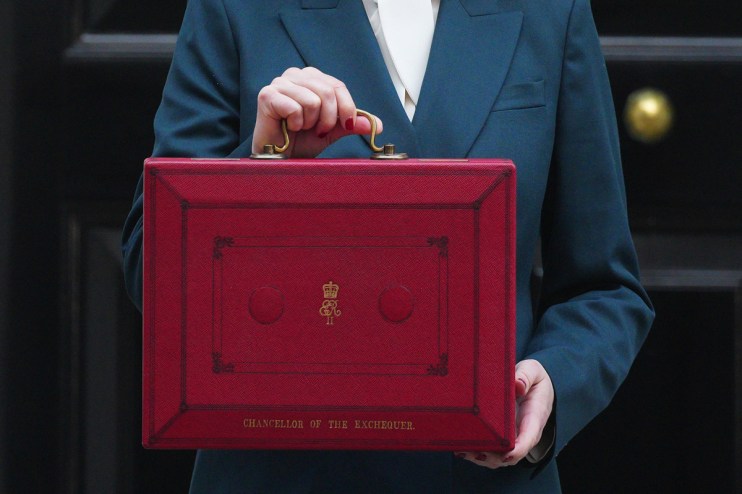
Chancellor Rachel Reeves has denied misleading the public over UK finances before the Budget, stating she “was very upfront” about the need to find more money, despite not mentioning £4.2bn surplus.
The Chancellor has found herself in the firing line since Wednesday’s crunch Budget, as she faces increasing questions from opposition figures over claims she misinformed the public on the size of the fiscal “repair job” she faced.
Reeves has insisted that she did not lie to the public when she set out a gloomy economic forecast earlier this month, stating she was “very clear” about the need to put up taxes.
She said: “Anyone who thinks that there was no repair job to be done on the public finances, I just don’t accept that.
“We needed to build more resilience, more headroom into our economy. That’s what I did, along with that investment in the NHS and cutting bills for families.”
£4.2bn headroom “not enough”
Pre Budget speculation suggested Reeves faced a significant gap in her spending plans, partly due to a downgrade to productivity forecasts expected to be delivered by the Office for Budget Responsibility (OBR).
The Chancellor fed into the rumours earlier this month during a speech in Downing Street, where she said weaker productivity had “consequences for public finances”.
In an interview with Sky News Trevor Phillips, she said: “I spoke about the Office of Budget Responsibility’s review of productivity in the economy, and that there was likely to be a substantial downgrade.
“That downgrade came, and it took £16 billion off of tax receipts, and as a result, we did have to make decisions at the Budget to increase taxes.”
She added that she explained that everyone in the UK would be asked “to make a contribution” in the Budget to protect funding for public services.
While the OBR did deliver a downgrade, much of that was cancelled out by inflation and higher wage growth, leaving a £4.2bn surplus against Reeves’ fiscal rules.
But, Reeves stated this would have been the lowest headroom any chancellor had secured against their fiscal rules.
She said to Phillips: If I was on this programme today and I said I’ve got a £4.2 billion surplus, you would have said, and rightly so, ‘that is not enough, Chancellor’.”
Freezing thresholds
Reeves also noted that the tax rises in the Budget did not break Labour’s manifesto commitments, acknowledging that she”stuck” to her promise to not raise income tax, national insurance or VAT.
In an interview with the BBC’s Laura Kuenssberg, she said: “We didn’t break the manifesto.
“We haven’t broken the manifesto because that explicitly said about the rates.
“But…am I asking working people to pay a bit more? Yes, I am asking working people to pay a bit more.”
But, economists and political opponents have hailed the move to extend the income tax threshold to 2031 as a manifesto break.
The £8.3bn “stealth tax” will drag 920,000 more Brits into paying 40 per cent tax on their income.
Meanwhile, 780,000 more people will be paying into public coffers as the basic rate and if families with small children see their income creep over £100,000 the loss of 30 hours of free childcare adds an additional blow.
Abolishing child benefit cap
Reeves also defended her decision to abolish the two child benefit cap as of April 2026, a rule that restricts both universal credit and tax credits to a maximum of two children per household.
Reeves denied that she bowed to pressure from Labour backbenchers to abolish the cap, stating the government was “choosing children”.
She said: “This lifts more than half a million children out of poverty.
“The people I was thinking about were kids who I know in my constituency go to school hungry and go to bed in cold and damp homes, and from April next year those parents will have a bit more support to help their kids.”
However, Conservative leader Kemi Badenoch said the decision to abolish the cap was “immoral” and instead placed more debt onto the next generation.
She said in an interview with Trevor Phillips: “It is immoral to saddle the next generation and children who are not yet born with debt so that people alive today can be a little bit more comfortable.”
“We would put that cap back.
“Somebody has to draw the line somewhere…only the Conservatives are saying this is getting out of hand.”