Bolt set for £190m VAT bill after legal defeat

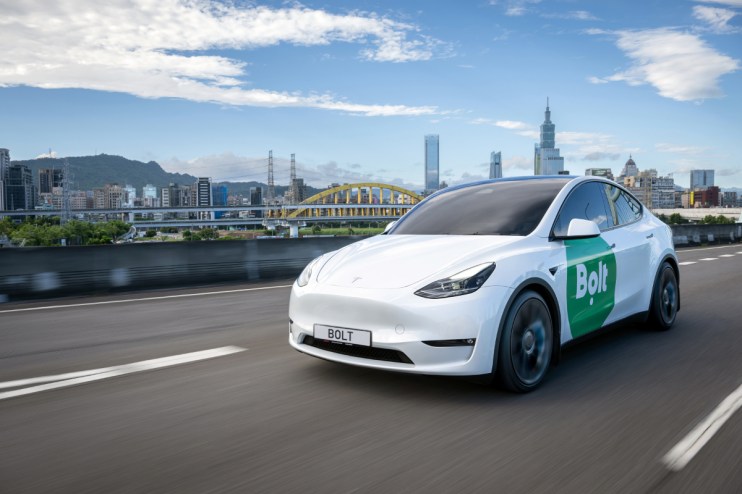
Ride-hailing platform Bolt has been refused permission to appeal a case brought by HMRC over how it calculates and pays its VAT.
This follows HMRC winning an appeal in June against the Estonian tech giant over its VAT payments and calculations, overturning earlier decisions that had ruled in Bolt’s favour.
The tax authority brought the appeal, questioning whether Bolt could use the tour operators’ margin scheme (TOMS). Under this scheme, businesses only pay VAT on the profit margin they make between buying a service and selling it to the customer. By qualifying for this scheme, Bolt must account for VAT only on the commission it takes from the fare, rather than the entire gross fare paid by the passenger.
Bolt’s appeal involves an estimated £190m in unpaid VAT.
HMRC had argued in February 2023 that Bolt did not qualify for this scheme, and the Court of Appeal backed the tax authority’s decision.
Bolt sought to appeal to the top court, but the Supreme Court refused Bolt’s appeal application, saying it “does not raise an arguable point of law of general public importance which the Supreme Court ought to hear at this time.”
Commenting on the decision, Kimberly Hurd, senior general manager for the UK and Ireland at Bolt, said in a statement: “Two courts have already found in Bolt’s favour on this question. We are therefore disappointed that the Supreme Court has refused permission for Bolt to appeal the Court of Appeal’s findings.”
“Businesses need a tax framework that supports a competitive market. This has consequences for fares, for driver earnings and for consumer choice across the sector that earlier rulings provided – supporting the 100,000 drivers that earn through our platform, and the millions of passengers that have depended on affordable and accessible transport,” Hurd added.
Bolt generated €2.27bn (£1.92bn) in revenue in 2025, and the UK is the firm’s second-biggest market.
Decision may bring Uber case ‘to a close’
Sue Rathmell, VAT partner at MHA, said the decision “brings to an end a long-running dispute.”
“Under TOMS, VAT is only payable on the operator’s margin rather than the full value of the fare. HMRC has argued for several years that the scheme was never intended to apply to ride-hailing businesses, while operators maintained that they were entitled to use it under the existing legislation,” Rathmell said.
Ride-hailing giant Uber has a similar ongoing legal battle over a £1bn VAT bill over TOMS, awaiting to be heard by the Tax Tribunal, which this decision could impact.
The court said in its judgment in June that other cases, including Uber’s, ”are awaiting its [Bolt’s case’s] outcome.”
“The Supreme Court’s decision to refuse Bolt permission to appeal means HMRC’s victory at the Court of Appeal now stands. Uber’s case was effectively waiting in the wings behind Bolt, so this decision is likely to bring the wider litigation to a close,” Rathmell said.
Black cab drivers already urged that the government to close this tax loophole used by Uber and Bolt, writing to the Chancellor last November asking her to make the tech ride-hailing apps pay the same level of VAT as cabbies.
HMRC was contacted for comment.