‘Dismal’: Blow to Healey as government borrowing overshoots by billions

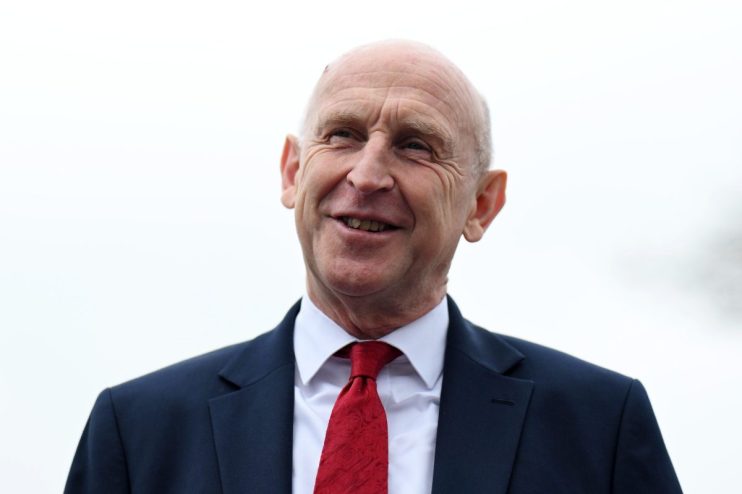
Chancellor John Healey has missed key targets on government borrowing ahead of his inaugural Budget after the UK borrowed more than economists forecast in August.
The Office for National Statistics (ONS) said borrowing in August was £18.3bn, which was about £3.5bn above a prediction by the Office for Budget Responsibility and overshot market predictions.
The ONS said that the public sector current budget deficit was also above the fiscal watchdog’s forecast, bringing the total in borrowing to fund day-to-day government spending to £51.9bn over the current financial year.
While public sector debt remained below the £3 trillion milestone at the end of August 2026, tricky data on borrowing reflects the difficulties Healey and Andy Burnham face in meeting fiscal targets as the Budget approaches on 28 October.
ONS analysts said that the impacts of inflation had led the government to spend more in August.
Debt interest payments also rose to £8.8bn, squeezing the government’s budget.
Shadow chancellor Andrew Griffith said it took a “rare fiscal incontinence to have both the highest tax take in history and see borrowing still shoot up”.
Capital Economics’ Ruth Gregory said the figures painted a “dismal picture” as the government “once again” borrowed more than expected.
“All this means after five months of the financial year borrowing is £8.1bn higher than the OBR forecast in March,” Gregory said. And we expect this overshoot to persist as real GDP growth weakens in the fourth quarter and the government announces further cost-of-living support.”
Gregory added she expected Healey to top up up his fiscal buffer by up to £14bn through tax rises or spending cuts in case he wanted to get to the same level of headroom as in March.
Thomas Pugh, chief economist at RSM UK, said: “The jump in borrowing in August compared to last year sets the stage for what is likely to be a much trickier Budget than Burnham or Healy anticipated when they came to power just a few months ago.
“Another round of tax rises in October now looks inevitable.”
Debt pile puts bond markets into focus
The Chancellor is already in the process of exchanging forecasts and policies with the Office for Budget Responsibility, the independent fiscal watchdog, City AM understands.
The five-week run-in to the Budget could make the picture on public finances for the Chancellor tougher given government borrowing costs spiked before partly falling back at the end of last week, as shown by recent changes in gilt yields.
On the year, ten-year gilt yields have increased by around half a per cent as the energy price shock from the Iran war sparked fears among traders that the Bank of England would raise interest rates.
At its peak, City analysts warned that a spike in gilt yields slashed the Chancellor’s headroom by as much as £9bn.
Tweaks to migration predictions, spending projections and growth forecasts could combine to shrink the current £23.6bn buffer available to Healey against the fiscal rules.
The main fiscal rule states that government receipts should match or outweigh day-to-day spending in the third year of the OBR’s forecast.
Beyond additional costs incurred by the Iran war and other potential forecast revisions, Healey faces a challenge in finding cash to provide households and businesses with support on higher energy costs as well as increasing defence spending to three per cent of GDP by 2030 from a level of 2.6 per cent.
The increase in defence spending could mean that the government is tasked with finding about an extra £11bn a year through cuts to other departments.
A series of constraints on public finances have led top researchers and economists to warn that tax hikes are more likely.