Ambassador Suzuki: I will spare no effort to nurture Japan-UK relationship

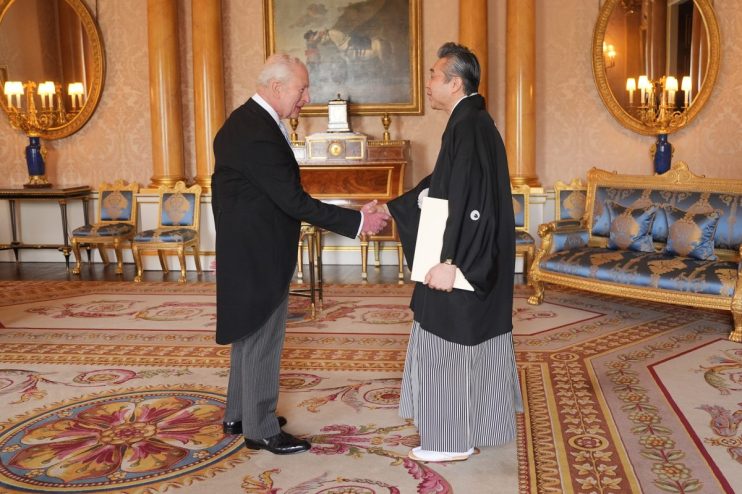
On the anniversary of VJ Day, Japanese ambassador to the UK Hiroshi Suzuki says he is committed to working closely with the UK and Prime Minister Burnham
Eighty-one years have passed since the end of the Second World War. Since then, Japan has contributed to peace and stability in the international community, driven by a firm resolve to pursue its path as a peace-loving nation.
Over the years, we have also promoted efforts towards reconciliation with the UK. Japan-UK relations today are built on mutual trust and amicable cooperation, which have been made possible through the invaluable efforts of many people who endeavoured tirelessly to heal the wounds of the war, seek reconciliation and foster friendship. At the same time, we must never lose sight of what happened in the war, lest we forget the devastating impact which brought sorrow to the hearts of so many people.
Current international events, notably Russia’s invasion of Ukraine, are reminiscent of that terrible conflict. As a peace-loving nation determined to restore international order, Japan has provided £14.5bn pounds in aid to Ukraine for humanitarian assistance including winter relief, healthcare and food as well as reconstruction assistance including mine clearance, agriculture and governance. We commend the UK and Europe for their leadership in supporting Ukraine and will continue to collaborate with them to deliver our assistance.
The Global Combat Air Programme will strengthen Japan-UK ties
As the Japanese Ambassador to the UK, it is my strong belief that Japan and the UK have tremendous potential to work together for the future of the world. Our efforts in this regard have been realised through the Global Combat Air Programme (GCAP), whereby Japan and the UK, alongside Italy, have been developing the next generation combat air system.
GCAP will forge an even stronger link between security in the Indo-Pacific and that in Europe and the Atlantic. It is not merely a fighter aircraft development programme but a new model for cooperation in cross-regional security.
Its most distinctive feature is that it is a software and hardware platform where new functions can be added. Much like a smartphone app, it is able to install new features to suit the needs of each user country.
Furthermore, it is being designed and developed by Japan, the UK and Italy, who are bringing in cutting-edge technologies and each contributing their respective areas of expertise to bring about the most advanced capabilities. Interoperability with the US is also ensured. This is precisely why Canada has shown keen interest in the project and recently began participating as an observer.
In addition, GCAP will provide long-term benefits to domestic employment, industrial development and technological progress in each country.
There is a strong commitment from the participating countries to ensure that the first fighter aircraft is deployed in 2035, and it is crucial that we deliver on this.
To that end, I welcome the recent UK Defence Investment Plan’s commitment of £8.6bn over the next four years. With the funding allocated by the three countries, the GCAP International Government Organisation (GIGO) signed the £4.6bn contract with Edgewing (the international joint venture set up by the three countries) on 3 July. I regard the signing as a historic milestone.
Between 19 and 21 July, Japanese defence minister Koizumi visited the UK and completed a series of GCAP-related engagements, including attending the Farnborough Airshow and the trilateral meeting of the Japanese, British and Italian defence ministers. This meeting sent a powerful message demonstrating the close ties between Japan, the UK and Italy through GCAP, and above all, between Japan and the UK.
Working in collaboration with the Burnham administration, Japan and the UK will strive to add further impetus to GCAP.
Even beyond GCAP, there is great scope for further collaboration between Japan and the UK. Our two nations share fundamental values and strategic interests. During Prime Minister Takaichi’s visit to the UK in June, we also reached agreement on cooperation in economic security and frontier technology. These are the drivers which will robustly accelerate the economic growth of the two countries.
The UK is scheduled to host the G20 next year and the G7 in 2028. I look forward to Japan–UK cooperation being further advanced through close communication with the new team under Prime Minister Burnham. I will spare no effort to this end.
Hiroshi Suzuki is Japan’s ambassador to the UK