Andy Burnham is on course to rack up the second highest debt interest bill on record

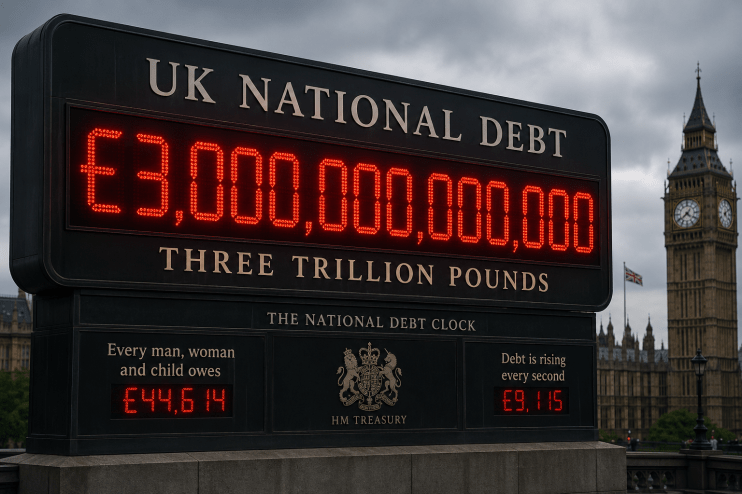
Britain’s national debt has reached £3 trillion. We can’t go on like this, says Anne Strickland
Andy Burnham has been Prime Minister for just over a fortnight and in that time, Britain’s national debt crossed the unimaginable £3 trillion mark, according to the Taxpayers’ Alliance Debt Clock. It took us 11 years to go from £1 trillion in debt to £2 trillion in the 2010s, but it has only taken us six years to ratchet that up another trillion. If you spread that burden across every household in the country, it would mean over £100,000 per household of national debt, and that’s before you even get to unfunded public sector pension liabilities and the rest of what the government owes but keeps off its main books. Factor those in and the real national debt is likely to be much, much higher.
But what should worry you about this £3 trillion debt is what it costs taxpayers every year just to service. Debt interest hit £109.3bn in 2025-26, the fourth-highest year on record in real terms, and every one of the four highest years we’ve ever recorded has happened since 2022-23. That’s 2.4 times the 70-year average. More than £1 in every £12 that the government spends now goes purely on paying the interest on our debt.
More than £1 in every £12 that the government spends now goes purely on paying the interest on our debt
To put that into perspective: the amount we spent on debt interest in the last year alone was more than the entire projected cost of HS2. It would have covered the cost of fixing every pothole in England and Wales almost six times over. And there’s a personal dimension to it for Burnham specifically. Rishi Sunak, primarily due to the knock-on effects from the scale of borrowing during Covid, holds the record for the highest average annual debt interest bill of any Prime Minister on record, at £121.5bn a year. But based on current OBR forecasts, Burnham is on course to be the Prime Minister with the second highest bill, at £112.8bn a year. More than any other Labour leader.
Debt is climbing
The OBR’s own long-term projections show that current government plans only stabilise debt temporarily. It starts climbing again from 2032-33, and by the late 2040s it’s on what the OBR itself describes as an unsustainable path. A lot of that comes down to an ageing population: state pension spending is projected to rise from 5 to around 9 per cent of GDP, driven largely by the triple lock, while health spending is projected to climb from 8 to 13 per cent of GDP by 2075-76. Run almost any scenario the OBR models, and you end up on the same trajectory.
But we must treat all of that as the optimistic version. The OBR has admitted, in its own words, that its forecasts tend to get rosier the further out you look. So if the OBR’s own forecasting record is anything to go by, we should probably brace for worse, not better.
Now, Andy Burnham obviously didn’t rack up this debt by himself, he has only been on the job for two weeks. But he’s already on course to hold one of the worst debt interest bills of any Prime Minister on record, and every one of his predecessors since the financial crisis has told us the same story: the debt will stabilise once growth returns, once the next set of reforms lands, once the numbers work themselves out, but we know how that plays out. So if the Prime Minister is serious about rebalancing our economy then top of his to-do list must be addressing the national debt. Failure to do so will make achieving any of his other economic objectives a herculean task.
Anne Strickland is a researcher at the Taxpayers’ Alliance