Britain needs a new Richard Branson

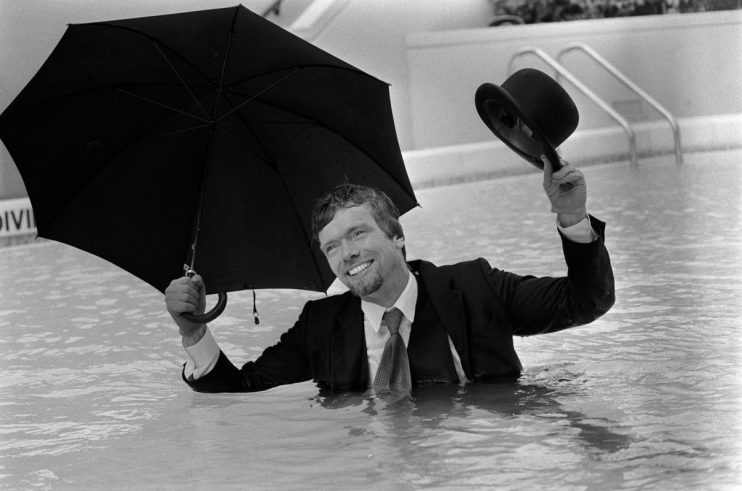
Richard Branson continues to be the best champion the UK has as a place to do business despite founding his first business decades ago. Branson is a global success, but he should have a successor by now, says Philip Salter
A few months after England lifted the 1966 World Cup, Sir Richard Branson started working on his first successful business, a magazine called Student that he launched two years later.
When we asked our network of founders, in partnership with Public First, which entrepreneur best champions the UK as a place to do business, Sir Richard came top. Of course, Virgin’s founder is a genuine global success story, but I suspect even he might have expected — indeed wanted — a successor by now.
After all, Hurun’s 2026 index finds a record 80 UK unicorns worth a combined £242.4bn, putting the UK third globally behind only the United States and China. There’s no shortage of candidates: Synthesia’s Victor Riparbelli, Darktrace co-founder Poppy Gustafsson and James Dacombe, whose two-year-old AI chip firm Olix was valued at £2.5bn this week.
There are two ways to view this. You can argue we all need to tell a better story about our successes and place in the world. Or accept that something’s still missing — that we need to fix the fundamentals. Our survey suggests the new government must do both.
Despite most believing it a good place to start a business, 70 per cent of founders said the UK presents itself ineffectively. So what shapes that judgement? According to some of Britain’s most ambitious entrepreneurs, in third place come cultural factors like language and lifestyle; in second, the pull of investor networks; but top of the list sits the cold truth for any government — founders judge a country first on its tax rates.
Presented with a range of options, founders would sell the UK on two things above all: its Enterprise Investment Schemes, which offer a tax break for investors, and its position as Europe’s largest venture capital market (cited by 49 and 42 per cent respectively). The prosaic is pivotal.
We also drilled down into the views of London’s founders. The single biggest reason they’re there is the ecosystem — 48 per cent cite the capital’s established industry network, not, as is often assumed, access to capital. And once established, they see the city as a clear net positive: a London base makes fundraising easier for 63 per cent, against just eight per cent who say it’s harder, and helps with credibility, partnerships, media relations and government access. Hiring is the one weak spot, with a significant minority saying it can be harder in London.
The cost of London
However, London’s drawbacks are almost entirely about cost. More than four in five founders (83 per cent) name the cost of living — rent, commuting, daily expenses — as a top downside, with high operating overheads such as office space and salaries close behind (73 per cent). Critically, over half of London-based founders have considered moving their company out of the capital in the past 12 months, and over a quarter have seriously considered it or actively planned to do so. Movement the other way is far weaker, as just 28 per cent of founders outside London have considered moving in.
Asked which cities come closest to rivalling London for their kind of business, founders looked west. San Francisco and New York were named far more often than anywhere else — 48 per cent and 44 per cent of those who named a rival — with Singapore (21 per cent) and Dubai (14 per cent) next, and Austin and Lisbon close behind (11 per cent each). European hubs like Berlin, Amsterdam and Paris trail well behind, suggesting founders see London’s competition as transatlantic and global rather than continental.
If they do leave, the same US cities top the list. Closer to home, the new Prime Minister — fresh from a decade of running Greater Manchester — may be pleased that Manchester is the leading domestic alternative, ahead of Cambridge.
Nearly 60 years on from Student, Britain has no shortage of billion-pound company founders. What it needs from the new government is not just to celebrate them, but to give them reasons to stay.
Philip Salter if founder of The Entrepreneurs Network