Quantexa boss: ‘Britain can build global AI winners’

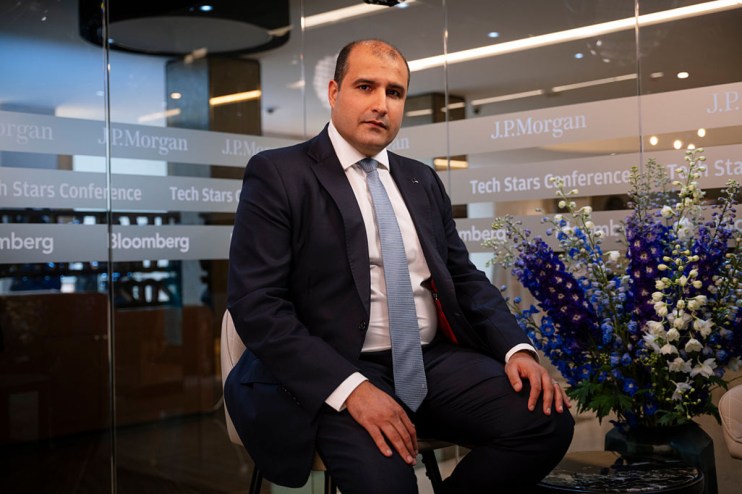
Vishal Marria is not short of reasons to be cheerful about Britain. At a time when the UK’s tech sector is once again debating listings, capital flight and whether founders inevitably end up scaling overseas, the Quantexa boss remains notably bullish about building and scaling in London.
“Yes, we’re HQ’d in London, in the UK, and that’s where we chose to start the business”, Marria told City AM this week.
“Being a Londoner, born and brought up in London, it’s a great place for me to have started my company”.
The firm just last week secured a 10-year, £175m deal with HMRC, one of the largest AI and data contracts awarded by the department in recent years.
Founded in 2016, Quantexa specialises in connecting fragmented data so firms can detect fraud and improve customer service.
It now operates across 19 countries, works with over 70 business clients globally and counts heavyweights HSBC and Vodafone among its customers.
Marria said Quantexa had been built with international competition in mind from the get-go.
“From day one of Quantexa, I have been competing on the international stage against some of the biggest tech providers on the planet,” he said.
London has become Europe’s dominant AI investment hub, UK AI firms attracted a record £8.3bn last year and global technology groups including Microsoft, OpenAI and Anthropic are all expanding aggressively in the capital.
“Our country has some of the greatest universities in the world,” Marria said. “We have an incredible, vibrant, diverse talent pool of people here in the UK – if that’s here in London, up in Manchester, into Newcastle, going into Edinburgh.”
The AI arms race pivots to infrastructure
The HMRC-Quantexa partnership also comes as the government doubles down on digital sovereignty, amid growing political unease over Britain’s dependence on large Silicon Valley-based tech titans.
Quantexa’s contract has inevitably drawn comparisons with Palantir’s work across parts of the NHS and wider public sector.
Marria, however, is careful not to frame the debate as Britain versus Silicon Valley: “This is not about the US versus the rest of the world on tech,” he said. “This is about choosing the right partnership for this data that fundamentally gives control to HMRC and other departments.”
Marria said the company’s systems are deployed within a client’s own environment rather than removing data externally, an approach he argues is particularly important in government.
“In government environments, AI cannot operate as a black box,” he said. “Decisions need to be transparent, auditable and explainable.”
The company’s role in the HMRC deal is not to replace investigators or automate tax enforcement decisions, but to create what Marria repeatedly described as a better “data foundation”.
“What Quantexa’s doing is putting the puzzle together,” he added. “HMRC can then take that puzzle and apply the analytics.”
Britain’s AI ambitions are increasingly moving beyond chatbots and LLMs and into infrastructure and procurement.
And with it, the debate has shifted beyond whether the UK can produce AI companies, and into whether it can scale them into durable global businesses.
“What this really does state and underscores is we have a global firm based here in Britain that can deliver with trust a sizeable partnership to the government,” Marria said.