Starmer’s Europe reset risks strangling UK AI sector with EU regulation

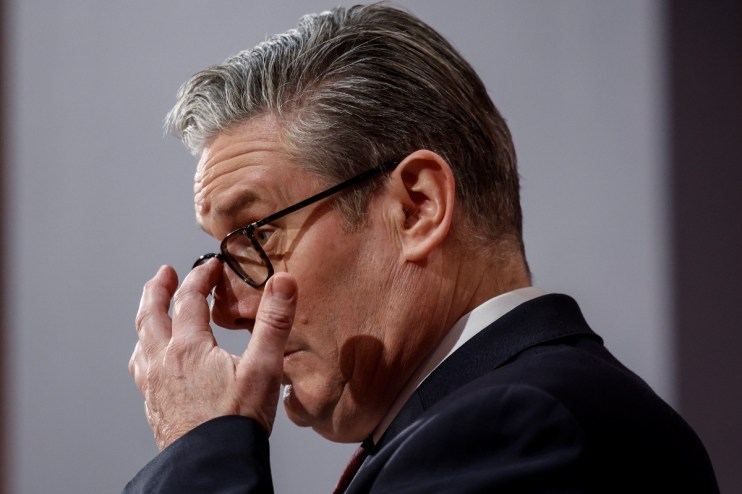
As the prime minister scrambles to save his premiership Keir Starmer has vowed to position the UK “at the heart of Europe” – but his pledge risks reigniting fears that closer EU ties could undo the UK’s AI advantage.
In today’s speech, aimed at rescuing the prime minister’s position after bruising local election losses, Starmer said his party would derail years of fractious relations with Brussels and form new ties around trade and economic cooperation.
“The last government was defined by breaking our relationship with Europe”, he said. “This Labour government will be defined by rebuilding our relationship with Europe, by putting Britain at the heart of Europe.”
His words land ahead of the next EU summit, where the prime minister is expected to push for deeper cooperation with the bloc, including an expanded youth mobility scheme for young Brits to work and study more freely across the continent.
His reset, however, sits atop of a growing fault line inside Whitehall over AI regulation, and whether the UK risks drifting closer to the EU’s far stricter approach to policing the technology.
For months, ministers inside the Department for Science, Innovation and Technology (DSIT) have internally resisted proposals that could see Britain align more closely with the EU’s sweeping, strict AI rulebook.
Ministers fear this could undermine the country’s pro-innovation position just as mass amounts of capital flood into British AI firms and datacentre development.
“The biggest concern by far is AI regulation,” one person briefed on internal discussions previously told the Financial Times.
“Our more laissez-faire approach is seen to have attracted investment for our companies and given them freedom to operate.”
Caught between EU and US regulatory approaches
By 2026, three distinct approaches to AI regulation seem to have emerged.
The EU, for its part, has run with a safety-first framework, funnelled through its AI Act, which imposes strict rules on “high risk” systems and hands regulators sweeping enforcement powers.
On the other hand, the US has taken a vastly different approach, leaning toward deregulation and market forces.
Indeed, the White House has increasingly focused on preventing state-level rules from slowing AI development, as a means to encourage innovation.
That leaves the UK, which has spent the past two years attempting to carve out a middle path.
Refusing to introduce one single overarching AI law, Britain has instead opted for a lighter-touch approach, where regulators oversee AI within existing industries, while the public sector casts Britain as a testing ground for new frontier models.
The UK’s AI Safety Institute, which now chairs the international network of AI Security Institutes, has become central to that strategy, evaluating advanced systems including Anthropic’s controversial ‘Mythos’ model.
Tech secretary Liz Kendall has long insisted Britain’s “pragmatic, not dogmatic” approach gives the country “a real edge” over Brussels.
Similarly, some ministers fear closer EU alignment could pull Britain toward the bloc’s far more interventionist regulatory culture just as the government tries to attract AI investment from US tech titans like OpenAI, Amazon, Meta or Microsoft.
Others worry alignment could create broader tensions with Washington, particularly around digital taxes or ‘Made in Europe’ procurement rules made to prioritise European tech providers.
“There is massive concern,” one official previously said, warning the UK could lose its “freedom to flex” between Brussels and Washington.
Meanwhile, members of the UK’s tech sector say that overregulation has already stifled Europe’s competitive edge.
Richard Windsor, founder of Radio Free Mobile, recently described the EU’s approach as “a disaster”, warning Brussels was attempting to regulate technologies “that do not really exist yet”.