The story of Keir Starmer’s failure is boringly familiar

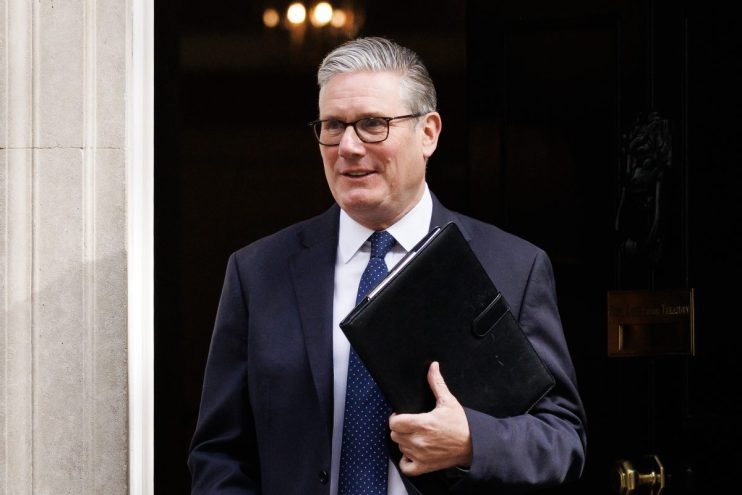
Keir Starmer’s fate was not brought about chiefly by his lack of personality. It was the predictable result of the economic conditions that have wracked Britain for almost two decades, a political system poorly attuned to fixing them, and more than a little of his own hubris, says Andrew Griffith
Analysing why Keir Starmer failed has become something of a habit for journalists and intellectuals. New long reads arrive in weekend magazines and broadsheets with the cadence of football matches. There are only brief breaks in this rhythm, to allow for international away fixtures focused on Donald Trump, European elections, or the increasingly unstable wider world.
Much like the Premier League, this is fast becoming an all-year-round fixture. Just as someone writes the “best piece you’ll read about Keir Starmer”, and you think it’s all over, a new scandal brings a fresh season of political psychoanalysis, quotes from defenestrated advisers, and breathless reporting about a “PM fighting for his political life”. That last headline seems to have been printed so often, one can’t help but wonder if it should simply be added to most papers’ mastheads to save time.
Back when many of the same commentators were lauding Sir Keir as the herald of a new quiet, dignified age, some of us could already see the writing on the wall. For us, it’s not difficult to see why Keir Starmer failed and it doesn’t require a PhD in applied SW1 psychology.
Keir Starmer’s fate was not brought about chiefly by his lack of personality, or by his legal background, nor was it wrought by a vengeful genie. It was the predictable result of the economic conditions that have wracked Britain for almost two decades, a political system poorly attuned to fixing them, and more than a little of his own hubris.
As a former finance director, I have a pretty good grasp of the numbers. Before even David Cameron took office, economic growth in Britain was stalling. Already chilled by Blair’s decade long expansion of the regulatory state, the post financial crisis loss of risk appetite meant we never recovered our economic ‘mojo’.
This is made plain by the data. Beyond GDP per capita – which is important, but which few normal people identify with – median wages have not grown above inflation since 2007. At all. In fact, they were lower in real terms in 2024 than they were before the financial crisis. Consequentially the tax take, a large part of which comes from income tax and (apart from the disproportionate amount paid by top earners) is heavily reliant on the majority of people who are somewhere near average, hasn’t grown. Instead, the Treasury has squeezed aspirational, middle-class workers whilst significantly expanding the cost and number of beneficiaries of welfare. I’ll be returning to this thought.
Relentless fiscal pressure
Mix all of this in with an ageing population and you get relentless fiscal pressures borne by a relentlessly shrinking working age population. That same working age population has been supplemented, incompetently, with a wave of immigration that has not, and never could, keep up with the rate of housebuilding and infrastructure required.
Any Prime Minister, be it placid and pusillanimous Keir Starmer or one of the greats like Churchill, Peel, or Disraeli reincarnated through the magic of AI, would have had to go at least some way towards addressing these problems to have a chance of success. And until someone does, the UK is stuck on a hamster wheel, exhausted by furious activity leading nowhere.
Starmer’s chief failure is that despite possessing a historic majority he chose not to break cycle. Read through Labour’s 2024 “Change” manifesto and the mention of any of Britain’s chief economic problems is scant. There simply is not in Britain today the financial capacity to govern ‘as usual’, and yet genuine plans to change this were non-existent.
There were plenty of people who believed the headline promises made about outcomes: that Britain would somehow be fairer, that 1.5m houses would magically appear, that there would – through some great weather dance to be performed by the curiously credentialed Rachel Reeves – at last be growth. Politics is full of people who make the category error of confusing outcomes with policies or plans. The former is brought about by the latter, and the latter was never given a moment’s thought by Labour.
There were plenty of people who believed the headline promises made about outcomes: that Britain would somehow be fairer, that 1.5m houses would magically appear, that there would – through some great weather dance to be performed by the curiously credentialed Rachel Reeves – at last be growth
Even if Keir Starmer had sought to do what many of us think is necessary: bring freedom back to Britain’s increasingly state-led markets, incentivise wealth creators and entrepreneurs rather than chastising them, cut energy prices or bet big on the innovation that has allowed Britain to prosper before, it is unlikely his rebellious band of novice Labour MPs – having clawed their way into Parliament up a ladder of left wing NGOs, trade unions or the public sector – would have supported him.
Instead, the result is that the tax take is dropping while Britain’s debt and borrowing costs are surging. The pips have finally squeaked and as the Sunday Times reported this week, the top wealth creators the Treasury relies on are leaving in droves. Our aspirational young people, unable to find the well-paying jobs only a thriving private sector can create, and thus unable to afford the homes they would need to start a family, have joined them. Almost 300,000 young Brits left last year, enough to bring down net migration perhaps more than changes to immigration policy under Labour have.
By my reckoning it has been decades since our politicians set out honest plans to tackle the public finances or made a truly free-market case for British prosperity.
The fact that this Prime Minister’s failure comes down to economics matters. Because if the Starmer limpet is dislodged, whoever takes his place will face the very same problems. No Prime Minister will succeed so long as they don’t finally take tough choices and grapple with the fundamentals that got us here. This won’t be easy, and at times it won’t be popular. It wasn’t when Thatcher did it for a broadly similar malaise in the years after 1979. But then, as now, that doesn’t mean it’s impossible.
The Conservatives are the only party grappling honestly with the policies needed to fix and enrich Britain. While Westminster descended into a new bout of regicide and psychodrama last week, we set out 16 Bills in our Alternative King’s Speech to get us the outcomes that have eluded past Governments. We are clear about the trade-offs which will be required. The work is far from done, but we are using our time in opposition wisely. And when it concludes, we will not have made the same mistake that doomed Keir Starmer and will undoubtedly doom his successor.
Andrew Griffith is shadow secretary of state for business and trade