When politics Trump prices, markets are no longer free

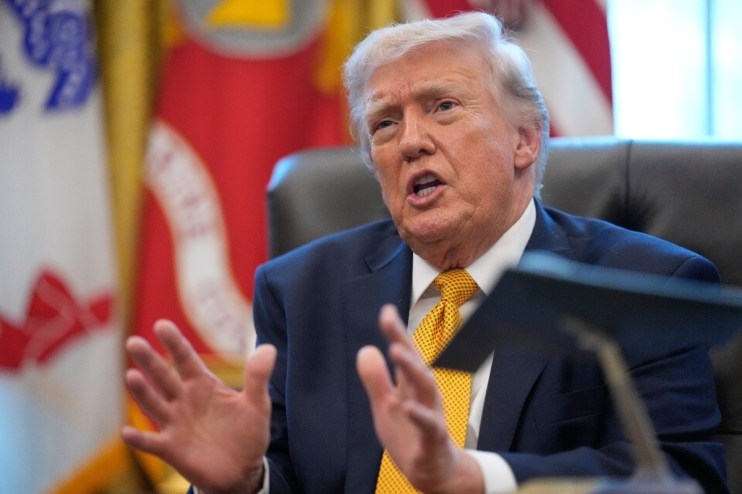
In any other context, a system where a single individual can move markets so abruptly would raise serious questions about resilience and fairness. With Donald Trump, it is simply accepted, says Tim Focas
The most striking thing about this week’s oil market moves is not that traders placed half a billion dollars of bets ahead of a Trump social post. It is that this now feels entirely normal for the leader of the free world to shoot nebulous political intentions from the hip.
Within minutes of Trump signalling so called productive talks with Iran, oil prices dropped like a stone while equity futures rallied. The trades that came just before that announcement will attract scrutiny, as they should. But focusing on whether someone acted on privileged information misses the more important point that free markets are no longer reacting to specific events.
Instead, they are reacting to political signals from a President who does not exactly have a strong track record when it comes to sticking to what he has said – and that is a problem. We have drifted into a system where a single line of ambiguous political rhetoric can move trillions of dollars in global assets. Not legislation, not a formal agreement, not even a confirmed policy shift, just a comment via a social post.
For years, markets have prided themselves on being forward-looking. The idea was that investors digest hard empirical facts quickly and incorporate it into prices. However, what we are seeing now is something completely different. Markets are no longer discounting future cash flows or economic outcomes. They are second guessing political intent from perhaps the most unorthodox US administrations in history, all in real time. The distinction really matters.
When markets move on fundamentals, volatility is at least anchored in something tangible. When they move on interpretation, volatility becomes reflexive and self-reinforcing. Prices move because traders believe other traders will react to a signal, not because the underlying reality has changed. All this does is create a feedback doom loop where positioning itself becomes the driver of price.
Uneven playing field
It also creates an uneven playing field. The advantage no longer sits solely with those who have the intellectual rigour to analyse balance sheets or economic data better than others. Instead, it sits with those who are quickest to interpret political language, or who have the infrastructure to act on it faster. This is not about accusing anyone of wrongdoing. It is about recognising that the structure of markets now systematically rewards proximity to political signalling.
Political communication has, to some extent, always acted as a market tool, whether governments like it or not. The difference is that right now, it seems that every hint carries financial consequences. In any other context, a system where a single individual can move markets so abruptly would raise serious questions about resilience and fairness. Here, it is simply accepted.
Markets are supposed to aggregate information, not amplify ambiguity. If we continue down this path, we risk ending up with a system where the biggest driver of financial outcomes is not economic performance, but political phrasing. At that point, we should stop pretending markets are truly functioning the way they should. They are simply reacting to whoever speaks next
That is a dangerous place to be. That is because if market participants begin to believe that prices are being driven more by access to political signals than by underlying fundamentals, trust erodes. And without trust, liquidity becomes fragile.
We should be clear about what this moment represents. This is not just another episode of volatility in oil. It is evidence that the centre of gravity in markets has shifted away from detailed economics and towards politics. Prices are being set not by what is, but by what might be implied. That shift may be efficient in the narrowest sense. It is not healthy though.
Markets are supposed to aggregate information, not amplify ambiguity. If we continue down this path, we risk ending up with a system where the biggest driver of financial outcomes is not economic performance, but political phrasing. At that point, we should stop pretending markets are truly functioning the way they should. They are simply reacting to whoever speaks next.
Tim Focas is head of capital markets at Aspectus Group