The Debate: Should we build a data centre on Brick Lane?

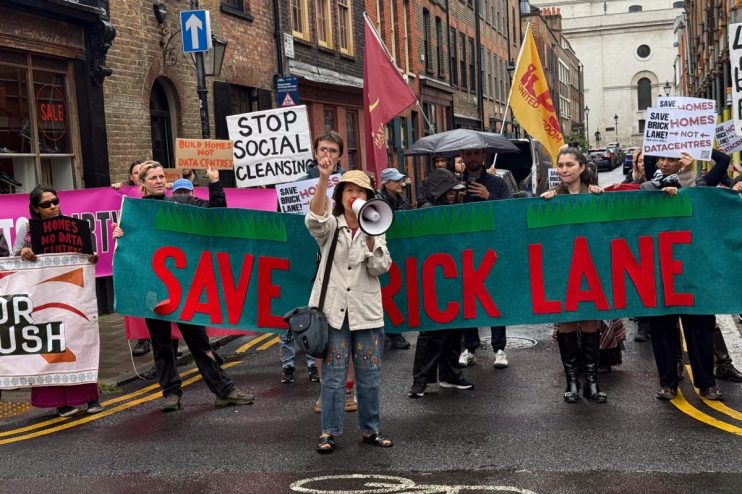
It may be better known for bagels, but times they are a changing. Should we put a data centre on Brick Lane? We hear the case for and against in this week’s Debate
YES: There’s a tendency to treat data centres as something that should be built somewhere else
Should we build a data centre on Brick Lane? If the site is suitable, then yes.
The debate around the Truman Brewery proposal reflects a broader challenge facing the UK. Everyone wants the benefits of a digital economy, but far fewer people are willing to support the infrastructure that makes it possible.
Data centres are no longer niche facilities tucked away on industrial estates, in fact many will be unaware there are existing data centres already on this site. They underpin everything from AI and cloud computing to banking, healthcare and public services. If the UK is serious about remaining competitive in a rapidly changing global economy, we need to recognise digital infrastructure as essential infrastructure.
That does not mean developments should be approved regardless of local concerns. Planning decisions should always consider the character of an area, environmental impacts and community views. Those are legitimate factors in any proposal.
What concerns me is the growing tendency to treat data centres as something that should be built somewhere else. The reality is that every part of the country benefits from digital services, and every part of the country has a role to play in supporting the infrastructure behind them.
The Truman Brewery site has a long industrial history and has evolved many times over the years. Cities remain successful because they adapt to changing economic needs rather than preserving every site exactly as it was.
The question should not be whether we need more data centres. Demand for digital infrastructure is growing rapidly and will continue to do so. The question is whether a particular site can accommodate one responsibly and deliver wider economic value.
If the answer is yes, we should be prepared to support it. Britain cannot aspire to lead in technology while continually finding reasons not to build the infrastructure that underpins it.
John McGee is the CEO of Durata
NO: The 5,200 square metre windowless box will provide barely 12 jobs
Brick Lane is an area of historical and cultural significance. Tourists associate Brick Lane with curry houses and vintage shops. It is located in the most densely populated borough in England, with the highest forecast population growth. Around 30,000 households are on the housing register. Child poverty rates are the highest in the country. The biggest contributor to poverty in London is high housing costs: the answer to that is homes, not server halls.
Data centres emit noise, heat and strain energy and water resources in the local area. This scheme will consume as much energy as 15,000 homes. It sits within a conservation area and is next to several residential blocks and rows of houses. The 5,200 square metre sealed windowless box will provide barely 12 jobs and hardly the type of employment needed locally. Existing homes adjacent to the site will be blighted, the street consigned to a future as industrial cul-de-sac. The primary value in this location will be to high frequency traders on the commodity markets: a millisecond advantage can yield millions in automated trading. Remote value extraction without benefit to local residents or businesses.
The campaign group Save Brick Lane calls for homes, not data centres on this part of the extensive Truman Brewery development site. The new Tower Hamlets Local Plan indicates a potential for 95 homes here, with a further 250 across the rest of the site. The government has declared a housing crisis; yet also that data centres are critical national infrastructure. Choices will need to be made.
Jonathan Moberly, Susanna Kow and Puru Mia are campaigners for Save Brick Lane
THE VERDICT
There’s no doubt that the idea of building a data centre on Brick Lane, as currently intended in plans for a £500m redevelopment of the Truman Brewery, is immediately unsettling. Brick Lane, after all, is a place for bagels and curries and rich hipsters, not massive blocks of AI infrastructure. Which is why Mr Moberly and his contingent of Save Brick Lane campaigners make for a sympathetic group. And yet, plans to build a data centre on Brick Lane are nothing new: in fact, there are already three there, one of which opened in 2019. Few seem to have noticed – which feels like fairly good evidence that they haven’t been overly disruptive.
But still, why not just put them somewhere else? Well, one because we can’t fob off everything on Slough but there are also practical reasons: distance matters with data centres. The further away they are, the more latency, i.e. lag, for the end-users. And just down the road from Brick Lane, there’s a fairly important financial hub that just may need good connection.