Supermarkets ‘actively shielding’ shoppers as food inflation falls again

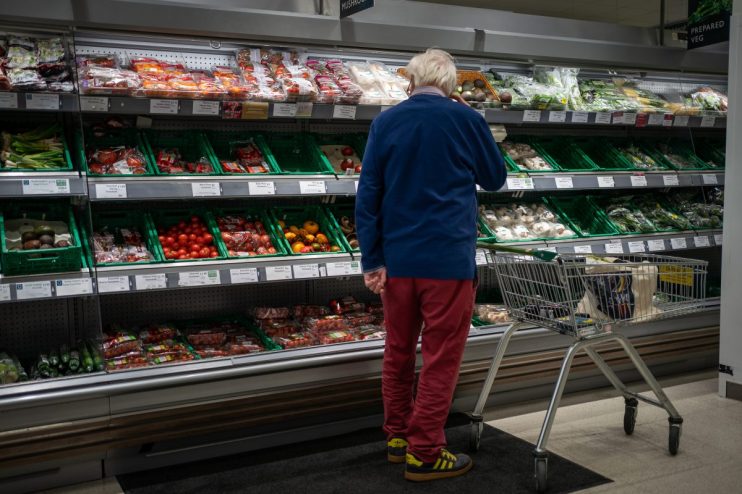
Food inflation fell again in July to its lowest level in nearly five years, as retailers claim they are “actively shielding” consumers from worse price rises.
The rate of food price inflation slipped to 1.3 per cent last month, down from 1.7 per cent in June, to reach the lowest point since September 2021.
Industry figures had warned that food price inflation could reach 10 per cent this year, but retailers say they are keeping a lid on prices with heavy discounting.
The British Retail Consortium (BRC), which represents leading supermarkets like Tesco, Sainsbury’s and Asda, said the responsibility is falling to grocers to keep prices down in the absence of government support.
“By discounting everyday essentials and delivering value, retailers are actively shielding consumers from the inflationary headwinds sweeping through the economy,” said Harvir Dhillon, the BRC’s lead economist.
Keeping inflation under control “must be an urgent priority” for Andy Burnham’s government, Dhillon said, but “the rising cost of government policies puts this in jeopardy”.
Retailers have previously piled pressure on the government to slash employment costs and energy bills, and to ditch a tax on non-recyclable packaging.
In May, Next boss Lord Wolfson said the government’s crackdown on zero-hours contracts will make it “much harder” for the business to offer more hours to its staff.
Dhillon added: “If ministers can reduce the cost of doing business by slashing standing charges on energy bills, cutting the cost of employment and rebalancing the business rates burden away from retail, those savings can be passed directly to customers at the checkout.”
Cooling food inflation bucks predictions
The Food and Drink Federation (FDF), which represents the UK’s 1,200 food manufacturers, had said the Iran war could cause food inflation to surge as high as 10 per cent this year.
The trade body had claimed that soaring supply chain and energy costs would eventually feed into prices, pointing to the months-long delay before food inflation surged after Russia’s invasion of Ukraine in 2022.
But Liliana Danila, the FDF’s chief economist, said on Wednesday that food inflation is continuing to fall because “manufacturers have learnt from the previous energy shock brought on by the war in Ukraine, adapting contracts and diversifying suppliers to keep costs down.”
She warned, however, that it will be “very challenging” for manufacturers to absorb the higher costs caused by the droughts that have swept across Europe this summer.
Though the headline rate of food inflation dipped in July, prices rose the fastest for fish (13.6 per cent), water (9.9 per cent) and preserved fruit (8.1 per cent).
Prices fell for 16 categories, according to the Office for National Statistics (ONS). These included pizza (-8.5 per cent), butter (-5.3 per cent) and jams and marmalades (-5.1 per cent).