Starmer admits defence upgrade doesn’t have enough funding

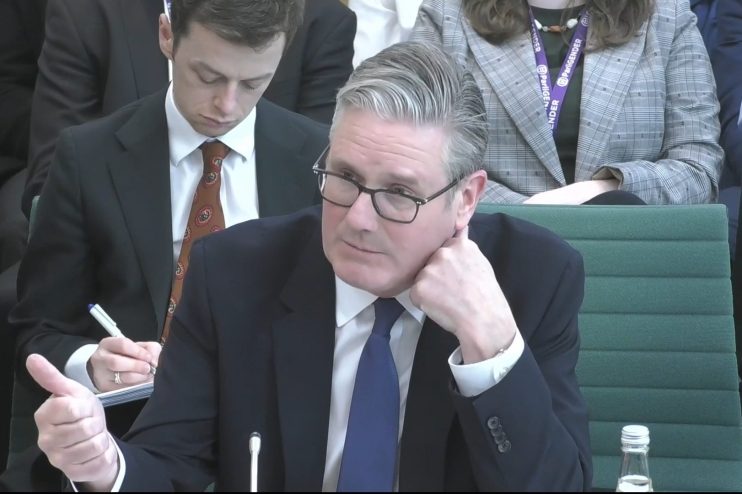
Sir Keir Starmer has admitted the government’s proposed defence plan does not have enough as he vowed to “resolve” the rift between the Treasury and the Ministry of Defence.
The Prime Minister admitted a target to raise spending on defence from 2.5 per cent of GDP in 2027 to 3.5 per cent in 2035 required further detail on “where the money is coming from”.
Appearing before a committee of MPs from different parties, Starmer said it was his job to find enough funding to commit to a 10-year strategy paper on the military as proposed in the strategic defence review.
“We have to make sure the investment we need is going in and it is sustained over a 10-year period in accordance with the strategic review,” Starmer said.
He also vowed: “It is my job to resolve it, and resolve it I will.”
After the Prime Minister promised he would set out funding details “in due course”, he was pressed by Tory Sir Bernard Jenkin on the delay of the DIP, which was slated to be published in autumn 2025.
Jenkin said the government’s refusal to comment on the timing of the DIP “smacks of enormous complacency”.
Starmer hit back: “This smacks of the fact that for years there wasn’t any investment by the last government.”
He added that investment planning had uncovered problems across the Ministry of Defence – including failed commitments and poor productivity – and made drafting the DIP more “difficult”.
“When I opened the books and saw the way it had been done for years I needed to change it.”
Starmer also batted away questions about the military’s preparedness in relation to the war in the Middle East, adding that he did not want to “raise levels of public anxiety”.
The government has committed to spending 2.5 per cent of GDP on defence from next year. It is facing questions over a wider funding pathway to reach a Nato target for members to spend 3.5 per cent of GDP on defence by 2035.
The Office for Budget Responsibility (OBR) said in its March forecast that, for the funding to be reached on a “linear path”, an extra £6bn in funding would be needed by 2029.
In today’s money, ratcheting up defence spending to the Nato 2035 target would require the Treasury to find an extra £40bn.
Starmer resists ‘false comfort’ of end of war
His appearance before the Liaison Committee in Parliament came hours after President Trump announced the US would pause strikes in the Middle East due to “productive” negotiations with the Iranian regime.
The Brent Crude oil price, an international benchmark, fell by more than 12 per cent after the US president’s remarks, partially easing concerns about interest rate hikes and a more prolonged economic slump.
The Prime Minister was scheduled to lead an emergency Cobra meeting with senior Cabinet officials including Chancellor Rachel Reeves and foreign secretary Yvette Cooper, as well as Bank of England governor Andrew Bailey, after his appearance at the committee.
He told MPs on the committee that Reeves would be tasked with providing an update on the outcome of the Cobra meeting as officials were working “on the basis that [the war] could go on for some time”.
“We mustn’t fall into the false comfort that there will be a quick and early end to this,” Starmer said.
He also indicated that, while Reeves would not announce “concrete” policy measures on Tuesday, the government’s focus would be on supporting the poorest households.
“We’re looking this afternoon at the approach we might take. I am acutely aware of how much it cost last time round.
“I’m acutely aware of the state of public finances. But we will look this afternoon at what appropriate approach might be.”