London luxury property at mercy of Labour chaos, not Iran war

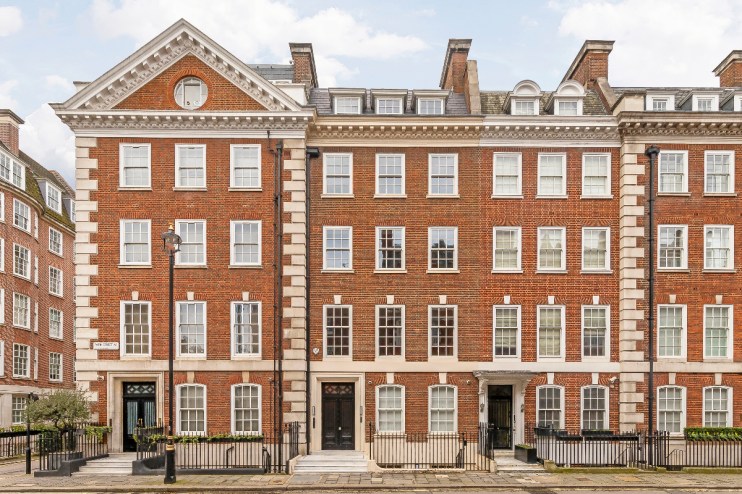
Labour party infighting, not the Iran war, is the primary factor shaping the ongoing slump in London’s luxury property market, experts have said.
While inflation fears caused by the Iran war had been blamed for the capital’s stagnant prime property market, speculation around the tax regime of a potential successor to Starmer is emerging as the defining feature of London’s up-market housing sector.
London’s prime property market suffered its biggest drop-off in sales last year – down 37 per cent – and experts had blamed stamp duty and the inflation fears caused by the Iran war.
House prices have fallen furthest in the capital’s most affluent postcodes, including Westminster and Kensington – where prices dropped by 11 and 7.5 per cent in May.
But the Middle East conflict is “no longer the dominant force shaping the outlook for the UK property market,” according to estate agency Knight Frank.
Dire local election results for Labour have left Sir Keir Starmer fighting for his political life, with Manchester mayor Andy Burnham and former health secretary Wes Streeting shaping up for potential leadership bids.
Iran war ‘no longer dominant force’
Tom Bill, Knight Frank’s head of residential research, told City AM the capital’s prime property market is holding its breath while the Makerfield by-election – and the Labour leadership race that could follow – runs its course.
“The ideological direction of the government will have a particular impact on the prime property market in the capital.
“A Chancellor who is unable to cut spending meaningfully or introduce broad-based tax rises may well target wealth and property in order to balance the books,” he said.
Wealthy property owners fear a repeat of last Budget’s “smorgasbord” of tax rises – including on property – which came after Rachel Reeves ruled out hiking the rates of income tax.
In the meantime, speculation around the property tax agenda of a potential new Prime Minister and Chancellor “will be a big drag on demand, aggravated by high rates of stamp duty and the absence of effective incentives for wealthy overseas investors,” Bill added.
Some property experts fear that Andy Burnham could look to lower the threshold of the so-called mansion tax, which will take the form of a council tax surcharge on all homes worth more than £2m from 2028.
Fears mansion tax could be widened
Mary-Anne Bowring, director of real estate asset manager Ringley Group, told City AM: “We are continuing to see an unfavourable taxation regime and additional barriers for overseas buyers of prime residential properties.”
Some prime property experts have warned that the end to the non-dom regime is in part to blame for the slump in London’s upmarket housing sector.
The non-dom tax status had allowed UK residents whose primary home was outside of the country to only pay tax on money made within the UK.
But at her first Budget in 2024, Rachel Reeves replaced this regime for a residence-based system which taxes all long-term residents on their worldwide income, and introduced a four-year “grace period” for the changes.
As many as 2,000 wealthy non-doms fled the country last year in apprehension of the tax changes, according to one report, with lobby groups warning the government is underestimating the impact of the regime’s end.
“Plus, [there is] a continued damping effect of the introduction of the mansion tax and emerging concerns that the introductory threshold could be lowered based upon recent political rhetoric,” she added.
David Fell, lead analyst at estate agency Hamptons, warned that there is “very little headroom left to squeeze further revenue from prime markets” before wealthy buyers could be spooked out of the market.
Burnham backlash
Annabel Dean, partner at law firm Farrer & Co, told City AM the firm, which advises on high-value property transactions, is seeing “some hold-off” on activity by high-net worth individuals in reaction to “political instability”.
“We are seeing many parties not proceeding with transactions unless they absolutely need to, for instance for work or education purposes, or unless they are absolutely certain that they are getting a good price,” she said.
Hugh Wigzell, also a partner at Farrer & Co, said that the prospect of a Burnham premiership is not yet “having a discernible impact” on the activity of many high-net worth buyers.
But he added that a market reaction “would surely follow” if Burnham were to become Prime Minister.
“This could likely take the form of a “Budget-esque” rush to get things done before new property taxes can be implemented, and indeed depending on what taxes these are, the impact could be quite profound,” he said.