Lexus ES 350e Review: Is this the best electric executive car?

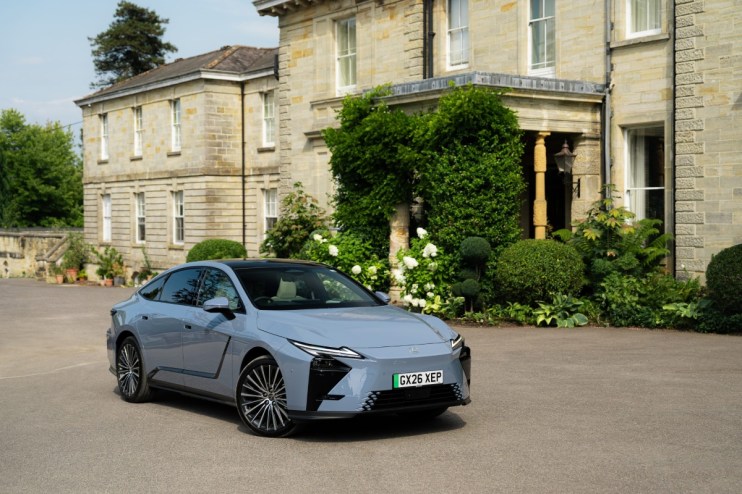
For business leaders, corporate decision-makers and high-income professionals, an executive car needs to do more than take the scenic route through total chaos. It needs to make the journey easier, writes motoring journalist Tim Barnes-Clay.
That could mean quietly hoovering up motorway miles between meetings, providing a comfortable haven while crossing London, or giving you somewhere to work or power down.
Having spent time behind the wheel of the all-new Lexus ES 350e, I reckon Lexus has understood that brief incredibly well.
I tested the ES from my base at Leonardslee House in West Sussex – a fittingly sophisticated setting for a car that places refinement, craftsmanship and wellbeing at its heart.
And while the ES faces competition from the BMW i5 and Volvo ES90, this new Lexus has a particularly appealing quality: it makes travelling feel less draining.
A fresh take on the premium executive saloon
The ES has been part of the Lexus line-up since the marque was founded in 1989, with over three million sold globally. This eighth-generation model represents a serious step forward.
In the UK, the ES is available exclusively as the fully electric ES 350e, bringing Lexus’s recognised approach to quality into the electric era.
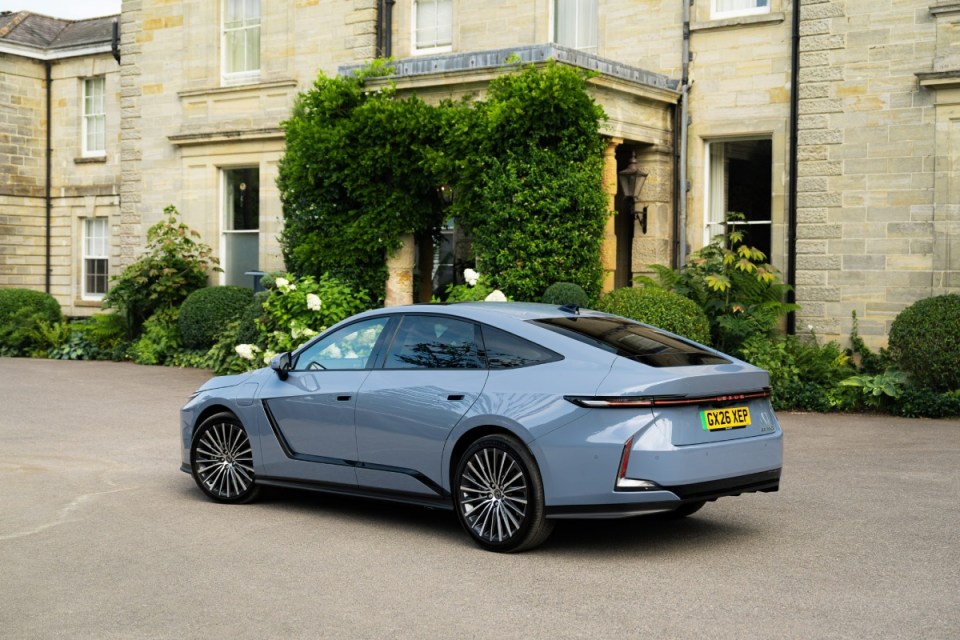
At 5,140mm long, it has genuine executive-car presence, while its 2,950mm wheelbase creates a spacious cabin.
Luxury that doesn’t need to shout
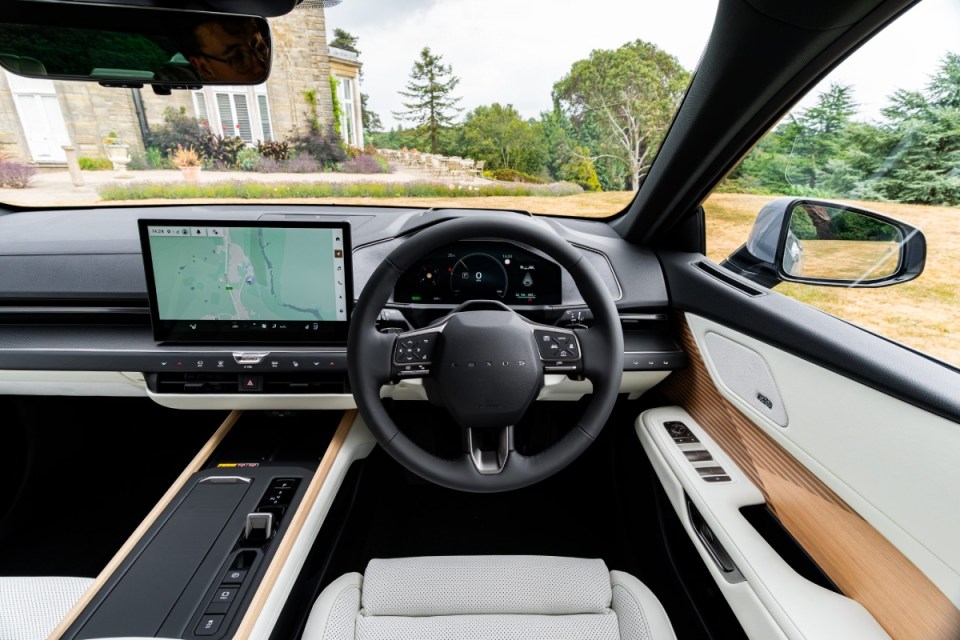
Inside, the cabin follows what Lexus calls its “Clean Tech x Elegance” philosophy, combining modern technology with traditional craftsmanship.
The dashboard is tidy, while the 12.3-inch driver’s display and 14-inch LexusConnect touchscreen provide the digital functionality expected of a modern executive machine.
My Premium Plus test car, priced at £68,245, was markedly well equipped.
It came with semi-aniline leather upholstery, a head-up display, an electronic rear-view mirror, twin wireless charging pads and a 17-speaker Mark Levinson Surround Sound system.
Low noise levels are particularly noticeable, creating an environment where you can listen to music or appreciate some peace away from the City.
Surprisingly agile for such a big car
It is easy to imagine a car measuring over five metres long will feel like a fish on a bicycle in confined spaces. The ES quickly dispelled that mental picture for me.
I navigated a mini roundabout with a low stone wall and couldn’t believe how such a relatively large saloon could almost turn on a sixpence.
That could prove particularly useful in London, where tight junctions and packed car parks are part of everyday driving.
Built for London’s business drivers
Think about the working day of a senior executive based around Canary Wharf.
There could be a crack-of-dawn commute into London, meetings in the City, a crawl across town, an airport run, and then a motorway drive home. That is a lot of time spent on the road.
But don’t worry, the ES will turn dead time into lived time. As already touched on, its electric powertrain is smooth and almost soundless, while the suspension takes the edge off urban roads well past their best.
The plentiful rear legroom also makes the Japanese-made car particularly suitable for working or stretching out when someone else is behind the wheel.
Electric power without compromise
The ES 350e uses a 77kWh battery and produces 221bhp through its front-mounted electric motor.
It reaches 62mph in 8.0 seconds and maxes out at 99mph.
That is modest compared with some electric foes, but this Lexus isn’t intended to be a performance car.
Its acceleration is smooth and immediate, with poke delivered progressively rather than ferociously.
The quoted electric range is between 325 and 361 miles, depending on specification. The Premium Plus has a driving range of 357 miles (WLTP), while the energy consumption is 25.7 kWh per 100 miles.
When a rapid top-up is needed, a 150kW DC charger can take the battery from 10 to 80 per cent in around half an hour.
BMW i5: a different interpretation
I have also driven the BMW i5 M60 xDrive, which demonstrates how differently automakers can approach the electric executive car.
The bimmer produces 593bhp and accelerates from 0-62mph in just 3.8 seconds.
It is hugely impressive, particularly for drivers who still want that BMW sense of performance.
DC charging at up to 205kW takes the i5 from 10 to 80 per cent in approximately 30 minutes.
The BMW is an out-and-out driver’s car – but the Lexus ES 350e is more devoted to making everyday travel unforced.
Volvo ES90: technology meets serenity
The Volvo ES90 is another alternative exec-EV.
I have driven the Swedish whip and found its Scandinavian interpretation of luxury pleasing.
Its fastback-inspired design and elevated stance give it a distinctive identity, while the cabin feels spacious and sophisticated.
Its 800-volt electrical architecture enables 10-80 per cent charging in around 20 minutes, with more than 400 miles of claimed range in the version I tested.
The Lexus takes a different tack, prioritising the overall experience rather than competing on charging speed or outright range.
A fitting luxury backdrop
As remarked on earlier, Leonardslee House was an ideal location to experience the ES. The Grade II Listed Italianate house dates from 1855 and sits within a Grade I Listed woodland estate. It has also been awarded a Michelin Key.
Restaurant Interlude, at the heart of the estate, is led by Executive Chef Jean Delport and holds both a Michelin Star and Michelin Green Star.
Leonardslee Family Vineyards adds another layer, with 38 acres producing English sparkling wines from Chardonnay, Pinot Noir and Pinot Meunier.
It is an experience built around craftsmanship and attention to detail – qualities also evident in the 2026 Lexus ES.
Verdict
The all-new Lexus ES 350e is one of the most satisfying electric executive cars I’ve driven.
It combines space, an impressive specification, easy manoeuvrability and a serene driving experience.
At £68,245, the Premium Plus sits between the £59,345 Premium and £72,545 Takumi trims.
The BMW i5 M60 xDrive offers brain-churning performance, but you won’t get much change out of £100,000. Meanwhile, the Volvo ES90 brings remarkable range and rapid charging – and costs £67,560-£87,350.
Overall, the Lexus is the cheapest option, then – but it doesn’t need to beat the BMW or Volvo at any particular game. Its strength is the complete package.