Labour’s inheritance tax reforms face legal test as farmers argue unlawful consultation

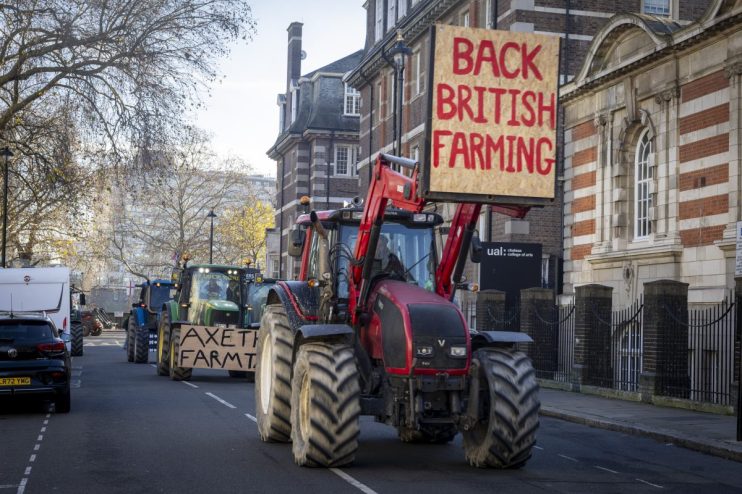
The UK government is set to defend its inheritance tax raid on agricultural assets and family firms in the High Court this week.
The proposed changes to agricultural property relief (APR) and business property relief (BPR) represent one of the biggest shifts in UK inheritance tax (IHT) policy in decades.
After a year of protests from farmers, Labour announced a partial U-turn in December, lifting the threshold to £2.5m from £1m, effective April 2026.
The government expected its U-turn to cut the number of family estates eligible to pay higher inheritance tax to 1,100 from 2,000 under the original proposals.
Government ‘acted unlawfully’
However, a judicial review was launched against the government, challenging the plan, arguing that it acted unlawfully by failing to follow its 2011 ‘tax consultation framework’.
The legal action was filed by farmers Thomas Martin and George Martin of the campaign group Farmers and Businesses for Fair Tax Relief, and the professional services firm Alvarez & Marsal.
The parties will tell the court that the lack of a comprehensive consultation fell well short of longstanding legal standards and breached public law duties towards the farmers and others.
The hearing is expected to last two days, starting on Tuesday, at the Royal Courts of Justice.
Normally, judicial review cases are heard by a single judge, but in this case, they will be heard by two senior judges, Lady Justice Whipple and Mr Justice Fordham, who will decide the outcome.
Lindsay Hoyle, the Speaker of the House of Commons, was granted permission to intervene in the case due to constitutional issues at stake.