Kanye is awful but so is meddling in private enterprise

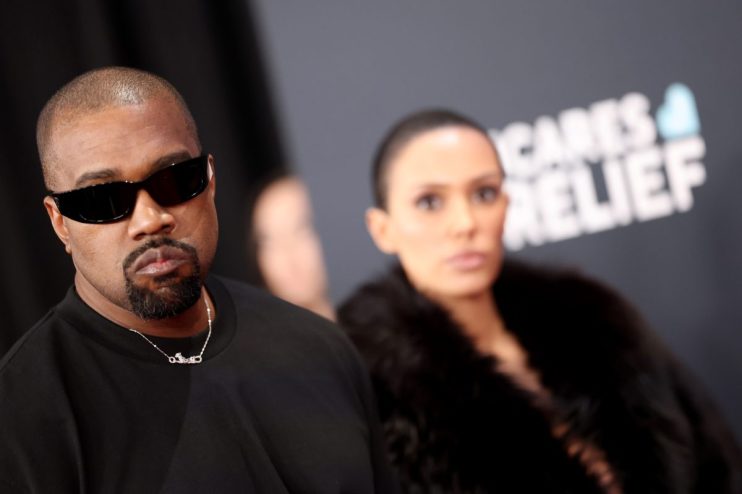
Kanye West’s actions are deplorable, but if Wireless wanted to platform him that’s their business risk to take, writes Joseph Dinnage
Kanye West (now Ye) has become one of the world’s most reviled public figures.
From antisemitic outbursts to parading his partner practically nude down Hollywood red carpets, the rapper’s behaviour has oscillated between the gratuitously offensive and the downright absurd.
His most infamous stunt came last year, when he released the track ‘Heil Hitler’, which was to feature on the ultimately unreleased album ‘Cuck’. The rapper has praised Adolf Hitler on a number of occasions and has even gone so far as to sell t-shirts emblazoned with swastikas.
To describe his behaviour as deplorable would be an understatement.
Yet Ye still commands significant popularity, and over the last 48 hours has become the subject of a fresh controversy here in Britain.
Until yesterday, Ye was set to headline London’s Wireless festival for all three days of the event. This news was met with disgust, particularly from the UK’s Jewish community. In the aftermath of the 7 October massacre, we have seen a disturbing spike in antisemitic hatred across the UK. Like many, I have been appalled at the abuse Jews continue to face during the innumerable pro-Palestine protests that so often take place in our capital.
In response to his comments, the Home Office has decided to rescind its permission for Ye to play at the festival.
This is an understandable response. Ye’s remarks were beyond the pale and have contributed to an atmosphere which has made life unsafe for Jews across the West.
Uncomfortable though it might be, the Home Office’s decision does raise important questions about both free speech and the role of the state in private enterprise.
One of the more revealing responses came from Chris Philp MP, the shadow home secretary. Philp celebrated the move, claiming Ye’s performance would’ve sent ‘the wrong message’ and declared “those espousing hatred shouldn’t be allowed in”. Again, ostensibly reasonable, and also in accordance with public opinion. YouGov polling has 57 per cent of Britons supporting Ye’s ban.
Markets must be allowed to take risks
Yet there’s an incongruence here. This is the same politician who only last year was published in The Telegraph decrying non-crime hate incidents as a threat to free speech and made the point that “saying something offensive is not illegal”. Surely this logic should be applied equally?
The Conservative Party has also – quite rightly – led the charge against the Labour Party’s campaign of intervention in the affairs of Britain’s businesses. While the subject is inflammatory, why should this case be any different?
The festival organiser, Melvin Benn, insists that although he recognises that Ye’s bigotry was despicable, he is ‘pro Jew and the Jewish state’, and appealed to Ye’s status as a cultural icon and the fact his music is enjoyed by millions across the country as reasons to grant the artist permission to perform. He also pointed out that Ye has apologised for his past actions, and attributed them to his bipolar disorder (whether you believe the apology or not is another question entirely).
Businesses must be able to take risks, and if Benn deems platforming Ye as a risk worth taking for his business and share price, then that is his lookout. This is exactly the process of creative destruction that allows businesses to rise and fall, and it is surely not the government’s place to tell them whether they are able to host musicians with a fan base of millions.
The fact is that it is possible to both utterly condemn Ye’s behaviour while also standing up for free speech and freedom in the private sector. Whether the decision to ban Ye’s performance was the right one or not remains to be seen. But it is vital that in highly charged and emotive news stories such as this, we do not forget the principles that underpin our democracy and prosperity.
Joseph Dinnage is deputy editor of CapX