Barts North Wing would be a worthy Toast Award winner

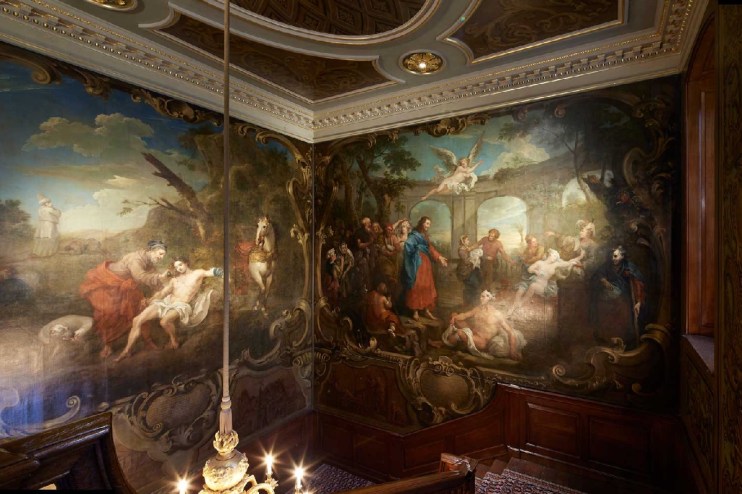
Barts North Wing houses the restored Hogarth Stair and Great Hall, a free City landmark up for Toast the City Awards.
The public voting for the Toast the City Awards is over but the judges have yet to cast their votes for their favourite bars, restaurants, hotels, coffee shops, cultural venues and more. As the head judge, I’ve spent the last couple of weeks trekking back and forth across the Square Mile to reacquaint myself with all it has to offer.
I’m a little ashamed to admit that after working here for almost 17 years, I had never visited Barts North Wing, which recently reopened after a year of renovations. So what better time to visit this City icon, nominated in both the Best Art or Culture Experience and Best New Opening categories?
It’s not the kind of place you would stumble upon by accident. It’s located down the road from St Bartholomew the Great, London’s oldest parish church (and home to an incredible Damian Hirst statue of the eponymous saint, who was flayed to death, holding his own skin), with the entrance to the St Barts hospital courtyard beside the William Wallace Memorial. Before you reach the courtyard you pass another church, the wonderfully-named St Bartholomew the Less, from where, when I visited, the sound of Bach’s Toccata and Fugue in D minor being played on the organ was drifting.
Barts North wing restoration
Take a left in the courtyard and you come to a green door that manages to be at once grand and unassuming. This leads to the North Wing, built in 1732 and home to the Hogarth Stair and the Great Hall. This part of St Barts Hospital was designed for the benefit of wealthy patrons, whom the hospital hoped to persuade to donate in the days prior to the NHS. Architect James Gibbs, influenced by both the Italian Renaissance architect Palladio and Sir Christopher Wren, created a stunning carved staircase leading up to the Great Hall.
It’s the mural, however, that really grabs your attention. William Hogarth’s vast mural of the Good Samaritan used the likeness of real-life patients from the hospital – complete with their medical conditions – and transplanted them into the biblical scene. It’s an astonishing place, incongruous with the working hospital it’s appended to, and the painstaking restoration work means it’s as vibrant as the day the paint first dried. And it’s free! Whether it wins one of our awards remains to be seen but if you have a free lunch break in the Square Mile, it’s well worth checking out.