Banning vape shops won’t fix scuzzy high streets

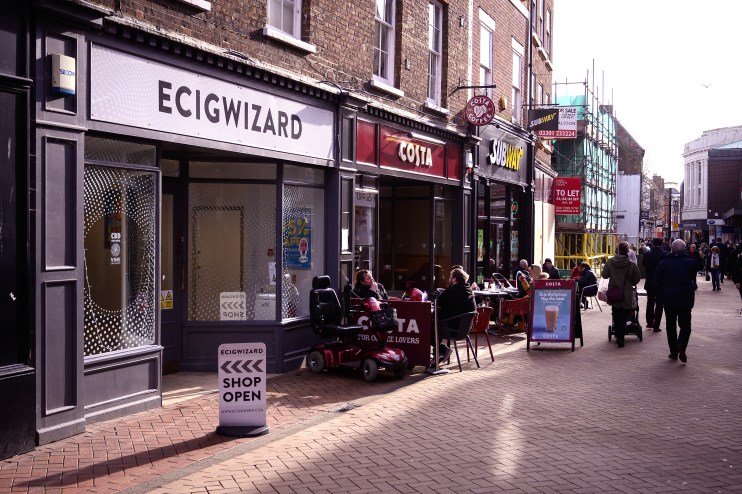
Andy Burnham’s plans to revamp high streets by cutting down on vape shops aren’t ambitious enough, says Joseph Dinnage
Andy Burnham is taking his hand to cleaning up Britain’s high streets. Commenting on the degradation of our urban centres, Burnham said that many areas have been “hollowed out”, and that the high streets we grew up with are now ‘unrecognisable’. What’s made them this way? The proliferation of vape shops and bookies – the former of which are often used for money laundering by organised crime groups.
The Prime Minister plans to hand local authorities new powers to block the opening of these businesses. Planning legislation will be amended to ensure that every new shop selling e-cigarettes or vapes will need to apply to their local council for permission to open. The definition of a vape shop will be tightened to prevent businesses avoiding the rules by describing themselves as a general convenience store or retailer. Building on a proposal made under Keir Starmer’s administration, new powers will be introduced to extend closure orders for mini-marts and vape shops found to be selling illegal tobacco for up to 12 months.
It’s easy to see the rationale: most of Britain’s high streets these days leave you nauseous. Where I was raised – in Camberwell, South-East London – I remember as a child thinking the local high street was a bit of a dump, with its vandalised branch of Natwest, dilapidated Greggs and busy sexual health clinic. Walking around it now – choking on the wafts of synthetic blueberry emanating from garishly coloured vape shops and suspiciously empty establishments offering phone repairs–- the scuzz of 20 years ago feels altogether more innocent.
Why should you care?
A stunning graph from the Financial Times reveals all. Since 2015, the number of vape shops on Britain’s high streets has increased from 262 to 3,776. The number of barbershops has also exploded, increasing from 2,953 to 18,078. Interestingly, betting shops are in decline, falling from 8,822 to 5,872.
You might think, so what? Who cares if more people want to vape and get their haircut? It wouldn’t matter if so many of these businesses weren’t steeped in criminality. A BBC investigation earlier this year found that a number of vape shops were selling illegal cigarettes, cocaine, cannabis and prescription medicines over the counter. As a result of the expose, six shops in Cradley Heath, Sandwell were closed down. Investigations into barbershops and American candy shops have found much of the same. And the thread binding these businesses is a sophisticated Kurdish organised crime network engaging in money laundering and harbouring illegal immigrants in squalid conditions.
Burnham is right to take issue with this – and I hope he succeeds in cracking down on these criminals – but his plan looks likely to fail on two fronts. First, the practicality. As both the Conservatives and Reform UK have pointed out, without cutting business rates across the board, Burnham could end up making our high streets even more desolate as businesses don’t crop up to replace those shut down.
Second is the sheer lack of ambition. The fact is that empowering local authorities to shut down these shops does not get to the route cause of these crimes. Without robust reforms to our immigration system, which both restricts entry and speeds up removing foreign criminals, criminal enterprises like those being run out of vape shops will continue to appear. A Prime Minister who goes on the media calling for Britons to “play their part” in accommodating migrants does not bode well.
The Prime Minister’s plan for Britain’s high streets reflects many of the concerns that have been raised about his government. That while, like his predecessor, he talks a good game, Burnham’s rule will be characterised by stunts, not substance.
Joseph Dinnage is senior press officer at the Prosperity Institute