Andrew Bailey warns markets are not ready for the rise (or fall) of AI

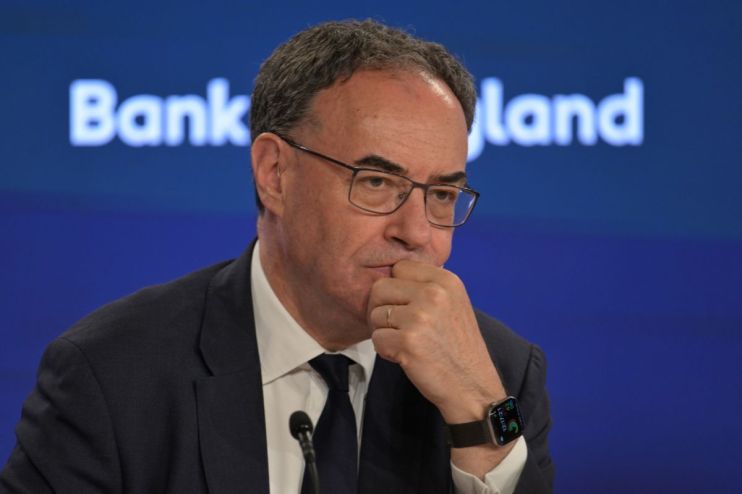
The governor of the Bank of England and chair of the Financial Stability Board, Andrew Bailey, has warned that countries are unprepared for the consequences of advanced AI and that the wider economy remains vulnerable to a dramatic market correction triggered by a potential slump in AI and tech stocks.
Ahead of a G20 meeting between finance ministers, Bailey warned that high issuance in sovereign debt, vulnerabilities in private credit and “stretched” pricing on AI investments were putting pressure on markets.
He warned that high levels of borrowing to fund an AI boom could “amplify a future market correction” and put global markets at risk.
“I remain concerned therefore that a large shock or combination of shocks could concurrently trigger multiple vulnerabilities,” Bailey wrote.
Many of the largest companies in the world, including Nvidia and Microsoft, are relying on sizable returns over the next year to play out after financiers supported heavy investments into chips, software and other digital assets.
A fallback in stock prices could see investors lose trillions of dollars, which could force investors to take action on holdings across bond markets and other sectors – triggering a chain reaction.
Several top finance chiefs have raised similar concerns, with Bank of England deputy governor Sarah Breeden predicting that stock prices could fall as high valuations did not reflect risks in the global economy.
Bailey warned that advanced AI poses a specific and evolving risk to cyber security.
“The risk landscape has been further complicated by the emergence of frontier AI models, which are showing increasingly sophisticated autonomy and problem-solving abilities, as well as threat capabilities,” he said.
“For the financial system, the most immediate concern is the potential impact of frontier AI on cyber risk.
“Frontier AI may have the ability materially to alter the speed, scale and economics of cyber risk, which could undermine market confidence system-wide.”
He warned that a cyber crisis at one institution could rapidly spread to other businesses and systems.
“The global financial system is highly interconnected and cyber disruption can spread across jurisdictions through common technology providers, shared infrastructure and cross-border financial activity,” he said.
Countries ‘do not have’ rules for AI
Bailey, whose role at the FSB involves coordinating responses to problems faced by the global financial system, said several countries were not prepared to deal with the fallout of AI risks on cyber security.
He said several jurisdictions “do not have the protocols in place” to manage the roll-out of advanced AI models, thereby “heightening risks for the financial sector and beyond”.
His warnings on the threats posed by AI come as regulators and governments have scrambled to ensure new models are unable to break into systems.
Anthropic’s Mythos model, which was tested by some government agencies such as the UK, was highlighted as a key risk earlier this year. The Silicon Valley firm said its Fable 5 model is a safer version of Mythos.
Meta and OpenAI have also both admitted that AI models have managed to connect to the internet and hack into other services.
Bailey said there was a “higher volume of vulnerabilities”, with the FSB now looking to support “safe deployment of frontier models” across financial services firms.
Before the G20 meeting in North Carolina, Chancellor John Healey said he would make “good growth” his top priority.
He is also expected to say the UK’s gilt issuance would be £58bn lower this year compared to last year. Talks of financing a surge in defence spending are also set to take place.