Healey’s business rate tweaks won’t stop ‘hollowing out’ high street, business group warns

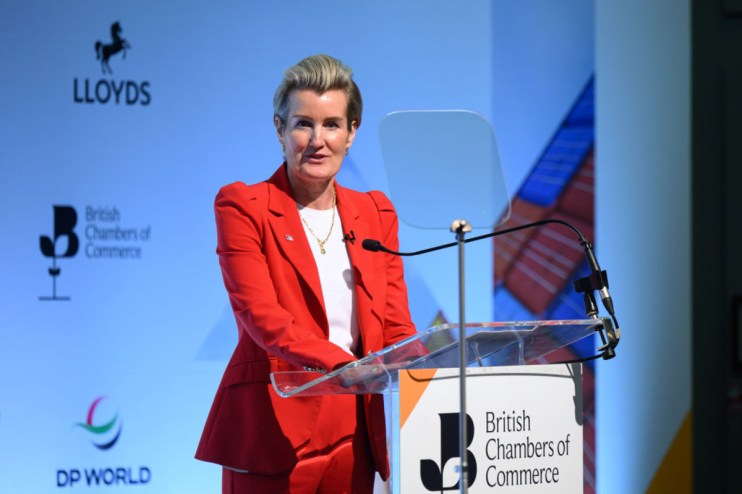
John Healey’s changes to high street business rates are a “sticking plaster” that will not reverse the “hollowing out” of town centres across the country, the boss of Britain’s largest business group has warned.
In his maiden Budget this week, the Chancellor said he would lift the threshold at which small firms receive business rates relief from £12,000 to £18,000, exempting some 70,000 more companies from the tax. He also said he would freeze business rates bills for all other retail, hospitality and leisure firms.
The move, funded by a tax raid on gambling firms and a VAT crackdown on e-commerce platforms, will “help provide the funding for our pubs, cafes and shops to thrive,” the Chancellor said.
But the decision has come under fire from some of the country’s biggest business bodies who have criticised the government’s failure to reform the underlying business rates system. A firm’s business rates bill is calculated using the annual rental value of its premises.
Labour pledged to reform the business rates system in its 2024 election manifesto but has so far made no headway on the plans.
Shevaun Haviland, the boss of the British Chambers of Commerce, told City AM the Chancellor’s move was welcome but would do little to solve the crisis engulfing British high streets.
“It’s another sticking plaster, really. It’s another tweaking of a system that’s already incredibly complicated and acts as another tax on businesses before they’ve sold a single thing,” she said in an interview.
“It is the thing that is hollowing out our high streets. From speaking to our members it’s generally the thing they can’t pay anymore, and then they [close].”
The British Retail Consortium (BRC), which represents some of the retail industry’s biggest names, including Tesco, Sainsbury’s and Marks & Spencer, dubbed Healey’s policies a “smoke and mirrors announcement”.
Though the Chancellor said business rates would be “frozen” for the retail, hospitality and leisure industries they are still set to rise by 3.5 per cent next year, in line with inflation, meaning the high street will be saddled with extra £250m in business rates bills next April.
‘Tsunami of costs’
Haviland’s comments will add to pressure on Healey after his maiden Budget came under fire from several independent think tanks for failing to meet the scale of the crisis facing the British economy.
The Chancellor set out some £6bn of giveaways designed to give “breathing space” to households and businesses. But the statement was accompanied by a gloomy fiscal outlook from the Office for Budget Responsibility which slashed growth forecasts from 1.6 per cent to one per cent next year and raised average inflation projections to 3.4 per cent. Unemployment is also set to peak at a higher level than previously expected.
Haviland said that the cost of employing staff remained the primary concern for the Chambers’ 50,000 members.
“Our businesses want to employ young people – those million young people, not in education, employment and training. We want to employ them, but at the moment, we just can’t,” she said, adding that firms were drawing under a “tsunami of costs”.
Rachel Reeves’s decision to hike national insurance contributions for employers has ramped up the cost of taking on new staff.
Haviland said energy was also becoming a key concern for her members as the Iran war chokes off fuel supplies and pushes up bills. While households were given a £100 support package yesterday, businesses were given nothing to help soften the blow of rising prices.
“Businesses are already seeing their bills tick up, and there’s nowhere to go,” she said. “There’s literally nowhere to go. You can’t pass on these costs.”
The government was approached for comment.