Meet the man behind London’s biggest new factory since the Second World War

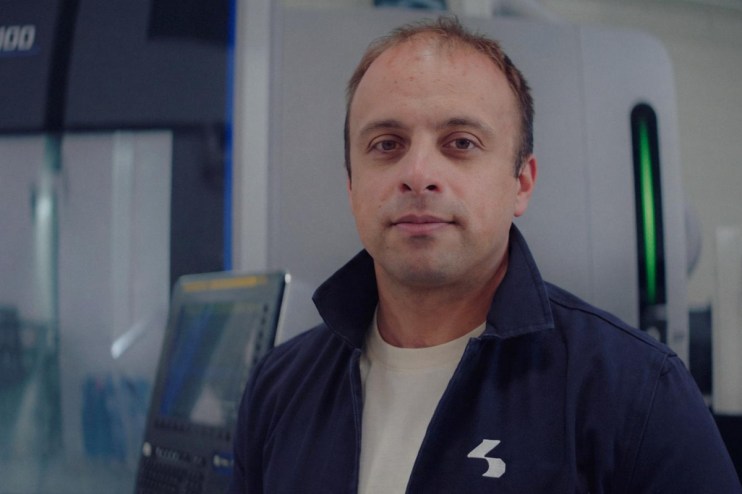
Isembard’s Alexander Fitzgerald is on a mission to revitalise Britain’s high-precision manufacturing industry. Ali Lyon visits the company’s new London site to talk policy, patriotism and intergalactic growth
Amid the whirring sound of robotic machines, Alexander Fitzgerald is excitedly explaining why the only thing on the wall of his cavernous factory is a brightly illuminated, 50-square-foot Union Jack.
“We’re incredibly proud to be actually trying to build stuff in and for Britain,” the founder of Isembard says. “And fun fact, the light above the flag is the only one that stays on when the factory shuts down; so people staying late can see it, and know what they’re working so hard for.”
Fitzgerald’s patriotism is a far cry from the usual cliche-ridden techspeak of venture-backed founders. But then Isembard – his rapidly growing, high-precision defence and aerospace manufacturing firm – is a highly unusual start-up.
We are speaking just weeks after Isembard, named after Bristolian polymath Isambard Kindom Brunel, stamped its mark on the UK’s start-up scene by announcing the opening of London’s largest factory since the Second World War.
Located little more than a mile away from the Square Mile, and in the shadow of the Shard, Fitzgerald’s Southwark site is an unorthodox choice for a 160,000 square foot plant. But it is also, the former army reservist says, an entirely logical one, given Isembard’s need for hardy manufacturing engineers, nerdy software engineers and professional services thoroughbreds all in one place.
“What people don’t realise in London is that we still do have manufacturing jobs,” he says. “The UK has the second-largest aerospace manufacturing sector in the world and the ninth for all manufacturing. Just in London alone, there’s about 100,000 people employed in building stuff.”
‘We can be the most valuable company in the world’
‘Building stuff’ is exactly what Isembard’s high-precision machines are up to, as the avuncular, muscular founder proudly strides from one to another on his coldly lit, bracing factory floor. The ‘stuff’, in this instance, is intensely complex and – sadly for his camera-toting interviewer – highly confidential components for defence firms and aeronautical giants.
It looks unremarkable enough. The machines quietly pump out the kind of shiny metal lumps that would not look out of place in a new hatchback. But in the two short years of its existence, Isembard has already become an integral part of the supply chains for Babcock and US defence-tech firm Anduril; not to mention several other arms companies whose identities, I’m told, must remain under wraps.
Fitzgerald says the secret to Isembard’s strikingly fast growth can be traced back to two early decisions. First was its choice to build its own proprietary software, dubbed Mason OS, which instructs his army of machines to carve their components faster, stronger, and more efficiently than manufacturing rivals. And second, was the move to adopt the kind of corporate model more commonplace in the less technical spheres of hospitality and retail: a franchise.
The latter is especially unusual. By Fitzgerald’s reckoning, Isembard is the only precision engineering company in Britain to license out its technology in the way KFC might do its menu. But he argues it is this unconventionality that has allowed the firm to grow from one factory at the start of last year, to 17 – at the time of writing.
From signing on the dotted line to your factory making rocket parts or satellite parts, it should take between 60 and 100 days.
First and foremost, it allows the group to spread its liabilities among different parties and boost its access to investor cash. But it has also expedited its expansion overseas. Isembard now has seven factories in the US, one in France, another in Germany and eight in its native UK. In an increasingly protectionist world, those international markets might have been harder to crack were it not for its unorthodox model, Fitzgerald says.
“The beauty of what we’re doing is, whenever we launch in a country, we’re not setting up a bunch of Isembard corporate-owned factories – it’s all local franchisees,” he explains. “Take France – traditionally massive nationalists who would only buy French in the world we operate in. But they’re rolling out the red carpet for us, financing franchisees faster than the UK is.”
The upshot of the approach is that Isembard now counts the most unlikely cross-section of society as its franchisees. There are former army officers, navy sailors and ex-Amazon workers – not to mention traditional McDonald’s and Subway franchise owners – all of whom can point to a factory of their own now churning out components that could end up in a submarine.
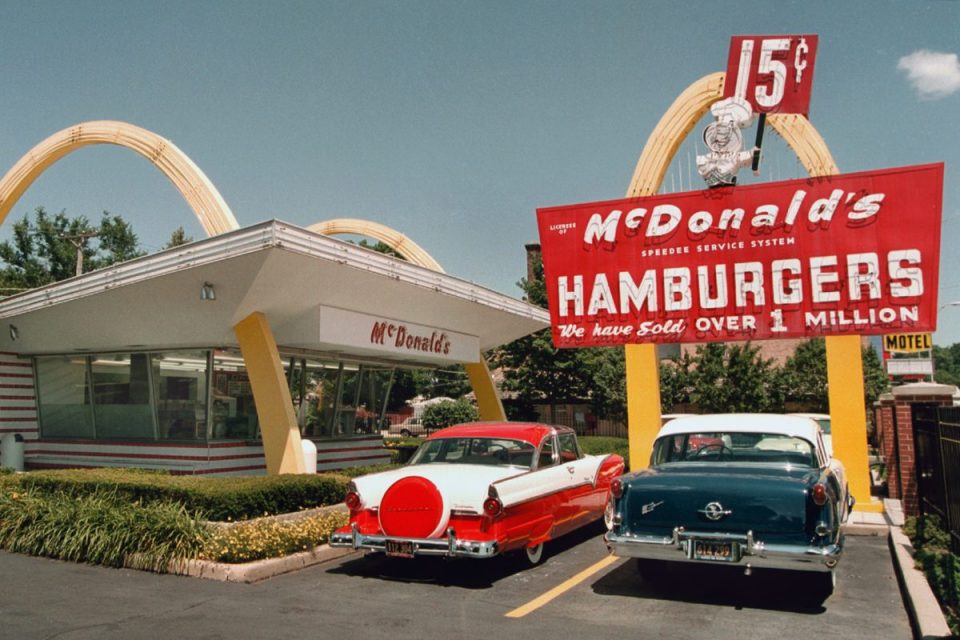
“If you applied today – with your CV and a letter saying why you wanted to own your own factory – we’ll assess you,” the 33-year-old says. “We’ll then offer you a franchise agreement, you’ll sign. And then from signing on the dotted line to your factory making rocket parts or satellite parts, it should take between 60 and 100 days.”
But 16 factories dotted around the developed world is far from the ceiling of Fitzgerald’s ambitions. The group is now launching “two or three factories a month”, he says, with plans for plants of varying sizes already afoot and new markets on the horizon. His target markets are everywhere with an industrial base “apart from Russia, China, Iran and North Korea”.
“I do fundamentally think we have the opportunity to build one of, if not the most valuable company in the world,” he says. “It sounds crazy, but still, it was crazier when I used to say that with 1,000 square feet and four desks. It’s slightly less crazy now.
“If we can build hundreds of factories in every country in the world, and we can make all the components, not just for critical industries but uncritical industries as well – and if we can do that not just on this planet but many more planets – I feel like you just get a cornucopia of human improvement,” he says.
Interplanetary growth
His ambitions may be intergalactic, but there is a prospect that Isembard may not be able to realise its goals in its own home market. The company is swimming against the tide of deindustrialisation in Britain, in which manufacturing’s share of the economy has fallen from a third of our output in the 1970s to below 10 per cent today, and its workforce share has fallen below a tenth.
And rather than bottoming out, the problem is accelerating. Since the pandemic, England has lost 6,500 manufacturing businesses, with most of the closures in the country’s two industrial beating heartlands: the North East and Midlands. Manufacturers blame China and the increasingly advanced industrial bases of other emerging markets. But also the UK’s own policymaking on skills, industrial strategy and, crucially, energy. Britain, famously, now boasts the highest industrial energy costs in the developed world; 50 per cent higher than its European counterparts and some four times more than gas-guzzling America.
Asked about the extent to which those energy costs and political decision-making impact Isembard, Fitzgerald is surprisingly sanguine. “Energy costs aren’t actually the big barrier for us,” he says. “Along with rent and hiring, it’s one of the big costs, sure. But the biggest one is actually machines. That’s why we’re banging the drum a lot trying to get the government to help make it easier to set up factories.”
The other big hurdle, at home at least, is cultural. Fitzgerald appears bemused by the way the UK has neglected its industrial base: “There was a think tank I was speaking to – and they characterise what they do as, ‘publishing PDFs on the internet’. I think there’s too many people publishing PDFs on the internet in the UK – as opposed to actually just going out and doing stuff.”

And he has a few ideas for John Healey heading into this month’s Budget to get the country doing more “stuff”. Half joking, he floats a “trading places”-type initiative to induct entrepreneurs on matters of state, and give pen-pushing civil servants some real-world experience: “Has anyone who works in industrial strategy ever actually made a part?” he asks. Top of the wishlist, though, is a ‘Help to Build’ scheme, modelled on the much-maligned move to help first-time buyers onto the housing market.
But Fitzgerald isn’t waiting for government support. Instead, the company can just lean on its franchise model to grow at home and, more importantly, overseas. As we return to the giant Union Jack that motivates staff at Isembard’s London headquarters, it’s an approach that has already fostered some healthy rivalry between competing factory owners.
“I was here the other day, when I saw a franchisee from the States on a ladder,” he says, breaking into a grin. “When I asked what he was up to, he told me he was measuring how big our flag was – so he could make a Stars and Stripes version that was a few inches bigger.”