Raspberry Pi shares surge as profit triples on hot demand

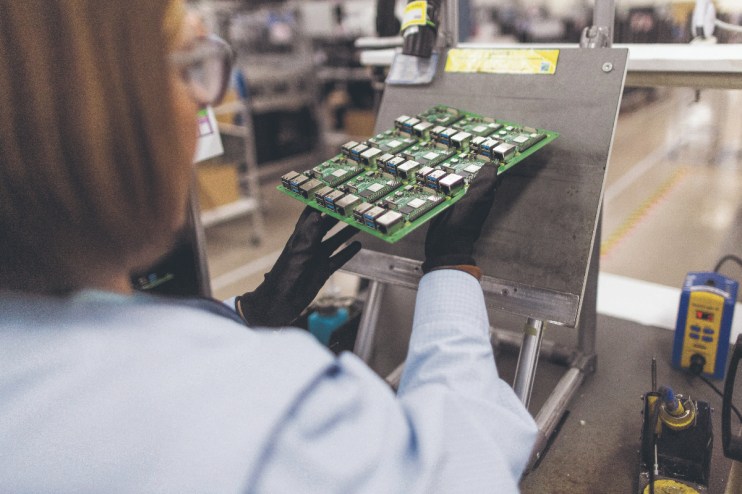
Raspberry Pi shares jumped as much as 17 per cent on Thursday morning after the British computer maker reported record first-half results.
The Cambridge-based computer maker posted pre-tax profit of $19.6m (£14.5m), up from $6.2m a year earlier, while revenue jumped 90 per cent to a record $256.9m.
Shares were trading around 15 per cent higher at 724p by 9.20am, extending a rally in the run-up to Thursday’s results. The stock closed at 631.5p on Wednesday.
Chief executive Eben Upton said demand from corporate customers and resellers remained strong, while Raspberry Pi’s order backlog doubled to 2.6m units during the six months.
“The decision in FY 2025 to build significant strategic memory inventory has allowed us to maintain product availability at a time when smaller competitors have struggled to secure allocation”, Upton said.
The results come months after British chip giant Arm increased its stake in Raspberry Pi, investing around £50m in a share sale by the Raspberry Pi Foundation in April.
The purchase lifted Arm’s holding from around 8.4 per cent to 13.1 per cent, making it one of Raspberry Pi’s largest shareholders.
Arm had already invested in Raspberry Pi before its 2024 London float and bought another $35m of shares at the IPO.
The two Cambridge-based companies have worked together since 2008, with Raspberry Pi’s computers built around Arm technology.
The company sold 4.2m units during the period, up 17 per cent year on year, while direct sales rose 26 per cent to 3.4m.
Raspberry Pi now expects full-year earnings to come in ahead of market forecasts and said it expects to sell more units in the second half than the first.
The results follow a trading update in June, when the London-listed business raised its profit expectations after stronger-than-expected demand sent its shares sharply higher.
Raspberry Pi has benefited from growing use of its computers by businesses as well as hobbyists, including for AI applications that run directly on devices rather than through large data centres.
It launched its AI HAT+ 2 during the first half, which allows Raspberry Pi 5 computers to run more sophisticated AI models locally. The company said it had seen a particular increase in customers using its products for this type of “edge AI”.
Memory crunch drive prices higher
Raspberry Pi’s bumper revenue growth also reflected sharp price increases rather than sales volumes alone.
The average selling price of its boards rose 42 per cent to $65.90 as the company passed higher memory costs on to customers. Direct sales of its Pi 4 and Pi 5 computers rose 69 per cent and 47 per cent respectively, despite the higher prices.
A global memory shortage has pushed component prices higher as chipmakers race to meet demand from the AI industry.
Raspberry Pi built up stocks of memory last year before prices rose, helping protect its profitability during the first half. Gross profit climbed 79 per cent to $59.4m, although its gross margin slipped from 25 per cent to 23 per cent.
However, the company warned that the benefit from those cheaper supplies had now “largely” run out, meaning its unusually strong profit per unit in the first half had moderated.
Raspberry Pi has continued to stockpile memory to protect itself against shortages. Inventory climbed to $262.7m by the end of June, up $117.4m during the half, while net cash fell to $18.4m.
It had amassed 8.3m gigabytes of memory by the end of August and expects to continue using its borrowing facilities as it secures components for future production. Its committed bank facility was increased from $80m to $140m in July.
Demand has also grown outside Raspberry Pi’s traditional enthusiast market. The company reported particular interest from smart-home businesses and the aerospace and defence sector, where it has held talks with defence contractors and national militaries looking for lower-cost computing systems.
Upton said Raspberry Pi had a “strong pipeline” of corporate customers and expected “rapid growth” in unit sales in 2027 and beyond.
The company has sold more than 77m computers since it was founded and floated in London in 2024.