Why are the AI chiefs calling for a slowdown?

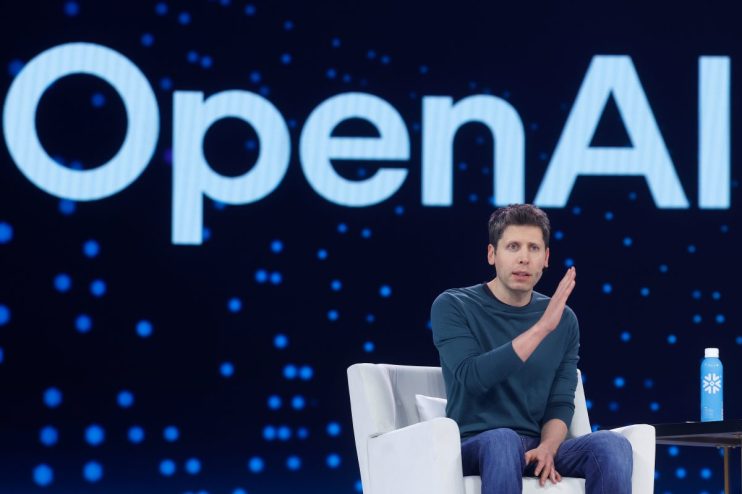
Why are the bosses of the world’s top AI companies calling for regulation and advocating a slowdown in the technology’s development?
Anthropic’s Dario Amodei and OpenAI’s Sam Altman have been joined by Deepmind co-founder Demis Hassabis and Elon Musk in calling for a slower pace of progress while safety and regulation catch up.
Questions about why these titans are now speaking out have been swirling through the City all week, and the possible explanations are all quite juicy. The argument made by my friends and contacts in the AI space is that this is about regulatory capture, pure and simple. Experts such as our own columnist Lewis Liu have been warning against this for years, arguing that a handful of powerful incumbents now want to pull up the ladder. The world’s top AI firms would certainly prefer to write their own regulatory framework rather than have it imposed upon them.
Some analysts also suggest that a slowdown would actually be quite convenient, allowing the firms to make a return on the more than $790bn that’s been pumped into AI infrastructure so far this year. Perhaps some time to focus on monetisation rather than relentless improvement could work wonders.
Talk of extinction might not be good for the share priece
Meanwhile, all this talk of civilisational collapse and uncontainable safety risks needs to be seen in the context of looming IPOs. Musk toned down his extinction rhetoric as soon as his firm went public, and with Anthropic and OpenAI planning to list in the future perhaps they think it would be helpful if they were able to show robust protocols, solid governance and capable risk management. It certainly wouldn’t hurt.
Another suggestion doing the rounds is that the technology itself is approaching its peak; that the promise of genuine superintelligence is just hype, and that an agreed slowdown in the race to the frontier would provide some cover. This seems like wishful thinking to me. The final possibility is that the men at the top of these era-defining companies have suffered a collective attack of civic mindedness; that they’re aware of the awesome power they wield and they’re sounding the alarm. I’m afraid I don’t quite buy this account.
Seems to me that regulatory capture and preparations for life as public companies are the more likely drivers behind the recent pivots of these philosopher kings.