Is Rachel Reeves actually to blame for the ‘Truss crash’?

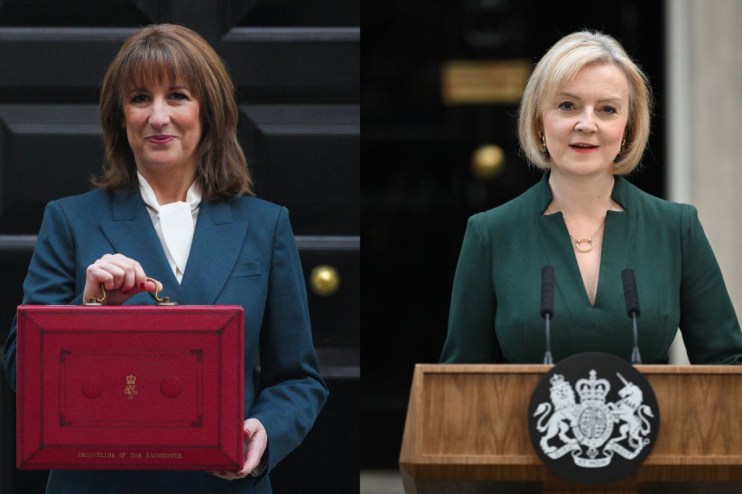
After years of blaming the ‘Truss crash’ on tax cuts, Rachel Reeves has finally gestured to the real problem – her own instinct to overspend, writes Tom Harwood
This week, the Chancellor’s mask slipped. For four years she has made political hay out of blaming tax cuts for the ‘Truss crash’. Indeed, Rachel Reeves herself spearheaded the Labour Party’s media push to claim that had they been in charge, gilt yields would never have spiked, the pound would never have tumbled and the Bank of England would never have had to take emergency measures.
This week that all changed. This week, surprisingly Rachel Reeves told the truth. Well, partly at least.
In making the case against expensive universal energy subsidies down the road, the Chancellor made clear that “we must learn the mistakes of the past”.
“The previous government,” she said, “pushed up borrowing, interest rates, inflation and mortgage costs with an unfunded, untargeted package of support under Liz Truss”. This universalism, she said, “gave the support to the most wealthiest [sic] of households”. Not only did the Chancellor butcher the English language, she butchered her own argument of these last four years.
No longer are the Truss tax cuts to blame for spiking “borrowing, interest rates, inflation and mortgage costs”, but her Energy Price Guarantee. In attempting to attack the previous government, she has actually laid bare the true scandal of 2022: overspending driven by one of the most dangerous things in politics: a cross party consensus.
For it was the Labour Party and Rachel Reeves herself who first demanded a universal energy price freeze in August 2022.
Reeves’s numbers don’t up
Now Reeves may believe she has delivered herself a get out of jail free card by using the word “unfunded”, as Labour always claimed they would pay for their proposed intervention though a windfall levy on oil and gas companies.
But the numbers don’t add up and never did. At the time Labour’s own calculations revealed they would raise £8bn with a windfall tax. And what of the cost of freezing everyone’s energy bills? Projected to cost between £100bn to £200bn.
Indeed Labour’s planned spending package was precisely the same design as that implemented by Liz Truss, as the Truss policy itself included a windfall tax on oil and gas companies, though this fact is little known for the precise reason that neither Truss nor Reeves felt it in their interests to publicise this fact.
The official Truss Government Growth Plan costings explicitly include revenue from the “Energy Profits Levy”, the windfall tax on oil and gas profits, showing £7.73bn of revenue from the measure in 2022-23.
The whole affair was fiscally reckless when Liz Truss implemented it. And it was fiscally reckless when Rachel Reeves demanded it in the first place.
Reeves herself demanded on 26 August 2022 that the Tories “freeze gas and electricity bills so that nobody pays a penny more during the autumn and winter”, saying that with her as Chancellor, “’no one would pay a penny more for their gas and electricity this autumn and winter”. On 15 August 2022 she announced it as “a big offer, a massive commitment that Labour is making today… to freeze bills for all households for six months”.
That Reeves now admits this policy was a disaster should be reassuring. That she recognises that the potential for an extra £200bn of government spending was of course by far the greatest element of Truss’s fiscal loosening, eclipsing her measly £45bn in tax cuts, is good news.
But is the Chancellor also suffering from a bout of selective amnesia? It was her policy. Her idea. Her demand.
The interest rate spike, gilt yields spike and associated Liability Driven Investments crisis that ensued has in the country’s popular imagination been described as “Truss crashing the economy” (though of course through the period the economy did not crash, it actually continued to grow). Perhaps now we should call it the Reeves Recession instead.
Tom Harwood is deputy political editor at GB News