When AI’s taken all the work, what will we all do?

The possible abundances of the AI-powered future mean that our lives won’t be nasty, brutish and short – but will they be devoid of meaning, asks Steffan Williams
In Victorian times, to split an infinitive was a major grammatical issue at odds with their efforts to ape Latin precedent. The attitude tells us something about the British imperial mindset of the 19th century, but times change and by the twentieth century there were ever-fewer objections to a once immutable grammatical rule.
Today we are living in a period of unprecedented change and while I don’t know what Elon Musk thinks about grammar I am very interested in hearing what he has to say about technology and its likely impact on society. Given his achievements to date, love him or hate him, Musk is simply impossible to ignore.
Some techs trot, others gallop
In no particular order, Musk talks about humans becoming an interplanetary species using powerful rockets, deriving energy from orbiting solar farms and a future where humanoid robots do all the hard work (Musk estimates 1m of them will be deployed within the next five years). In terms of GDP, he reckons that double digit growth will be possible over the next 18 months and that within the next five years we will achieve ‘sustainable abundance’. He has gone so far as to suggest that mass-scale automation could eventually expand the global economy by a factor of 10 to one hundred.
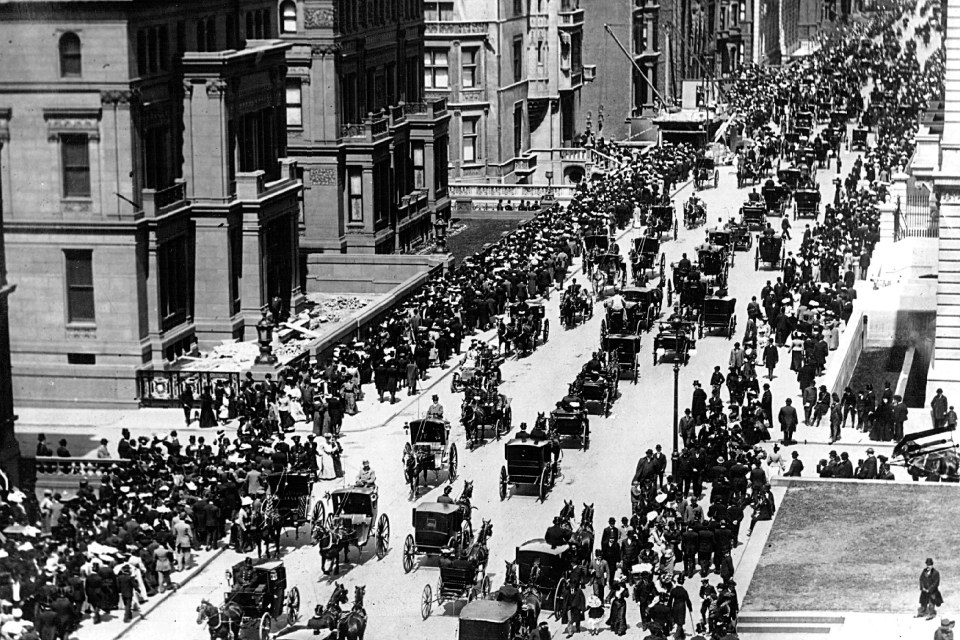
Most major technological innovations, like electricity for example, take decades to fully affect economies. But there’s no doubt that some, such as the internal combustion engine, move at a much greater pace. There’s the famous photograph taken on Easter morning in 1900 in New York where only one car is visible in a sea of horses and carts. By 1913, in a picture taken from the same spot on the same day of the year the situation was reversed; there’s only one horse surrounded by cars. And of course, many changes happen without government intervention.
Musk also talks about the likelihood of a universal high income. So much of the work required to drive and maintain the economy will be handled by AI and robots it risks leaving humans with a dilemma. What do you spend your time on if paid work is not required?
An AI future: How do we maintain meaning without work?
I remember visiting a very wealthy Middle Eastern state a few years ago. My local partner, a Brit who had lived there for years, was very well integrated with the local society and spoke fluent Arabic. As we passed through a residential zone I asked him whether these people – who all enjoyed an incredibly high level of affluence courtesy of their natural energy resources – had started to deliver innovations in the arts or sciences. Were they making productive use of their ample free time? The gloomy answer was: “they have the highest rate of type two diabetes per capita in the world and their major pastimes are watching daytime TV and eating fast food”.
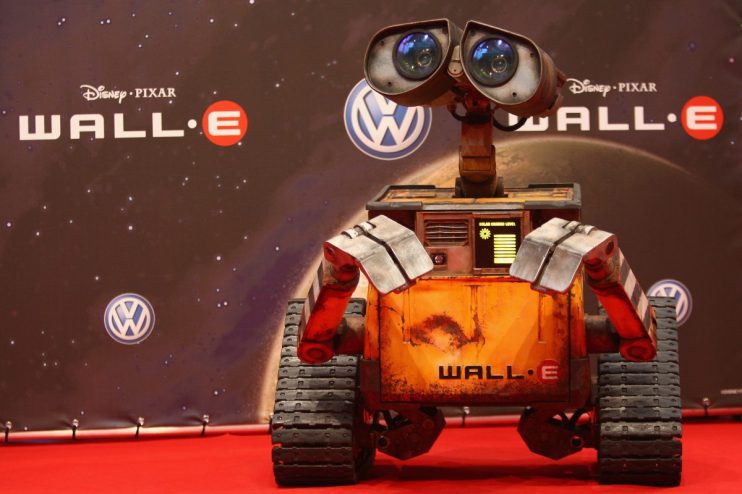
That sort of vision is where the humans have got to in the animated movie WALL-E. Surrounded by labour-saving technology, the humans have become helpless, obese child-like consumers.
But there’s another way this could work out. What if, as in Gene Rodenberry’s Star Trek, we choose to boldly split infinitives? By which I mean that humans take it upon themselves to seek a purpose for their lives rather than just consume resources?
Think about it: in Star Trek, no one draws an income. No-one has been forced to join the starship – they have all elected to do so. None of them prizes possessions. When they want experiences, they use the holo-deck and when they want to communicate, they talk to each other using hand-held tricorders. Others are still living on Earth. Not everyone has decided to explore the galaxy – only those who have chosen to do so.
I’m no socialist, but the motive to gain money has, for most people, only really been relevant since the industrial revolution. Before then, the majority of humans were simply trying not to die from disease, famine or war.
The possible abundances of the future mean that our lives won’t be nasty, brutish and short – but they could equally be devoid of meaning. In that world, will humans decide to go boldly forth with purpose? I hope so.
Steffan Williams is co-founder and partner at Data Counsel