On this day: Bruce Springsteen is born

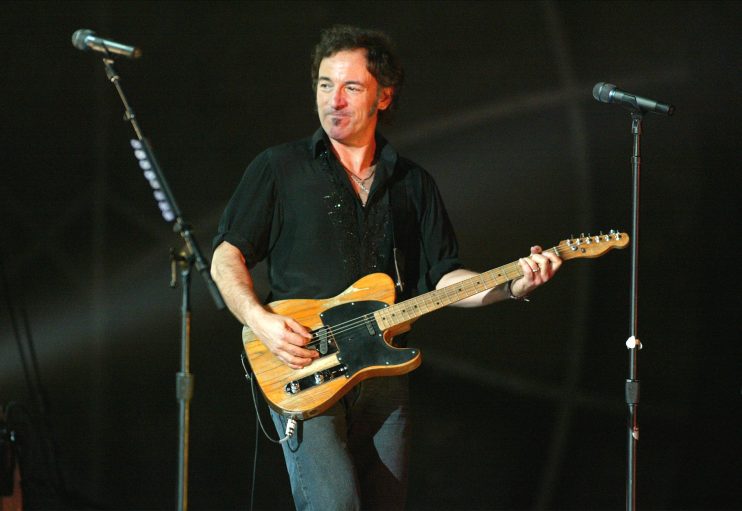
On 23 September 1949, Bruce Springsteen aka ‘The Boss’ was born in New Jersey. His life and music would go on to define post-war America, writes Eliot Wilson
The way in which modern rock music developed means that the late 1940s are stuffed full of famous births. Take 1949 alone, and you will find enduring stars: Billy Joel, Lionel Richie, Gene Simmons (all still performing). You will also read the names of those for whom fame flared briefly, if at all: John Miles, the next big thing until he wasn’t, Steve Peregrine Took (remember Shagrat? No-one does), Steve Gaines, guitarist for Lynyrd Skynyrd for 18 months.
Today in 1949, though, in Monmouth Medical Center in Long Branch, New Jersey, a child was born whose fame is unimpeachable. Bruce Frederick Joseph Springsteen was the first child of Douglas “Dutch” Springsteen, a Second World War veteran who worked as a bus driver, and Adele Zerilli, a legal secretary from Bay Ridge in Brooklyn. The couple had married the previous year, and Adele was the family breadwinner as Douglas suffered with increasingly severe but undiagnosed mental illness – his son has referred to schizophrenia and bipolar disorder – which he attempted to counter with heavy drinking.
As expected of a future rock star, Springsteen had a turbulent schooling. He was educated by nuns at St Rose of Lima Catholic School before moving to Freehold High School, and, naturally, he bridled at authority, was a disaffected loner and dreamed only of being a musician.
The pattern matters, but so does the chronology, as it shaped Springsteen’s music in profound ways. He was born in the first years of the post-War era, with the United States the undisputed hegemon; America’s absolute nuclear monopoly had only ended 25 days before his birth. The economy was booming, and so was America: the population grew by 15 per cent between 1940 and 1950, then nearly 20 per cent in the following decade. The Springsteens were by no means well off, but this was a society for which the Dust Bowl was very much in living memory. Everything is relative.
But track the American story forwards. Springsteen was 14 when John F Kennedy was assassinated. A year after he graduated from high school, in 1968, he was called up for his draft physical: he failed the medical examination because of a concussion suffered in a motorcycle accident two years before, and would not be drafted into the army and sent to Vietnam.
But his late teens and early 20s coincided precisely with that darkening, the apparent capsizing of the American dream into something like a nightmare. In 1968, the year Springsteen was rejected for military service, the total number of US personnel killed in Vietnam soared past 30,000. The story of the My Lai massacre, when GIs raped, mutilated and butchered as many as 500 Vietnamese civilians, broke two months after Springsteen’s 20th birthday.
Then came the economic shocks of the 1970s. America was battered by the collapse of the Bretton Woods system, the oil crisis of 1973 and the 1973-74 stock market crash and the recession which came in its wake. Inflation, which had been one per cent in 1964, was over 12 per cent in 1974, and unemployment began to rise.
Springsteen had bought his first guitar in 1964 after seeing the Beatles on The Ed Sullivan Show, and from his teens he passed through a slew of bands, as young musicians do: the Castiles, Earth, Child (which became Steel Mill), Dr Zoom and the Sonic Boom, the Sundance Blues Band. But it was apparent that, musicianship aside, he was a songwriter of rare talent, texture and literacy. One early record label proclaimed he had “more words in some individual songs than other artists had in whole albums”.
An obvious hit?
In 1972, Springsteen assembled a group of musicians to record his debut album, Greetings from Asbury Park, NJ When Columbia Records heard an early version and felt it lacked an obvious hit, Springsteen hastily wrote “Blinded by the Light” and “Spirit in the Night”, then recorded them both in a day. (Neither charted, but Manfred Mann’s Earth Band took “Blinded by the Light” to number one in 1977.)
His musicians became fixtures. Dubbed the E Street Band, they would be long-term comrades: saxophonist Clarence Clemons stayed till his death in 2011. When bassist Garry Tallent opted out of a Saturday Night Live appearance at the end of 2020 because of Covid-19 anxieties, it was the first E Street Band performance he had ever missed. Steven Van Zandt on guitar, multi-instrumentalist Nils Lofgren and Springsteen’s future wife Patti Scialfa followed a few years later.
At 77, the Boss is still touring. Springsteen is hardly the first rock musician to deal with themes of hardship, struggle or working-class life in America. But two things have given him enduring appeal and sold an estimated 150 million records worldwide. The first is ineffable, searing authenticity. You can look at academic studies or just listen to “The River”, or “The Rising”, his gruff, clenched-fist response to 9/11, and you know. Springsteen doesn’t perform, he tells you a story of himself and the American experience. Never forget how acute a nose the public has for bullshit.
Eliot Wilson is a writer and historian