Uber and Wayve open waitlist for London robotaxis

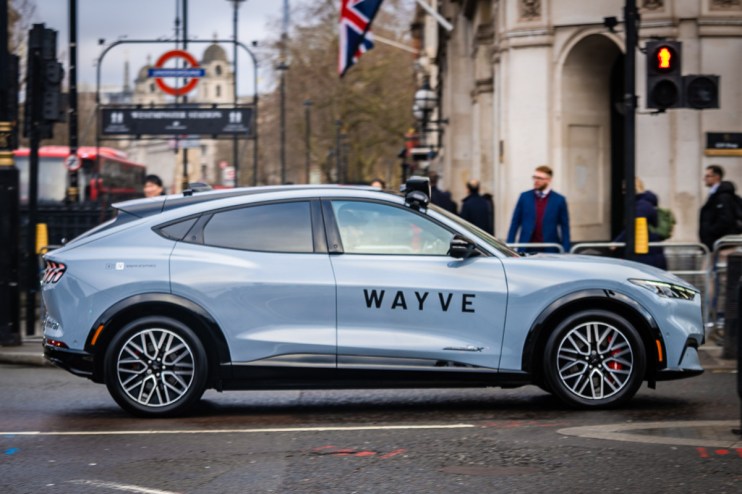
Uber has opened an interest list for customers keen to try autonomous minicabs in the capital, as self-driving taxis near a commercial launch in the UK.
The ride-hailing giant is partnering with British autonomous driving firm Wayve, whose technology has been tested on London’s streets since 2018.
Customers can now opt in through the Uber app for a chance to be matched with one of the vehicles when the service launches, which both companies expect to happen in the coming months, subject to regulatory approval.
Initially, the vehicles will operate with a trained safety operator behind the wheel, although the long-term ambition is fully driverless journeys.
Announcing the move at London Tech Week, Wayve’s vice president of commercial and operations, Kaity Fischer, described the launch as a “full circle moment” for the company after nearly a decade of testing on some of the world’s most challenging roads.
“We’ve been testing 24/7, 365 here in London for years,” Fischer said. Some of the most complex streets imaginable, 2,000-year-old roads, 20 times the amount of construction compared to San Francisco.”
She added that London’s combination of cyclists, pedestrians, roadworks, cobbled streets and unpredictable traffic patterns creates an “incredible proving ground” for autonomous technology.
Uber’s global head of autonomous mobility -perations, Annie Duvnjak, added: “For us at Uber, London’s really a pioneer city”.
“We’re just so thrilled to be partnering with an incredible technology company like Wayve to give Londoners access to that in the coming months.”
‘Magically boring’
The launch sets up a looming battle between Wayve and Alphabet-owned Waymo, which is also testing autonomous vehicles across London ahead of a commercial rollout.
While robotaxis are already operating in cities including San Francisco, Phoenix and parts of China, Europe has lagged behind due to tougher regulation and more complex urban environments.
Unlike some rivals, Wayve’s system does not rely on high-definition maps or geofenced operating zones, allowing vehicles to adapt more easily to new cities and road conditions.
The company says the technology has already been trained extensively on London’s streets and is now “ready to go”.
For passengers, Duvnjak said the novelty quickly wears off: “You know, you’re looking, what’s the wheel doing? Is it seeing that person crossing the road?” she said. “And then all of a sudden it becomes magically boring. You’re suddenly checking your email again, you’re just going on about your day.|
Uber says autonomous rides will cost the same as conventional journeys and customers will be able to reject a robotaxi if they would prefer a human driver.
The rollout comes as ministers push to accelerate autonomous vehicle trials following the passage of the Autonomous Vehicles Act.
Transport secretary Heidi Alexander said self-driving technology had the potential to “transform how people travel”, while creating high-skilled jobs across Britain.